As the literary world continues to explore the vast and enduring landscapes of digital discourse, today’s digital digest brings readers another curated selection of essential reading, cultural commentary, and historical reflection from across the literary internet. In an online ecosystem crowded with fleeting trends and rapid-fire commentary, platforms dedicated to deep literary exploration offer a vital space for readers, writers, and critics to engage with the stories that shape our cultural memory. From archival discoveries to contemporary criticism, the daily roundup serves as a vital touchstone for those tracking the pulse of contemporary letters.
At the heart of today’s historical reflection stands a monumental figure of twentieth-century European literature: the German author Anna Seghers. Born on this day in 1900, Seghers remains one of the most powerful chroniclers of exile, political resistance, and the human condition under the shadow of totalitarianism. Her life and work continue to resonate with contemporary readers who find in her prose a profound urgency and moral clarity that transcends the historical era in which it was written.
Celebrating the Legacy of Anna Seghers
Born Netty Reiling in Mainz, Germany, into an observant Jewish-German family, Seghers would go on to adopt her pen name under the influence of the Dutch artist Hercules Seghers. Her early intellectual life was marked by rigorous academic pursuits in art history, history, and Chinese studies at the universities of Cologne and Heidelberg, where she ultimately completed her doctorate. These deep intellectual foundations informed her sophisticated engagement with politics and philosophy, steering her toward the Communist Party of Germany in the late 1920s and the Association of Proletarian-Revolutionary Writers.
Seghers’ literary career gained international acclaim with her 1928 novel The Revolt of the Fishermen of Santa Barbara (Aufstand der Fisher von St. Barbara), which earned her the prestigious Kleist Prize and established her as a formidable voice in modern fiction. However, the rise of the Nazi regime in 1933 drastically altered the trajectory of her life and career. Her books were banned and publicly burned by the regime, forcing her into a harrowing exile that took her first to Switzerland, then to France, and eventually to Mexico following the fall of France in 1940.
It was during this harrowing period of displacement that Seghers composed some of her most enduring masterpieces, most notably Transit and The Seventh Cross (Das siebte Kreuz). The Seventh Cross, depicting the escape of seven inmates from a Nazi concentration camp and the relentless manhunt that follows, became an international bestseller upon its publication in English in the United States and was subsequently adapted into a major Hollywood film starring Spencer Tracy. The novel stands as one of the few contemporary literary depictions of the grim reality of concentration camps written while the Nazi regime was still in power.
Following the end of the Second World War, Seghers made the deliberate choice to return to Europe, settling in East Berlin in the German Democratic Republic. There, she played a prominent and complex role in the cultural and political life of the state, serving as the long-time president of the Writers’ Union of the GDR while maintaining an international reputation that bridged the divides of a fractured Cold War Europe. Her post-war works, including The Dead Stay Young (Die Toten bleiben jung), continued to examine the moral compromises and historical traumas of the German twentieth century.
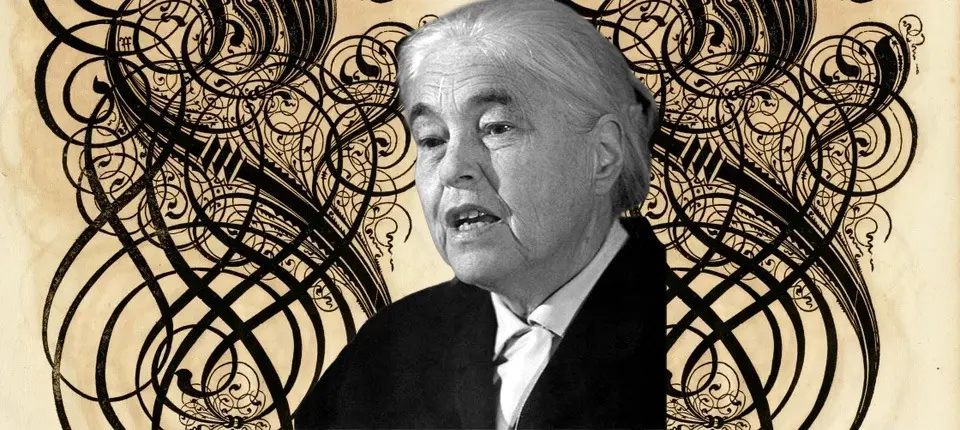
Today, as scholars, archivists, and everyday readers encounter her life and work through digital preservation initiatives, historical archives, and contemporary criticism, the enduring power of Seghers’ voice remains undiminished. Photographic records, such as those preserved in institutions like the Bundesarchiv—captured through the lens of photographers like Christa Hochneder and made widely accessible under Creative Commons licenses—allow modern audiences to connect the physical likeness of the author with the monumental legacy she left behind.
As the literary internet continues to highlight the milestones that shaped our global cultural heritage, commemorating the birth of Anna Seghers serves as a powerful reminder of literature’s capacity to bear witness to history, challenge injustice, and preserve the dignity of the human spirit through times of profound crisis.