
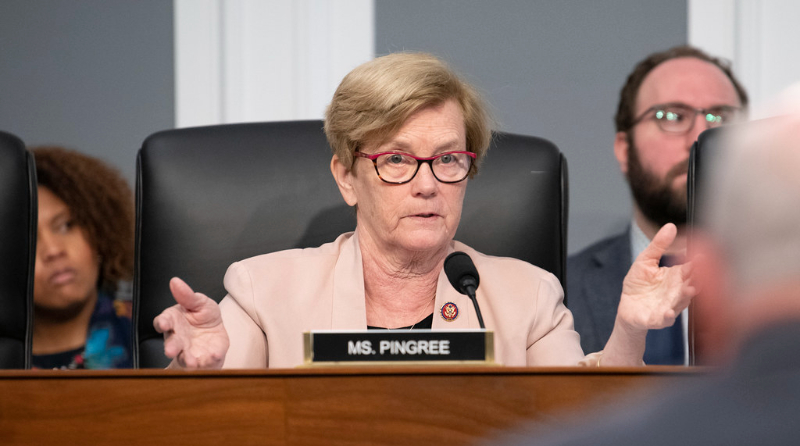
US Representative Chellie Pingree, a Democrat from Maine and a longtime organic farmer, is calling on the United States Department of Agriculture to take immediate action on a recent Government Accountability Office report detailing the growing climate-related risks that diseases and pests pose to American farms and forests. Pingree, who serves on the House Agriculture Committee, is pressing USDA leadership to stop delaying and implement a comprehensive national strategy to safeguard the nation’s agricultural sector from escalating ecological threats.
The GAO report, titled "Agricultural Diseases and Pests: Nationwide Assessment and Strategy Needed to Enhance the Climate Resilience of Farms and Forests," revealed that the USDA has taken remarkably few actions to address these mounting risks. In fact, the report noted that staffing and funding for several critical prevention and mitigation programs have actually been cut in recent years, leaving agricultural producers more vulnerable than ever.
For years, farmers, ranchers, and forest landowners have operated as the frontline defense against invasive species, blights, and destructive insects. However, Pingree and agricultural experts point out that these biological threats are no longer adhering to traditional geographical boundaries or seasonal calendars. Outbreaks are beginning earlier in the year, lasting significantly longer, and proving far more resilient against the traditional management methods that farmers have relied on for generations.
In Maine, where the regional economy and cultural way of life are deeply intertwined with healthy, productive farms and forests, these warnings are not theoretical. Producers are already experiencing the severe impacts of shifting climate conditions firsthand. Rising temperatures have allowed invasive pests like the southern pine beetle to expand their geographic range much further north than historically recorded, reaching all the way into Maine forests. The resulting tree damage and mortality leave forested lands increasingly vulnerable to secondary insect outbreaks and devastating wildfires.
The GAO report outlines a clear, practical roadmap for the federal government to address these compounding crises. The investigators identified four central areas requiring immediate attention: improving and coordinating the monitoring and surveillance of diseases and pests, incorporating advanced climate information into predictive modeling and data projection, coordinating and expanding educational outreach and technical assistance for producers, and modifying existing management strategies or developing entirely new ones to tackle climate-driven threats.
Despite the clear and present danger highlighted by federal investigators, the institutional support systems designed to help producers adapt are facing significant political and financial headwinds. The USDA’s Climate Hubs, which operate as vital collaborative networks across various departmental agencies to deliver research, tools, and regionally tailored information to agricultural professionals, have found themselves in the crosshairs of the federal budget process.
Pingree has expressed deep concern that the federal government is actively shedding the specialized expertise required to confront these environmental challenges. She pointed directly to attempts to eliminate funding for the Climate Hubs in the proposed fiscal year 2027 Agriculture Appropriations Bill, characterizing the move as dangerously shortsighted at a time when producers are crying out for reliable science, early warnings, and practical assistance.
The economic stakes associated with inaction are immense. Historical data shows that between 1960 and 2020, invasive species, including aggressive plant diseases and destructive pests, cost the United States agriculture and forestry industries at least $550 billion. Furthermore, climate change is expected to drastically exacerbate these financial burdens. A 2024 analysis indicated that shifting climatic conditions could inflate federal crop insurance costs by anywhere from $300 million to $2.2 billion annually. Given the sheer scale of documented historical losses and projected future liabilities, Pingree argues that it is fiscally irresponsible for the USDA to disregard the findings of the GAO report or delay implementing its recommendations.
The urgency of the situation prompted Pingree to formally communicate her concerns to USDA Secretary Rollins in a detailed letter, urging the department to adopt the GAO’s roadmap without hesitation. In her correspondence, Pingree emphasized that the financial and operational pressures facing agricultural workers are mounting daily.
"I am writing to urge the U.S. Department of Agriculture to swiftly implement the recommendations in the Government Accountability Office’s recent report, Agricultural Diseases and Pests: Nationwide Assessment and Strategy Needed to Enhance the Climate Resilience of Farms and Forests," Pingree wrote to Secretary Rollins. "Farmers, ranchers, and foresters know all too well that the impacts of climate change are not distant or theoretical—they are already materializing on the ground and affecting their operations and livelihoods."
Pingree reiterated that the GAO’s findings confirm that the USDA has taken insufficient action to enhance the climate resilience of farms and forests despite undeniable trends showing rapidly escalating dangers. She highlighted that the erosion of capacity within the USDA’s Climate Hubs has occurred at precisely the moment when producers are in the most desperate need of localized climate and pest guidance.

The ripple effects of these ecological shifts are altering daily agricultural practices across the country. In Maine, farmers have had to invest thousands of dollars out of pocket for protective netting and high-tunnel greenhouse structures simply to shield their crops from surging pest populations. These added expenses come on top of dealing with unpredictable weather patterns, including late spring freezes, heavy and erratic rainfall, extreme summer heat, and prolonged droughts that routinely damage or destroy harvests.
Compounding these production challenges, many agricultural workers have struggled to navigate bureaucratic hurdles in obtaining timely crop insurance payouts or federal disaster assistance to recover from their financial losses. These day-to-day struggles underscore a broader reality: while farmers and foresters are actively innovating and adapting to survive, they cannot shoulder the heavy burden of climate adaptation entirely on their own.
In her letter, Pingree outlined the foundational steps the USDA must take to fulfill its mandate of supporting the agricultural sector. She stressed that the department, in close consultation with stakeholders across the agricultural and land-management communities, should immediately conduct a comprehensive nationwide risk assessment. Such an assessment would identify and evaluate the relative risks posed by climate-related diseases and pests, providing the necessary analytical foundation for a robust national strategy.
The GAO roadmap provides the precise framework needed to guide this strategy, emphasizing enhanced surveillance, better climate modeling integration, expanded technical outreach, and innovative pest management techniques. By taking decisive action now, the USDA can help protect American agriculture from avoidable future costs while providing essential stability to the farmers, ranchers, and foresters who feed and clothe the nation.