If the lights go out in your house, you call an electrician. If a pipe bursts, you call a plumber. Both matter. Both protect the house. But asking the plumber to inspect the wiring does not make the house safer. It simply gives the plumber the wrong job.
Something strikingly similar is currently happening across the landscape of American higher education, as federal policymakers attempt to reshape the mechanisms that govern academic institutions.
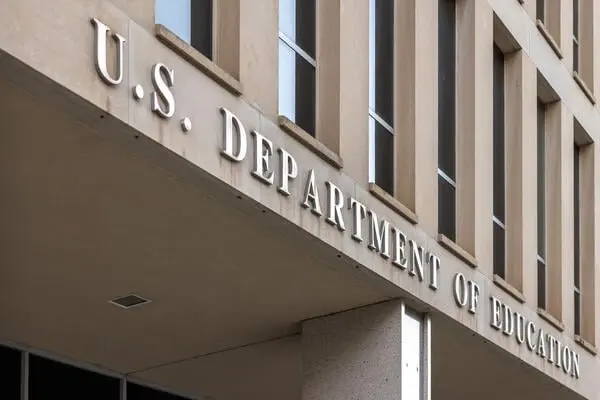
The U.S. Department of Education’s proposed regulations, titled "Accreditation, Innovation and Modernization," begin with noble and widely shared goals. Many stakeholders across the academic spectrum desire stronger accountability, better student outcomes, less unnecessary regulatory burden, greater institutional innovation, and better protection for both students and taxpayers. The Council for Higher Education Accreditation (CHEA) and the colleges and universities it represents firmly support those foundational objectives. Across the country, academic institutions and their members remain deeply committed to student success, educational quality, ongoing accountability, and continuous improvement.
However, good intentions and worthwhile goals do not automatically guarantee sound policy.
The central question facing policymakers, educators, and institutional leaders is not whether American higher education should be held accountable. It unquestionably should be. Rather, the fundamental question is who should be held accountable for what, and exactly how that accountability should be operationalized.
Nasser H. Paydar, president of the Council for Higher Education Accreditation, has spent the vast majority of his professional life immersed in the ecosystem of higher education. Throughout his career, he has served as a faculty member, an academic administrator, and a university chancellor. In addition to his extensive campus-based experience, he has served inside the U.S. Department of Education itself, and today he leads CHEA. Viewing the complex machinery of higher education from all three of these distinct perspectives has reinforced a principle he has come to believe deeply: strong accountability does not require every participant to do the same job. Instead, it requires each participant to do their own designated job exceptionally well.
The Deliberate Architecture of Oversight
That core principle has long been embedded in the structural DNA of American higher education. Under the traditional framework, colleges and universities are directly responsible for educating students and fulfilling their specific institutional missions. Meanwhile, the federal government determines whether those institutions meet the statutory requirements necessary for participation in federal student aid programs. At the state level, individual state governments authorize colleges and universities to operate within their borders. Independent accrediting organizations evaluate academic quality through rigorous peer review.
While these distinct responsibilities sometimes overlap in practice, they are deliberately and carefully separated by design. Congress intentionally chose this multi-layered structure rather than establishing a centralized federal system for determining academic quality or dictating curriculum.
Those institutional distinctions are far from mere bureaucratic trivia. They function as vital safeguards protecting academic independence, institutional diversity, and educational quality. Yet, several provisions contained within the Department of Education’s newly proposed regulations risk blurring these essential lines of demarcation.
Turning Academic Evaluators Into Compliance Officers
The overreach evident in the proposed rules raises several pressing concerns about the future scope of accreditation.
First, policymakers must ask whether an independent accreditor should truly be responsible for determining whether a university complies with every applicable federal and state law. Colleges and universities must, of course, obey the law. Accrediting agencies must also operate within legal boundaries. But determining whether a specific law has been violated is the legal responsibility of the government agencies explicitly charged with enforcement, and ultimately, the responsibility of the courts. Turning independent academic accreditors into auxiliary legal compliance officers does not strengthen the accreditation process. Rather, it fundamentally changes and distorts its core purpose.
Second, the proposed rules prompt a critical examination of institutional spending. Should an accreditor be tasked with determining whether a university has spent too much money on faculty, physical facilities, student support services, or scholarly activity? Accreditation should certainly examine whether an institution possesses the financial and physical resources necessary to fulfill its educational mission. However, requiring accreditors to conduct intrusive cost-benefit analyses of internal institutional spending places them in a vastly different role—one of judging how universities allocate their internal resources and prioritize their budgets. Those complex governance decisions appropriately belong to the institutions themselves and their internal governing structures.
Furthermore, these newly invented responsibilities carry very real operational and financial costs. Any new requirement imposed through the accreditation process ultimately translates into additional layers of data collection, extensive documentation, detailed analysis, cumbersome reporting, and prolonged review cycles. Before adding these new administrative burdens, policymakers are urged to ask whether the changes are genuinely justified by a meaningful, measurable improvement in educational quality and student protection.
Avoiding the Politicization of Academic Standards
Another critical question raised by the proposal is whether Washington should prescribe the exact methods by which accreditors evaluate student achievement, academic freedom, intellectual diversity, faculty policies, and other core dimensions of academic life.
These are undeniably important issues that deserve serious attention. CHEA strongly supports robust academic freedom and meaningful attention to student outcomes. However, supporting an objective is vastly different from believing that the federal government should dictate what an independent accreditor must measure and how it must conduct that evaluation. The proposed rule too often crosses that critical line, moving from oversight into prescription.
There is a vital distinction to be made here: federal oversight of the accreditation process is both necessary and appropriate. The politicization of accreditation, however, is not. That distinction matters immensely, particularly in the current socio-political climate.
Higher education is currently facing difficult, searching questions concerning rising costs, demonstrated value, student success, public trust, academic freedom, and workforce preparation. Accreditation cannot adequately respond to those profound questions simply by defending the status quo or maintaining the way things have always been done. The system must continue to improve. It should leverage better information, focus more clearly and transparently on student outcomes, reduce unnecessary administrative burdens, and encourage meaningful institutional innovation.
Nevertheless, any genuine reform should strengthen accreditation’s fundamental ability to judge and uphold educational quality, rather than gradually transforming it into a blunt enforcement mechanism for every public policy objective that happens to affect higher education.
Indeed, the more unrelated responsibilities that policymakers pile onto the accreditation system, the greater the danger that it becomes progressively less effective at fulfilling the singular responsibility for which it was originally created.
A Call for Smarter Accountability
In its formal comment submitted to the Department of Education, CHEA identifies specific provisions that it supports, while also recommending targeted revisions where the regulatory proposal would expand accreditation far beyond its appropriate and effective role.
Higher education does not need less accountability. What it needs is smarter, more focused accountability.
To return to the initial analogy, a safe house requires working plumbing, reliable electricity, and a sound structural foundation. Every single part matters immensely. But that reality does not mean the plumber, the electrician, and the contractor should all be asked to do the exact same job.
Higher education stakeholders emphasize that institutions must remain responsible for fulfilling their unique missions and serving their students effectively. Government should enforce the law. States should exercise their distinct oversight authority. Individual institutions should govern themselves within those established boundaries. And independent accreditors should be allowed to carry out their vital role within the framework originally established by Congress: evaluating educational quality while helping to protect students and support continuous institutional improvement.
The electrician and the plumber both matter. The higher education community argues that policymakers should resist the persistent temptation to hand them both the exact same toolbox.