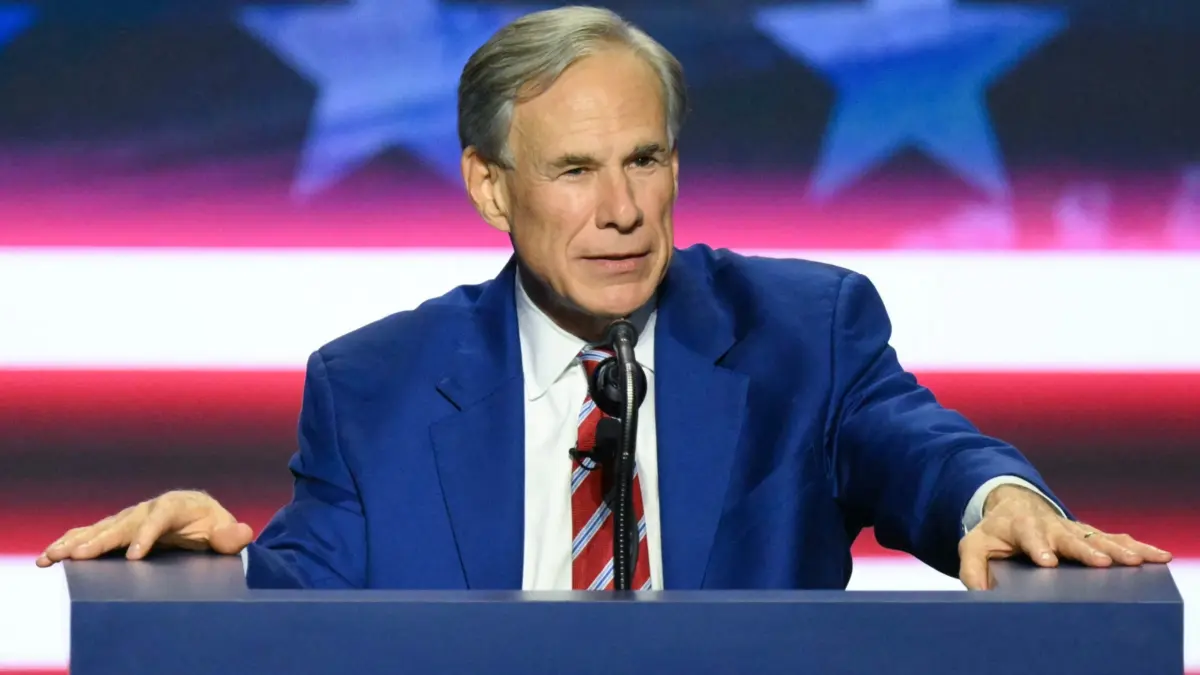
Texas Governor Greg Abbott has taken decisive action to halt the issuance of new permits for data centers across the state. This move comes amid a growing wave of public backlash against the massive technological infrastructure projects, as the Republican governor seeks reelection to a fourth term in November.
Abbott has officially directed the Texas Commission on Environmental Quality (TCEQ) to stop processing permits for data centers until the state can complete a comprehensive audit regarding their impact on the local power grid and water resources. This development marks the latest in a string of controversial moves in Texas—currently the most prolific state for data center development—aimed at slowing down the rapid, often contentious pace of construction that has transformed both urban skylines and rural landscapes.
The governor’s decision directly defies President Donald Trump, who continues to heavily tout the economic potential and local benefits of data centers and artificial intelligence infrastructure. Trump’s optimistic stance stands in stark contrast to widespread public opposition to data center developments. Communities across the country are increasingly worried about how these massive, energy-hungry facilities affect local water supplies, electrical grids, and overall air quality.
"Simply put, Texans must come first," Abbott said in an official statement detailing the new restrictions. "Data centers must pay their own way, protect our grid and water, and complete the ERCOT and TWDB audits. Until they do, TCEQ will issue no permits sought by data center projects."
Abbott did not specify an exact timeline for when these permits might resume. According to estimates from commercial real estate services firm JLL, Texas remains the nation’s top market for data center construction, far surpassing Virginia, although the two states currently operate roughly the same overall capacity of data centers.
The regulatory squeeze in Texas has been building for months. Since June, the Electric Reliability Council of Texas (ERCOT) has been actively auditing data center projects currently undergoing interconnection to study how their immense power draws will affect the stability of the state’s power grid. Furthermore, Abbott recently ordered developers to report their intensive water usage directly to the Texas Water Development Board, backing the mandate with the threat of potential legal action for any companies that fail to comply.
Beyond pausing permits and tightening reporting requirements, Abbott indicated that he aims to phase out economic incentives for future data center projects. However, achieving this goal will require him to work closely with the Texas Legislature to pass corresponding policy changes.
Meanwhile, the federal and national discourse surrounding artificial intelligence and its physical infrastructure continues to accelerate. President Trump doubled down on his pro-AI stance during a speech at the United Nations, telling world leaders that he refuses to cooperate with international efforts to constrain the rapid development of AI, which he frequently refers to as "super-intelligence."
"I’m not going to stifle growth of something that will be bigger than the industrial revolution," Trump said during the address, adding that the United States will actively encourage the growth of advanced artificial intelligence rather than attempt to rein it in.
Nationwide Brake Check
Data centers have rocketed into the political spotlight as a major, high-stakes issue this year, triggering a wave of development constraints and regulatory measures across multiple states.
In Virginia, newly established policies by Governor Abigail Spanberger have created a "rapid-response task force" to monitor and react to the continuous, heavy influx of data center construction in the state, forming part of a broader campaign to regulate the industry. In California, Governor Gavin Newsom mandated much stricter reporting requirements regarding the water and electrical consumption of existing and planned facilities. Meanwhile, Illinois Governor JB Pritzker established a specialized cabinet dedicated to advising the state on the advancement and integration of artificial intelligence technologies.
Governors from across the political spectrum, particularly Democrats leading key technology hubs, argue that the federal government has failed to implement sufficient oversight for data centers. This regulatory vacuum has quickly emerged as a prominent campaign line against Trump and the Republican platform ahead of the upcoming midterm elections, especially as local public support for massive industrial tech developments continues to wane.
"This industry has been rapidly expanding in the last few years without a clear or coordinated plan to address the impacts on Virginians—on their electric bills, their water, their land, their air, or their quality of life," Spanberger noted in remarks addressing the state’s regulatory push.
At the federal level, the U.S. House of Representatives passed a bill designed to encourage individual states and utility companies to shield everyday ratepayers from absorbing the massive power infrastructure costs driven by data centers. The legislation aims to ensure that commercial developers are held financially responsible for the costly energy upgrades and grid enhancements their operations require.
However, the House bill has encountered a rocky start in the Senate, where lawmakers have expressed concerns that the legislation does not go far enough to protect consumers, according to Freedom Smith, a partner specializing in environmental law at Ice Miller LLP. The Senate has instead introduced its own set of much stricter data center regulations, setting the stage for a potential legislative clash between the two congressional chambers over how best to govern the booming industry.
"The House bill is more amending the existing framework to add another consideration to what the regulators would consider," Smith explained. "The Senate bill doesn’t do that. I think it’s a lot more punitive to the data centers."
The Data Center Debate and Market Impacts
These sudden regulatory clampdowns spell continued uncertainty and operational hurdles for the data center development sector. According to research from the National Association of Realtors (NAR), Virginia, Texas, and California represent the top three regions for data center development nationwide. Combined with states like Oregon and Ohio—both of which have implemented their own localized data center restrictions—these five states account for over half of all operating facilities in the United States.
Recent research published by Realtor.com regarding data centers highlights that these industrial facilities are increasingly moving into rural and semi-rural areas. While such projects undeniably influence local tax bases, the exact way they impact the average homeowner’s tax burden remains complex and variable. Furthermore, while initial real estate data tracks no immediate negative impact on property values in the immediate vicinity of large facilities during the two years following their opening, the long-term community effects remain a subject of intense debate.
The National Association of Realtors found in its own membership study that 61% of surveyed real estate professionals reported their clients were deeply concerned that local data center developments would drive up electricity and utility costs, while 56% cited significant anxieties regarding heavy water usage.
Despite the growing local opposition and state-level friction, major financial projections for the sector remain staggering. Financial firm McKinsey & Company estimates that the industry will pour an astounding $7 trillion into physical infrastructure by the year 2030, fueling the broader economic growth that industry supporters frequently tout. Additionally, Goldman Sachs projected that overall power demand from U.S. data centers will more than double between 2025 and 2027, though analysts warn that logistical bottlenecks, delays, and political cancellations mean only about 50% to 60% of currently planned data center capacity is likely to actually come online.