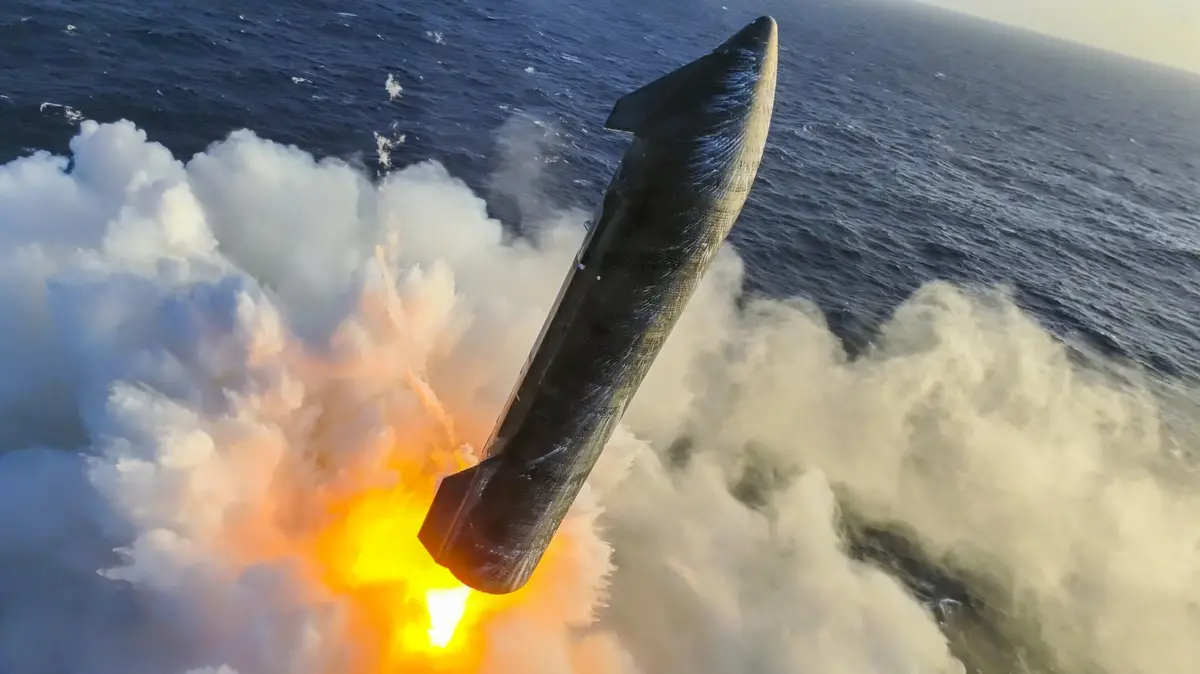
SpaceX is signaling a profound and seismic shift in the future of global aerospace. According to numerous industry and government sources close to the matter, the aerospace giant has quietly stopped accepting new reservations for its legendary Falcon 9 rocket for missions taking place past 2028. This pivotal operational decision reveals an extraordinary level of corporate confidence in Starship, the massive, next-generation heavy-lift vehicle that SpaceX intends to serve as its singular, universal successor.
Under the leadership of CEO Elon Musk, the company is preparing to shutter the operational chapter of its workhorse rocket—a vehicle that currently forms the absolute backbone of commercial, scientific, and government spaceflight. The core philosophy driving this aggressive transition is simple: once Starship achieves a routine flight cadence of several launches per week, SpaceX plans to redirect its heavily constrained engineering, manufacturing, and production resources entirely toward scaling Starship’s launch rate to multiple times per day.
However, this bold move has triggered immediate anxiety and urgent strategizing across the global space industry. Satellite operators, defense agencies, and international partners are now forced to confront a looming reality: whether Starship can genuinely meet its ambitious timeline, and whether a single mega-rocket can realistically absorb the diverse, specialized mission profiles historically fulfilled by the Falcon 9. With SpaceX effectively deciding that Starship will be ready and fully proven by 2028, the rest of the aerospace sector is left scrambling to figure out how payloads will reach orbit if the industry’s primary workhorse is systematically phased out.
The Many Missions of the Falcon 9
To understand the magnitude of retiring the Falcon 9, one only needs to look at its historic dominance in 2025. During that year alone, the Falcon 9 accounted for nearly half of all orbital rocket launches from planet Earth, a staggering feat of modern engineering and logistics. The vehicle achieved orbit 165 times, successfully delivered every single assigned payload, and suffered only a single booster recovery failure.
Through its pioneering reusable booster stages and unmatched flight frequency, the Falcon 9 fundamentally compressed the cost of delivering cargo to space. This dramatic drop in pricing single-handedly catalyzed an entirely new orbital and lunar economy, allowing a wave of startups, small businesses, and academic institutions to reach space—ventures that would have been entirely priced out of the market just a decade prior. For many of these entities, access to orbit has relied on space-sharing arrangements, where multiple small satellites are packed into the cargo fairing of a single Falcon 9 upper stage.
Even with these multi-payload rideshare deals operating at maximum capacity, analysts have warned for years that the global market was hurtling toward a "space crunch," characterized by a severe shortage of functional spaceports and active rockets relative to soaring commercial demand. Removing the Falcon 9—which currently drives half of all global launch activity—from the equation threatens to turn that looming crunch into a full-scale operational bottleneck.
Beyond commercial constellations and scientific payloads, the Falcon 9 also serves as the current American provider for both cargo resupply and human spaceflight missions to the International Space Station (ISS). With NASA contemplating a life extension for the aging orbital laboratory out to 2032, a premature or aggressive wind-down of Falcon 9 and its crew-rated Dragon capsule could create a dangerous multi-year capability gap. While alternative vehicles like Russia’s Soyuz rocket or Boeing’s troubled Starliner—should it successfully resolve its ongoing technical hurdles—could theoretically step in, the enormous Starship upper stage is physically incapable of docking with the space station.
Signals from Space(X)
The aggressive 2028 target date chosen by SpaceX may not be entirely self-determined; it is deeply intertwined with the company’s high-stakes contractual obligations to NASA. The complex roadmap for returning American astronauts to the lunar surface under the Artemis program relies heavily on Starship.
Under the baseline architecture, NASA astronauts will launch aboard an Orion capsule atop a Space Launch System (SLS) rocket. Separately, a SpaceX Starship will launch into low-Earth orbit, where its upper stage must undergo rigorous on-orbit cryogenic propellant transfer—requiring upwards of 15 separate refueling flights. Once fully fueled, the Starship lunar lander will propel itself into lunar orbit, rendezvous with the Orion capsule, and transfer astronauts down to the lunar surface. This monumental mission profile is officially scheduled for 2028.

To maintain its lucrative NASA lunar lander contract, SpaceX is contractually bound to make Starship fully operational, human-rated, and proven by that exact window. By refusing post-2028 Falcon 9 reservations now, SpaceX is effectively locking its own corporate trajectory into that deadline. Starship will be ready by 2028, the company’s actions suggest, simply because it has to be.
NASA, however, has maintained a more cautious posture. The space agency previously reopened contract discussions regarding the human lunar lander program, keeping Blue Origin positioned as an alternative contender. Furthermore, the latest iterations of the Starship prototype have only recently ramped up flight testing, and the vehicle has yet to complete a full orbital flight.
As the aerospace industry absorbs the implications of SpaceX’s decision, satellite operators and government planners are left weighing their options. While competitors are rushing to develop new medium- and heavy-lift rockets to capture the impending market share, none currently match the sheer launch frequency and reliability of the Falcon 9. When an entire global industry becomes deeply underpinned by the innovations of a single private enterprise, the shifting priorities of that company can reshape the future of space exploration overnight.