In a significant move that signals a new era for English rugby league, the national women’s squad has been finalized for the upcoming World Cup. Among the most notable inclusions is Australia-born Jasmin Strange, who stands as one of four potential debutants in head coach Stu Barrow’s 23-player roster. The selection marks a landmark shift in the sport’s landscape, as England embraces the inclusion of "heritage players"—athletes who qualify for national selection through parentage—following a pivotal relaxation of international eligibility rules earlier this year.
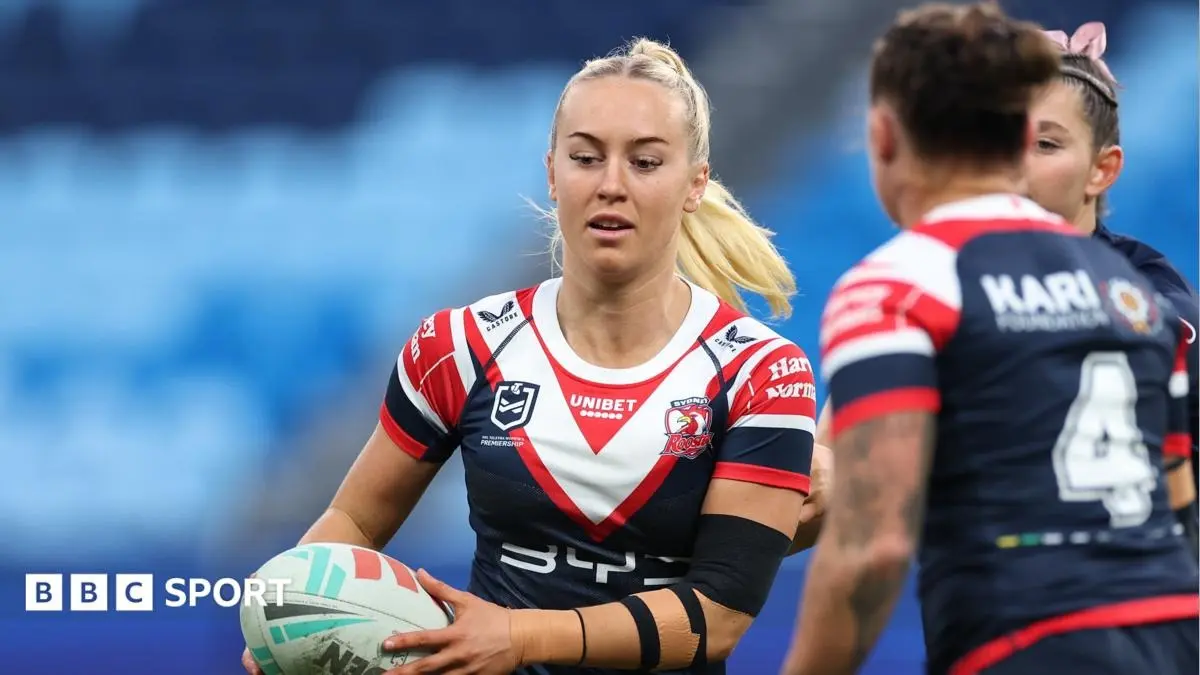
Strange, a dynamic second-row forward currently plying her trade with the Sydney Roosters, has officially committed her international future to England. Her eligibility is derived from her mother, Adele, and her connection to the game is deeply rooted in heritage; she is the daughter of Roosters women’s head coach John Strange, a former player who made his mark in the UK playing for Featherstone in the 1990s. As she prepares for the intensity of the NRLW Grand Final against the Brisbane Broncos this Sunday, the 23-year-old’s transition to the international stage is being viewed as a major coup for the England programme.
The inclusion of heritage players like Strange and fellow squad member Hope Millard—whose father, Shane, enjoyed a distinguished playing career as a forward for Widnes, Leeds, and Wigan—has sparked significant conversation regarding the future of the international game. Under a recent ruling by International Rugby League (IRL), players are now permitted to represent more than one of the three tier-one nations: Australia, New Zealand, and England. While this opened the door for speculation that Coach Barrow might look to bolster his side with a wider array of NRLW-based talent, such as Jocelyn Kelleher, Tayla Preston, or Caitlin Turnbull, the head coach has remained steadfast in his desire to maintain a balance between overseas experience and the development of homegrown talent.
A Blend of Global Talent and Domestic Depth
While the "heritage" storyline captures headlines, the core of the England squad remains firmly rooted in the high-intensity domestic competitions of the UK. Coach Barrow has rewarded standout performers from the Women’s Super League, ensuring that the team’s foundation is built upon players who have been tested throughout the domestic season.
Notably, the squad includes all three nominees for the prestigious Woman of Steel award: Jenna Foubister, Eva Hunter, and Megan Williams. Their selection reflects the high quality of play currently being produced in the UK, particularly within the Wigan Warriors camp, which sees an impressive six players from their roster included in the national side. Meanwhile, the Grand Final winners, York Valkyrie, have seen their efforts recognized with the selection of forward Liv Wood.
The squad also balances this youthful energy with seasoned international pedigree. Jodie Cunningham, the influential loose forward who has announced that this World Cup will be the final chapter of her storied career, brings a wealth of experience to the group. She will be joined by her St Helens teammate Vicky Whitfield, who is set to compete in her fourth World Cup, providing the leadership and tactical acumen necessary for a tournament of this magnitude.
Addressing the difficulty of the selection process, Coach Barrow noted that narrowing a 40-player shortlist down to the final 23 was an arduous task. "Narrowing our squad from 40 players to a final 23 has involved some difficult decisions, but we believe we have the right balance of experience and youth to compete on the world stage," Barrow said. "It’s also an exciting moment for the programme with the inclusion of Australian-based heritage players for the first time."
NRLW Experience Adds New Dimensions
The inclusion of established NRLW players beyond Strange and Millard significantly elevates the competitive profile of the squad. Georgia Roche, now with the Newcastle Knights, and Hollie-Mae Dodd, currently representing the Canberra Raiders, are both included in the final 23. Furthermore, the return of dual-code international Fran Goldthorp provides a major boost. Goldthorp, who previously represented England at the 2022 World Cup, brings invaluable experience and versatility to the backline, having continued to refine her game in the Australian system.
This influx of NRLW experience is timely, given that the upcoming World Cup tournaments—men’s, women’s, and wheelchair—will be staged predominantly in Australia. The familiarity with Australian conditions and the speed of the NRLW game is expected to be a critical asset for the English squad as they navigate a challenging pool stage.
The Path to the World Cup
The logistical scale of this year’s tournament is immense, with the men’s, women’s, and wheelchair World Cups running concurrently. While the wheelchair squad was confirmed last week and the men’s squad is expected to be finalized on 5 October, the women’s team now has a clear road map for the weeks ahead.
England’s campaign is set to be a rigorous test of their tactical and physical preparation. They are slated to play three group matches, starting with a clash against Wales in Perth on 17 October. Following the opener, the squad faces a formidable challenge against Australia on 24 October, before rounding out the group stage against Samoa in Wollongong on 30 October.
The tournament format is unforgiving, with only the top two sides from England’s four-team group advancing to the semi-finals, which are scheduled for 7 and 8 November. With the final set for 15 November, the path to lifting the trophy will require consistency and resilience from the opening whistle.
The full squad announced for the tournament reflects both the strategic evolution of the national side and the depth of talent emerging from both hemispheres:
- Keara Bennett (Leeds Rhinos)
- Connie Boyd (Leeds Rhinos)
- Amelia Brown (Huddersfield Giants)
- Ruby Bruce (Leeds Rhinos)
- Mary Coleman (Wigan Warriors)
- Evie Cousins (Leeds Rhinos)
- Jodie Cunningham (St Helens)
- Anna Davies (Wigan Warriors)
- Hollie-Mae Dodd (Canberra Raiders)
- Jenna Foubister (Wigan Warriors)
- Fran Goldthorp (North Queensland)
- Eva Hunter (Wigan Warriors)
- Molly Jones (Wigan Warriors)
- Hope Millard (Canterbury Bulldogs)
- Lucy Murray (Leeds Rhinos)
- Georgia Roche (Newcastle Knights)
- Isabel Rowe (Wigan Warriors)
- Lucie Sams (Wigan Warriors)
- Jasmin Strange (Sydney Roosters)
- Vicky Whitfield (St Helens)
- Megan Williams (Wigan Warriors)
- Georgia Wilson (Wigan Warriors)
- Liv Wood (York Valkyrie)
As the squad prepares to head to Australia, the integration of these players—ranging from debutants like Connie Boyd, Hope Millard, and Lucie Sams to seasoned veterans like Cunningham—will be the primary focus for the coaching staff. By blending the tactical discipline of the domestic game with the physical and high-paced exposure offered by the NRLW, England is positioning itself as a serious contender in what promises to be a historic World Cup tournament. For players like Jasmin Strange, the opportunity to represent her mother’s home nation on the world stage represents the culmination of personal ambition and a new, more inclusive era for international rugby league.