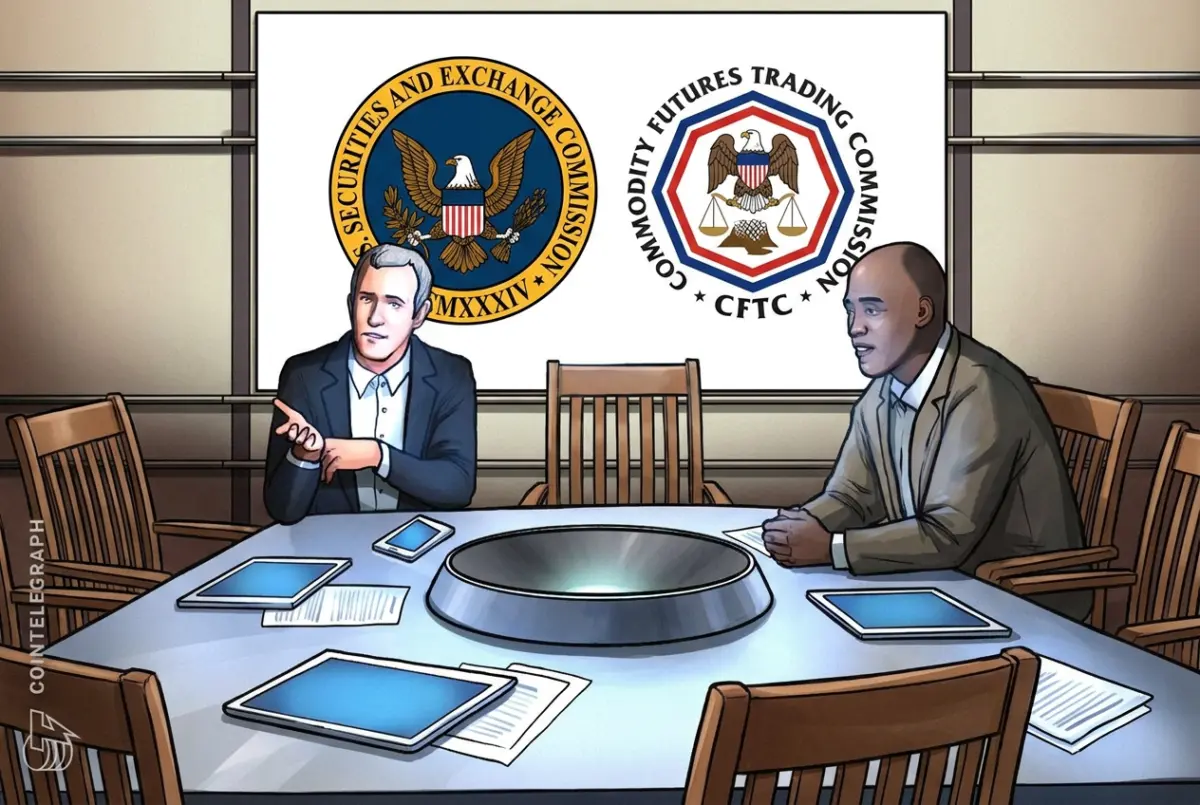
Two of the United States’ primary financial regulatory agencies tasked with overseeing and enforcing digital asset rules are bracing for unprecedented administrative bottlenecks. Following the departure of a high-profile Republican member, these crucial bodies will be left operating with a severely depleted roster, raising fresh questions about governance, regulatory certainty, and the future of crypto policy in the United States.
On Friday, Hester Peirce, a commissioner with the US Securities and Exchange Commission (SEC) whose tenure spanned eight eventful years, officially leaves the agency. Her departure comes roughly two months before the scheduled conclusion of the 18-month extension for her second term. Peirce, widely recognized and affectionately known throughout the digital asset industry as “Crypto Mom” due to her thoughtful and often sympathetic views on blockchain technology and decentralized finance, leaves behind a massive regulatory footprint. Her exit marks only the second time in the entire history of the SEC that the agency has been forced to operate with just two commissioners.
With Peirce’s departure, the SEC will be left with Chair Paul Atkins and Mark Uyeda, both Republicans, as the final two commissioners remaining on a bipartisan panel that is statutorily designed to consist of five members. Meanwhile, the Commodity Futures Trading Commission (CFTC)—another federal regulator driving many critical aspects of cryptocurrency oversight and enforcement—has been operating under even leaner conditions. The CFTC has been led by Chair Michael Selig as the sole commissioner since December 2025, following the departure of acting chair Caroline Pham.
Under United States federal law, the President is the sole authority empowered to nominate replacements to fill vacant leadership seats at both the SEC and the CFTC. Despite the mounting vacancies and the operational strain on these critical federal bodies, the White House has not yet formally announced any nominations or signaled an immediate timeline for naming additional members. The current sitting commissioners at both agencies were originally chosen by Donald Trump, with the sole exception of Uyeda, who was appointed during the Biden administration in 2022.
When contacted for comment regarding potential nominations to fill the SEC’s empty seats, agency representatives did not provide an immediate response. However, a CFTC spokesperson offered insight into the agency’s current posture, noting that Chair Selig “welcomes new Commissioners to the CFTC upon their nomination and confirmation by the US Senate.” The spokesperson further asserted that the CFTC remains “more than equipped to also oversee [its] part of the crypto market.”
A White House official subsequently indicated that the administration intends to nominate new members to both financial agencies “in the near future.” This follows prior reporting from CNBC earlier in the month, which revealed that White House officials had actively vetted four distinct candidates to fill the empty commissioner seats at the CFTC, though no specific names have been publicly disclosed.
The severe lack of full leadership has drawn sharp criticism from lawmakers on Capitol Hill, who argue that the current administration is bypassing traditional legislative and bipartisan norms. In a strongly worded joint letter sent to President Trump and Senate Majority Leader John Thune, Senate Democrats expressed deep concern over the trajectory of federal oversight boards.
“Congress designed these boards and commissions to be bipartisan and gave them the authority to regulate some of the most vital and significant parts of American life,” Senate Democrats wrote, referring broadly to the SEC, the CFTC, and other administrative departments. “लेकिन the Trump Administration appears intent on ensuring that it retains complete control over these agencies, with little interest in working in good faith with Congress.”
Three commissioners regulating crypto without CLARITY
Operating without a full complement of commissioners, both the SEC and the CFTC continue to advance digital asset regulation primarily through administrative rulemaking, interpretive guidance, and enforcement actions, rather than comprehensive federal legislation passed by Congress. This regulatory vacuum has intensified frustrations across the digital asset sector, where market participants had heavily lobbied US lawmakers to pass the Digital Asset Clarity (CLARITY) Act earlier in the month. However, those legislative efforts ultimately stalled when the bill failed to advance in the Republican-controlled Senate.
The defeated CLARITY Act was widely expected to reshape the regulatory landscape by granting the CFTC significantly broader authority over digital asset spot markets, carving out specific roles that have traditionally been fiercely contested by the SEC. Without the passage of the bill to establish definitive statutory boundaries, both agencies have been left to forge their own paths, announcing divergent interpretations of federal laws as they apply to token issuers and blockchain enterprises. While the SEC has issued specialized staff guidance concerning investment contracts, the CFTC has taken steps to outline how regulated entities can practically utilize blockchain technology for recordkeeping and market operations.
As the SEC and CFTC navigate these complex regulatory waters with historically low headcounts, industry stakeholders and federal lawmakers alike continue to monitor the White House for upcoming personnel announcements. Until new commissioners are formally nominated and confirmed by the Senate, the heavy burden of shaping the future of American cryptocurrency regulation will rest upon the shoulders of just three individuals.