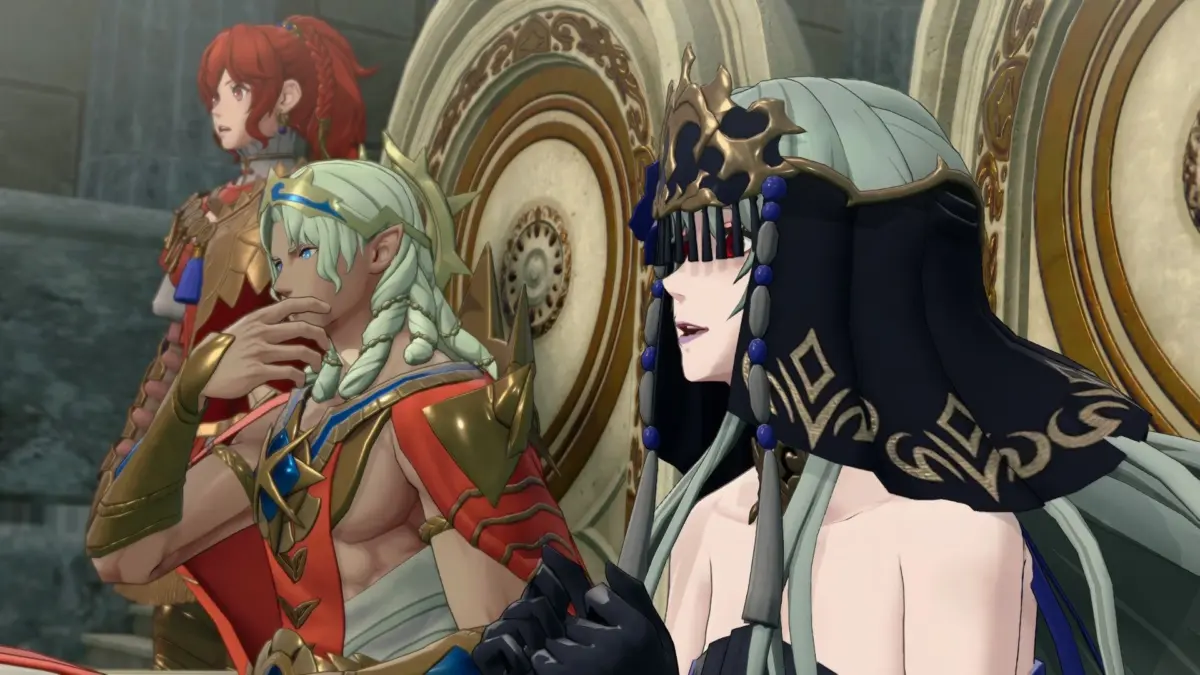
When gamers think of Nintendo’s storied development history, sharp, adroit political commentary is rarely the first thing that comes to mind. It is not an avenue the company frequently, or indeed ever, engages in as a core pillar of its design philosophy. Even Monolith Soft’s famously grand and sweeping Xenoblade series tends to lean much more heavily toward abstract philosophy and existential metaphysics than tangible political critique. Up to this point, developer Intelligent Systems has generally limited the socio-political messaging across its long-running Fire Emblem franchise to broad strokes and foundational cautionary tales—warnings such as "do not get in bed with dragons," both literally and metaphorically, or the timeless advisory that "when the king starts laughing maniacally, stop giving him power."
That final maxim is an eternal truth of governance, but Fire Emblem: Fortune’s Weave, the latest entry in the tactical role-playing series released on September 17 for the Switch 2, takes that warning with deadly seriousness. Beneath its familiar tactical combat and sprawling character supports, the entire game functions as a pointed, unyielding commentary on nationalism, imperialism, and the systemic dangers of failing to confront the horrific truths of the past, no matter how uncomfortable or disruptive those realities might be.
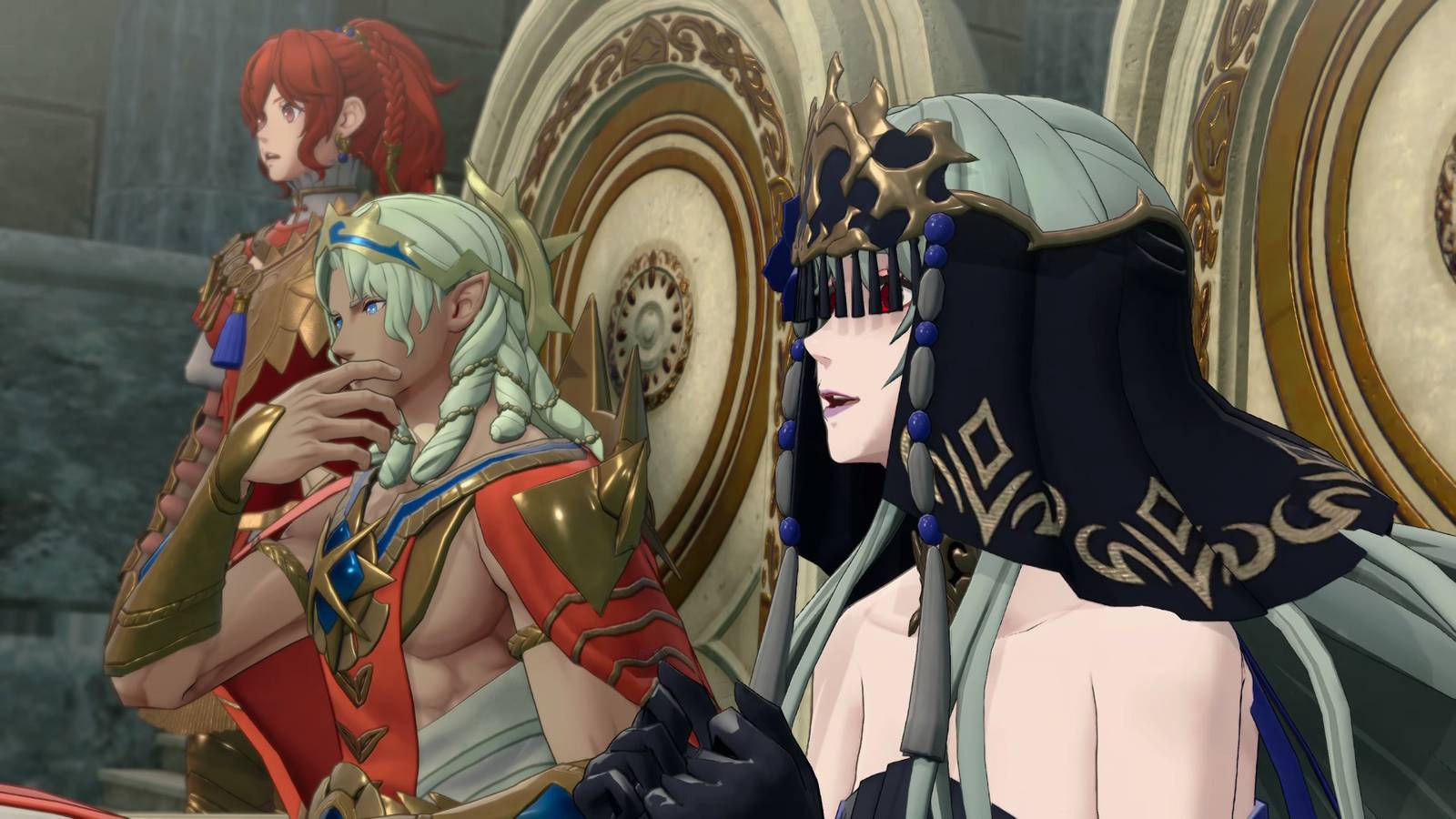
The story of Dagda, the central empire within Fortune’s Weave, mirrors the historical trajectory of expansionist empires throughout human history. Centuries of relentless warfare and calculated conquest steadily expanded its borders, giving rise to a fervent, state-mandated belief in the inherent divinity of that territorial expansion. When a nation’s absolute ruler is revered as a living god and the direct offspring of the world’s ultimate progenitor deity, the common populace can be remarkably easily persuaded of their moral superiority. Dagda justifies his latest brutal military campaign in Part 2 of the game by reminding his surviving court that Sothis, his mother and the creator god, originally tasked him with bringing the entire continent under his singular control.
There are distinct echoes of the ancient Chinese Mandate of Heaven within his conviction—the historical belief that emperors ruled through divine favor and risked forfeiting that legitimacy if they misbehaved. However, after spending the entirety of Part 1 learning about the empire’s supposedly glorious history via the in-game Heroic Games, it is difficult for players not to be reminded of Manifest Destiny, the 19th-century doctrine espoused by American politicians to justify continental westward expansion. Under that doctrine, God allegedly ordained the future of the nation, marking anyone who disagreed or stood in the way as legitimate targets for displacement or eradication.
As the narrative unfolds, players discover that this exact fate befell the various independent tribes and smaller nations scattered across the continent. The empire’s recorded history is essentially a centuries-long ledger of subjugating smaller sovereign entities and systematically erasing their cultural identities, with the sole historical exception of its initial war against Brigid, which Dagda decisively lost. The standard imperial playbook involved installing a loyal relative as a regional puppet ruler or local deity in conquered territories. Over time, generations of assimilated citizens would come to think of themselves as proudly Dagdan, utterly devoted to an emperor they revered and a pantheon of gods they trusted to have their best interests at heart.

As the narrative progresses through Fortune’s Weave, players learn that Dagda viewed the indigenous People of the White Egg either as expendable resources or as a persistent inconvenience, ultimately treating them as both. Despite posing no military threat to the empire, Dagda orchestrated the execution of 100,000 of them, ruthlessly hunted down their surviving descendants, and forcefully confined the remainder to a barren, desolate corner of the continent. The historical parallels to how various federal and state governments treated Indigenous populations are striking, though echoes can be found across global history—from the treatment of the Ainu by imperial Japan, to the historical dynamics between imperial powers and indigenous groups worldwide.
Yet, much like real-world instances of state-sponsored oppression and genocide, the modern citizens of Dagda remember these historical chapters only as paeans to their empire’s glorious past—whitewashed atrocities neatly repackaged as grand entertainment and cultural heritage. The People of the White Egg were reduced to the stuff of dark fairytales, though the underlying prejudice remained tangible enough that any citizen caught dressing entirely in white ran a very real risk of arrest and interrogation. The official state-sanctioned version of events fostered a deep, unifying sense of national pride among the populace. During Leda’s route, when the character Anatolia joins as a guest, Sha Lan expresses profound surprise and sorrow upon learning the true history of her people, realizing that the general public remains completely ignorant of the dark reality. Her sadness is entirely justified; that systemic ignorance and blind faith ultimately laid the groundwork for the empire’s internal rot and eventual undoing.
Following his initial genocide against the People of the White Egg, Dagda turned his tyrannical focus toward the children of Damascar, who were descendants of the White Egg survivors, intending to slaughter them as well. Yu Phas, daughter of Balor and wife of Dagda’s son Solel, courageously intervened, rescuing as many innocent people as she possibly could. In retribution for her defiance, Dagda had her brutally murdered.

The divine nature of gods in this universe inherently insulates them from the realities of mortal existence. The concerns of ordinary people, whose lives span a mere eighty years, barely register in the consciousness of immortal beings who measure time in millennia. While Dagda’s wife Jurah and several of his children later expressed private horror at his actions during the Damascar incident, no one within the divine family took decisive action until Dagda’s cruelty directly threatened their own status and comfort. Solel finally took up his axe and struck his father down following the murder of Yu Phas, an act of patricide that triggered the deep "slumber" Dagda entered into 500 years before the events of Fortune’s Weave begin.
It is difficult for contemporary players not to draw parallels to real-world dynamics between ultra-wealthy elites and the broader population. From their insulated positions of immense privilege, macroeconomic downturns and systemic crises often appear negligible, while technological disruptions are championed for the immense wealth they generate for shareholders. However, the moment their own personal comfort, safety, and social standing are compromised, decisive intervention suddenly becomes imperative.
Despite his initial rebellion, Solel perpetuates his father’s foundational lies after ascending to the role of Divine Sovereign. He embodies the archetype of the entrenched politician desperate to maintain the political status quo at any human cost. He permits the public denigration of his deceased wife, Yu Phas, allowing her to be falsely branded as an unholy goddess of death. Defying his father’s original absolute decree, he does grant the Children of Damascar the land that eventually becomes Saramis, but this is executed as a calculated, shrewd political maneuver rather than an act of genuine benevolence; the displaced population conveniently serves as a heavily fortified buffer zone between Dagda and its hostile southern neighbors. Furthermore, Solel allows the Order of Mithras—a shadowy, manipulative cult founded by his father that ultimately facilitates Dagda’s eventual madness—to operate unchecked throughout the realm. He also unquestioningly accepts corrupt testimony that justifies Arago’s brutal, politically advantageous massacre in Cydonia. From Solel’s perspective, questioning the narrative carries no personal benefit, and investigating further would only disrupt the delicate political balance he so desperately wishes to preserve.

This systemic apathy paves the way for the establishment of the Heroic Games. No one within the ruling class, not even the immortal gods, pauses to consider the inherent cruelty and exploitation underpinning the tournament. It operates essentially as a divine-sanctioned blood sport, forcing desperate individuals to fight for the amusement of the elite under the hollow promise of a reward that the ruling class could easily grant at any time without contest. For instance, Solel promises Leda that he will personally reinvestigate the Cydonian Massacre that devastated her hometown only if she manages to emerge victorious in the games—as though it had never occurred to him to care about the atrocity otherwise. Temple authorities instruct Dagda’s citizenry that these games serve to honor the empire’s glorious heritage, claiming that martial prowess and theatrical recreations of national history within the arena will bring collective honor and finally awaken Dagda from his centuries-long slumber. The public readily believes the narrative because the romanticized version of Dagda’s past paints the empire as an infallible beacon of prosperity and virtue.
Despite possessing full knowledge of the horrific harm his father caused and the profound danger of waking him, Solel ultimately does nothing meaningful to halt the charade. He and the rest of the ruling family gamble by offering a genocidal tyrant and ruthless despot a second chance at absolute power. Whether they naively assumed a five-century slumber would mellow a tyrannical ruler or simply convinced themselves of the very lies they had propagated for centuries, their good intentions prove disastrously misguided. The moment Dagda reclaims the throne, he immediately plunges the continent into a brutal new war against Saramis, executes Solel, turns on his own children, and eventually orders the total slaughter of the population of Dagsion. The narrative delivers a stark, unyielding confirmation: the tyrannical ruler was just as monstrous upon his return as he had been in the past.
While the exact timeline of development for Fortune’s Weave remains internal to Intelligent Systems, experiencing its narrative themes in 2026 invites unavoidable real-world comparisons. The central political arc—wherein a leader whose historical legacy is defined by failure and atrocity manages to reassume absolute power and enact even more destructive policies—resonates powerfully with contemporary global politics. The narrative highlights how populist figures utilize warped historical revisionism, fabricated nostalgia for a golden age that never truly existed, and the cultivation of fear toward marginalized outsiders to convince a populace that their interests are being served.

These thematic parallels extend far beyond a single political figure or nation. Modern political landscapes across the globe continue to grapple with rising right-wing nationalism, shifting electoral dynamics, and a growing reluctance to confront uncomfortable historical truths. Across all of these real-world contexts, a recurring theme remains the collective sense of shock—surprise that history is actively repeating itself, bewilderment that populations appear to ignore obvious warning signs, and dismay that those in positions of institutional power ultimately did nothing to prevent catastrophe.
These thematic undertones help explain the prevalence of intricate fan theories circulating across social media regarding the identity of the protagonist Eshmel, particularly speculation suggesting that Eshmel may be the reincarnation of Solel. These theories are fueled not merely by superficial design similarities, such as Eshmel’s Trident class combat style or the visual resemblance of his spear to the Divine Sovereign’s weapon, but rather by narrative beats established early in the experience. During the prologue character-creation sequence, the character Fortuna explicitly remarks on the concepts of cosmic karma and the unique opportunity for the soul inhabiting Eshmel to actively seek redemption. If Eshmel is indeed the reincarnated soul of Solel, it is a redemption arc he desperately requires to answer for a legacy built on complicity, tyranny, and the tragic repetition of history.