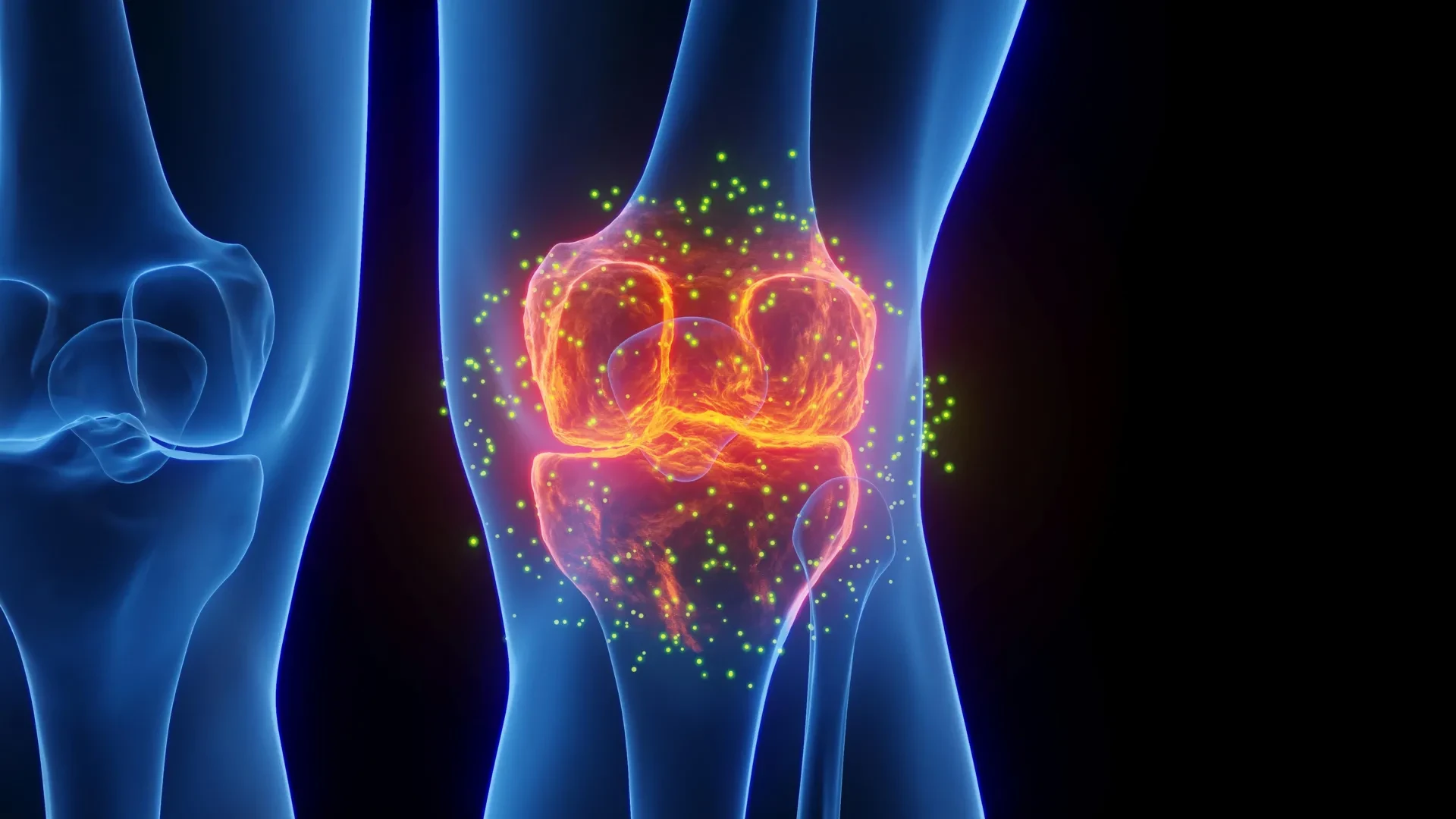
For the millions of people living with the persistent, daily grind of osteoarthritis, the condition is often viewed as an inevitable consequence of aging—a simple case of "wear and tear." This perspective, while common, significantly underestimates the complex biological processes that drive the disease. For these patients, pain and stiffness are not merely symptoms; they are indicators of a progressive, structural breakdown within the joint. Current standard-of-care treatments, ranging from over-the-counter anti-inflammatories to localized steroid injections, provide temporary relief but fail to address the underlying degradation of cartilage. Now, groundbreaking research from Yale University offers a potential paradigm shift in how we approach this chronic condition.
In a study published in the journal Bioactive Materials, a team of researchers led by Chuan-Ju Liu, PhD, the Charles W. Ohse Professor of Orthopaedics & Rehabilitation at Yale School of Medicine, has identified a promising dual-purpose therapy. By repurposing lacosamide—a medication currently approved for the treatment of epilepsy—and pairing it with an advanced, temperature-responsive hydrogel, the researchers have demonstrated the ability to not only suppress pain but also actively reverse cartilage damage in preclinical models. This dual-action strategy could mark the first time a therapeutic intervention successfully addresses both the symptomatic and structural aspects of osteoarthritis.
Understanding the Biology of Joint Breakdown
To grasp the significance of this discovery, one must look closer at the inner workings of a healthy joint. Within the synovial environment, specialized cells known as chondrocytes maintain the structural integrity of cartilage through a delicate, continuous cycle of remodeling. These cells balance the synthesis of new tissue with the removal of old or damaged material. In an osteoarthritic joint, this equilibrium is catastrophically disrupted. Cartilage begins to erode at a rate that far outpaces the body’s ability to regenerate it, leading to the thinning of the protective cushion between bones.
As the condition advances, the protective cartilage eventually wears away entirely, causing bones to rub against one another. This leads to the hallmark pain, inflammation, and loss of mobility associated with the disease. In advanced stages, patients are often left with few options other than invasive joint reconstruction, such as a total knee replacement.
"There is a major unmet need in osteoarthritis," says Liu. "We need therapies that don’t just mask pain but actually change how the disease progresses." Currently, no medication approved by the U.S. Food and Drug Administration (FDA) has the dual capability to both silence the debilitating pain of osteoarthritis and prevent the structural collapse of joint tissue. The research led by Liu suggests that a single, sophisticated therapeutic strategy might soon be capable of achieving both.
The Role of the Nav1.7 Protein
The core of the Yale team’s discovery lies in a protein known as Nav1.7. Historically, this protein has been studied primarily for its role as a sodium channel in nerve cells, where it acts as a microscopic gatekeeper, facilitating the electrical signals that transmit pain sensations to the brain. Because of this, Nav1.7 has long been a target for pain management researchers.
However, Liu and his team discovered that Nav1.7 is not limited to the nervous system. Their research revealed that the protein is also highly active within chondrocytes—the very cells responsible for maintaining joint health. In a healthy, stable joint, Nav1.7 activity remains relatively low. In the presence of osteoarthritis, however, its expression spikes significantly.
The researchers found that this hyper-activity serves a double-edged sword: it amplifies pain signaling while simultaneously shifting the behavior of chondrocytes toward the destruction of cartilage. By identifying this protein as a "dual-acting target," the Yale team realized that blocking it could potentially achieve two distinct goals: quieting the nerves that transmit pain and signaling the cartilage cells to halt their destructive behavior and begin the process of repair.
Repurposing Lacosamide for Joint Health
Rather than embarking on the lengthy and expensive process of developing an entirely new drug molecule, the team evaluated existing medications known to inhibit sodium channels. Among these, lacosamide stood out. The drug demonstrated potent biological activity even at low concentrations and presented a more favorable safety profile compared to older, traditional sodium channel blockers.
Interestingly, the team found that the therapeutic effect of lacosamide on cartilage is highly dose-dependent. More is not necessarily better. Through rigorous testing, the researchers identified an optimal, low-concentration range where the drug encourages cells to produce essential proteins for cartilage building while simultaneously suppressing the pathways that lead to tissue degradation.
"This tells us the system is finely tuned," Liu notes. "There is an optimal range where the drug helps restore balance without overcorrecting. What stood out was not just its effectiveness, but how little of a dose was needed."
Furthermore, the study revealed that lacosamide modulates cellular communication. The treatment stimulates the release of two vital signaling proteins: HSP70 and midkine. HSP70 plays a critical role in helping cells respond to stress and facilitating tissue repair, while midkine acts as a regulator of inflammation, shielding the joint from further degeneration. Together, these proteins create an environment conducive to cartilage preservation and growth, extending the drug’s therapeutic influence beyond individual cells to the entire joint tissue.
Innovation in Delivery: The Smart Hydrogel
While oral administration of lacosamide showed efficacy in preclinical trials, it also presented the traditional challenges of systemic drug delivery—namely, the drug would circulate throughout the entire body, potentially causing unwanted side effects. To maximize efficacy and minimize systemic impact, the researchers opted for an intra-articular injection, delivering the medication directly into the site of the injury.
However, the team encountered a significant anatomical hurdle. "The knee joint, which is also the most common location for osteoarthritis, naturally acts like a leaky bucket," Liu explains. "The body’s drainage system can clear out liquids injected into the knee within hours."
To overcome this, the researchers engineered a specialized, temperature-responsive hydrogel derived from Collagen II. At the cool temperature of a syringe, the substance remains a liquid, allowing for easy injection. Once it reaches body temperature inside the joint, the material transitions into a firm, jelly-like state. This "smart" gel acts as a localized reservoir, holding the lacosamide in place and facilitating a slow, sustained release over the course of several weeks.
In preclinical studies, this delivery system proved remarkably effective. A single injection of the lacosamide-loaded hydrogel every four weeks outperformed daily oral doses, not only in managing pain but in preventing structural cartilage loss.
Toward Clinical Application
The fact that lacosamide is already an FDA-approved medication for epilepsy provides a massive advantage for the researchers, potentially accelerating the timeline for moving into human clinical trials. Because the drug’s safety profile and behavior in the human body are already well-documented, the regulatory path forward may be shorter than that of a novel drug candidate. Furthermore, lacosamide has been studied in patients with nerve-related pain conditions, providing additional confidence that the biological mechanisms observed in the lab will translate into meaningful clinical relief for osteoarthritis patients.
This project represents a broader, emerging trend in medical science: the fusion of traditional pharmacology with cutting-edge biomaterials. By controlling the spatial and temporal delivery of a drug, scientists can move closer to the ultimate goal of regenerative medicine.
"We are not just developing a treatment," Liu concludes. "We are developing a system that allows the medicine to work more effectively where it matters most. Our goal is to move beyond symptom control and towards true disease modification. This effort brings us closer to that reality." If successful in human trials, this approach could fundamentally transform the treatment landscape, offering a way to save joints, reduce the necessity for major surgeries, and finally provide a lasting solution for those suffering from the slow decay of osteoarthritis.