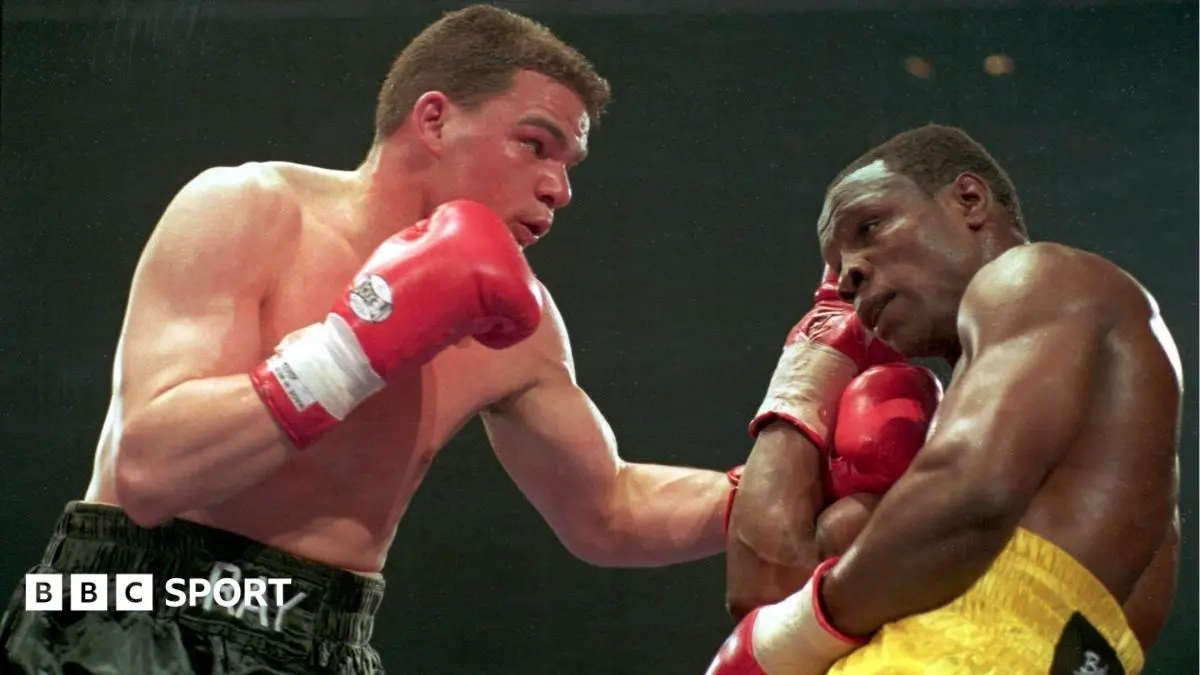
Ray Close, the Belfast-born pugilist widely regarded as one of the most gifted fighters to emerge from Northern Ireland, has passed away at the age of 57. A man whose career was defined by technical brilliance, immense heart, and a storied, high-stakes rivalry with British boxing royalty, Close’s death has prompted an outpouring of grief from the sporting community, where he is remembered not only for his exploits in the ring but for his humility and commitment to the next generation.
Born in 1969, Close’s journey into the squared circle began at the age of 10 at the Ledley Hall Youth and Boxing Club in East Belfast. It was here, amidst the grit and discipline of a local club, that the foundations of a formidable career were laid. Following a decorated amateur tenure that showcased his natural aptitude for the sweet science, Close made the transition to the professional ranks in 1988. From the outset, it was clear that he possessed the poise and tactical intelligence to make a significant impact on the sport.
Close’s professional ascent was marked by steady, calculated progress, culminating in a career-defining moment on St Patrick’s Day in 1993. On that day, he secured the EBU Super Middleweight title, a victory that cemented his status as a premier force in the division. However, it was his subsequent emergence as the primary foil to Chris Eubank that would etch his name into the annals of British boxing history.
At the time, Chris Eubank was the undisputed king of the super-middleweight division. Having successfully defended his WBO title against all comers and boasting an unblemished record of 35 professional victories, Eubank appeared invincible. When the two men met in Glasgow in May 1993, the narrative surrounding the fight centered on Eubank’s dominance. Yet, Close delivered a performance that stunned the boxing world. He fought with a tenacity and technical precision that neutralized much of Eubank’s flair, pushing the champion to the absolute brink. By the time the final bell rang, the judges could not be separated, resulting in a draw—a result that effectively tarnished Eubank’s perfect record and elevated Close to the global stage.
The intensity of their first meeting necessitated a sequel, and the boxing world turned its eyes to Belfast for the rematch. In 1994, the King’s Hall provided the backdrop for a raucous, high-pressure encounter. The atmosphere was electric, with a partisan home crowd backing Close as he sought to finish what he had started in Glasgow. Once again, Close demonstrated immense resolve, putting in a masterful performance that showcased his versatility. However, on this occasion, the scorecards favored Eubank in a split decision, leaving many fans and pundits to debate the nuances of the contest for years to come.
Despite the loss, the rivalry had captured the public imagination, and a third bout was quickly discussed. It was expected to be the final chapter in a compelling trilogy. However, the path to a rubber match was abruptly blocked by medical intervention. During a routine examination, the British Boxing Board of Control denied Close a license to fight after an MRI scan revealed two lesions on his brain. The news sent shockwaves through the sport, forcing an premature end to his aspirations of claiming the world title on home soil.
Refusing to accept that his career had reached an involuntary conclusion, Close sought avenues to return to the ring. After obtaining a license in the United States, he moved to Illinois to continue his journey. His return was nothing short of impressive; he secured five consecutive victories, proving that his technical ability remained sharp. His final professional outing in June 1997 ended in a emphatic knockout victory over Larry Willis. When he finally hung up his gloves for good, his record stood at an impressive 25 victories, three defeats, and the singular, historic draw against Eubank.
Beyond the cold statistics of his win-loss record, it is the personal legacy of Ray Close that is currently being mourned. The Ledley Hall Youth and Boxing Club, the site of his earliest training sessions, served as the focal point for the tributes that followed the news of his passing. The club described Close as a "true gentleman, humble, kind and always willing to give something back."
For the staff and young athletes at Ledley Hall, Close was more than a former champion; he was a symbol of what was possible. "To our young people, Ray was proof of what could be achieved," the club shared in a statement posted to social media. "He was someone who had come through the same doors, trained in the same club and gone on to accomplish incredible things."
The club reflected on the cyclical nature of his influence, noting that his journey from a young boy in East Belfast to the heights of international boxing served as a perpetual source of inspiration. "His story has inspired generations of young people at Ledley Hall and will continue to do so," the statement continued. "There are some people who become part of the history and heart of a place, and Ray will always be part of ours. We will remember him with enormous pride, affection and gratitude."
The sentiment was echoed by the Bangor Abbey Boxing Academy, where Close had spent considerable time training throughout his career. The academy expressed its profound shock and sadness, highlighting the deep personal connection Close maintained with the boxing fraternity in Ireland and beyond. "Ray and his whole family have been a huge part of our club over the years, right from the very start and we are truly devastated," the academy stated, adding that his death represents a "huge loss to the boxing fraternity of Ireland and across the world."
Close’s life story remains a compelling narrative of resilience. From the local gym in Belfast to the bright lights of major arenas in Glasgow and beyond, he navigated the highs and lows of professional boxing with a level of character that often eclipsed his athletic achievements. While the medical hurdles he faced in the mid-1990s denied him the world title that many felt his skills warranted, they did not diminish his standing in the eyes of his peers or his community.
He leaves behind a legacy defined by that night in 1993, when he stood toe-to-toe with one of the most formidable champions of the era and refused to yield. Yet, for those who knew him best, he will be remembered not for the punches he threw or the titles he held, but for the quiet, humble man who walked through the doors of a local boxing club and never forgot the path he took to reach the top. As the boxing world pays its final respects, the memory of Ray Close continues to resonate as a testament to the enduring impact a single individual can have on their community, proving that greatness is measured not just in championship belts, but in the lives touched along the way.