After experiencing a relatively sluggish start to the year, electric vehicle giant BYD is regaining significant momentum, powered by a robust surge in passenger vehicle deliveries as the fourth quarter approaches. The company’s latest sales report reveals that September brought substantial gains, driven predominantly by strong demand for fully electric vehicles that easily outpaced previous performances and helped narrow the deficit for the broader year-to-date figures.
According to the official figures released for September 2026, BYD achieved total passenger vehicle deliveries of 456,713 units. This performance represents a healthy 5.4% increase compared to the 433,000-range figures of August 2026, and a much more pronounced 16.2% jump when compared to the 393,060 passenger vehicles delivered in September 2025. The numbers clearly indicate that the automaker is putting its early-season challenges behind it, capitalizing on shifting market dynamics and steady consumer interest in new energy alternatives.
A closer examination of the data reveals that the growth engine behind BYD’s September success is heavily concentrated in its fully electric vehicle lineup. While plug-in hybrid electric vehicles (PHEVs) have historically shared the spotlight evenly with battery-electric vehicles (BEVs) at BYD, the latest monthly breakdown highlights a diverging trajectory between the two powertrains.

In September 2026, BYD’s fully electric vehicle sales experienced a massive acceleration. BEV sales climbed 6.6% on a month-over-month basis, moving up from the previous month, but the year-over-year figures are where the true strength lies. Fully electric vehicle sales surged by an impressive 33.2% compared to September 2025, jumping from 205,050 units delivered during that month to an impressive 273,143 units in September 2026. This stark increase demonstrates that consumer preference within BYD’s showroom ecosystem is leaning increasingly toward pure electric mobility over hybrid alternatives.
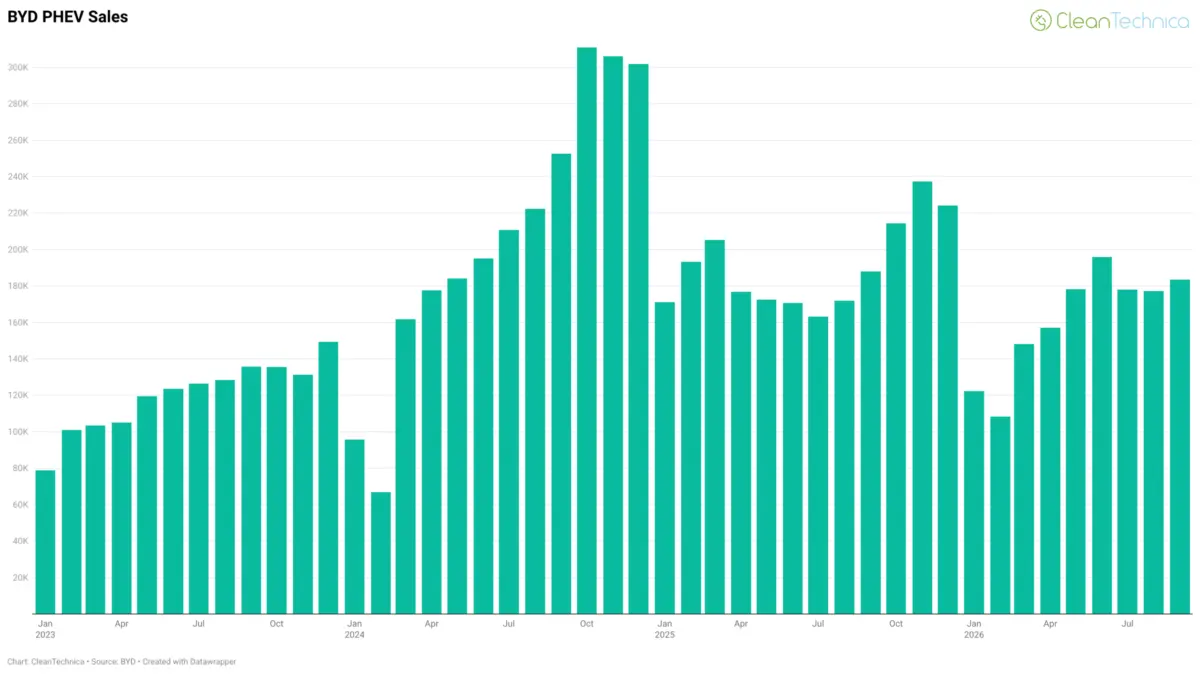
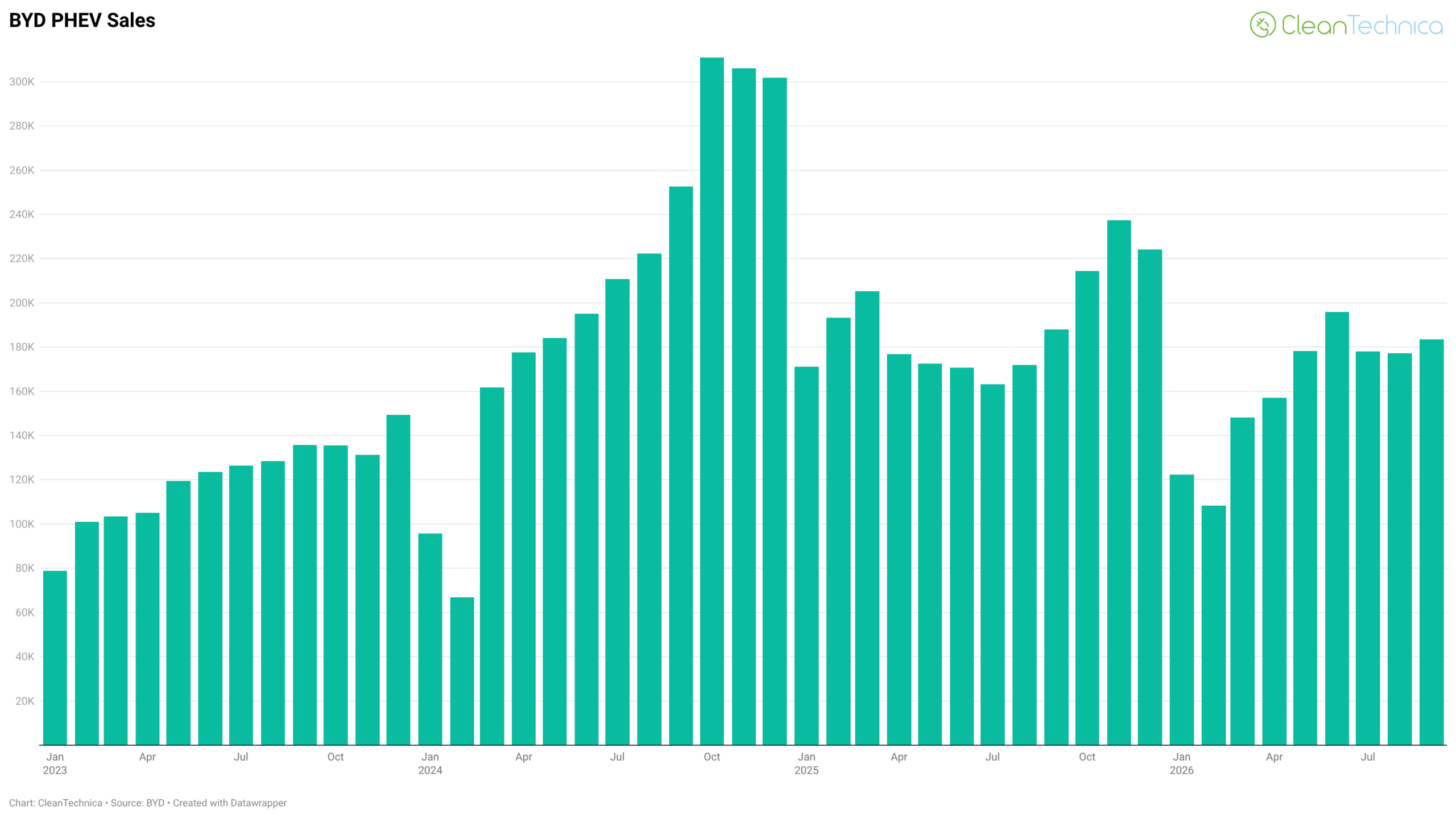
In contrast, the company’s plug-in hybrid electric vehicle sector told a different story. Because BYD’s passenger vehicle portfolio is exclusively divided between BEVs and PHEVs, the runaway success of fully electric models stands in sharp contrast to a cooling market for hybrids. Although PHEV sales managed a modest month-over-month recovery of 3.6% compared to August 2026, they actually declined on an annual basis.
PHEV deliveries dropped by 2.4% year over year, slipping from 188,010 units in September 2025 down to 183,570 units in September 2026. This contraction in the hybrid segment points to a structural shift in buyer behavior, as more consumers opt to bypass internal combustion engine components altogether and transition directly into battery-powered electric vehicles.

When aggregating these totals into the broader category of plug-in passenger vehicles, BYD’s overarching footprint continues to expand significantly. The company’s combined plug-in passenger vehicle sales rose from 393,060 units in September 2025 to 456,713 units in September 2026. This translates to more than 63,000 additional clean-energy vehicles hitting the roads in a single month, reinforcing the brand’s dominant market position despite a competitive and rapidly evolving global automotive landscape.
Looking at the broader picture across the first three quarters of the year, the recent September surge has played a vital role in helping BYD recover from its slow beginning. While cumulative passenger vehicle sales for the first nine months of 2026 remain slightly below the record-setting pace of the previous year, the gap is closing rapidly.
Across the first three quarters of 2025, BYD delivered a cumulative 3,218,862 passenger vehicles. For the same nine-month period in 2026, total passenger vehicle deliveries stood at 3,078,544 units. This leaves the year-to-date passenger vehicle sales down by a modest 4.4%—a notable improvement compared to the steeper deficits the company faced earlier in the year.
Furthermore, when evaluating the powertrain breakdown across the year-to-date timeline, fully electric vehicles have already crossed into positive territory. BEV sales across the first three quarters of 2026 rose by 1.5%, reaching 1,629,957 units compared to 1,605,903 units during the corresponding period in 2025. This year-to-date growth in the pure electric segment underscores how critical the BEV portfolio has been in stabilizing the company’s annual output.
Conversely, the year-to-date numbers for plug-in hybrids reflect the downward trend observed in the monthly data. PHEV sales for the first three quarters of 2026 fell by 10.2%, dropping from 1,612,959 units in 2025 down to 1,448,587 units in 2026. This double-digit contraction in hybrid volume explains why overall cumulative passenger vehicle sales remain slightly negative, even as the company’s pure electric offerings continue to break new ground.
With the latest September results demonstrating robust momentum for fully electric vehicles and a solid recovery in total monthly output, BYD enters the final stretch of the year with renewed vigor. As consumer adoption trends favor pure electric mobility, the automaker’s ongoing ability to scale BEV production and deliveries will likely dictate its ultimate performance trajectory as the year draws to a close.