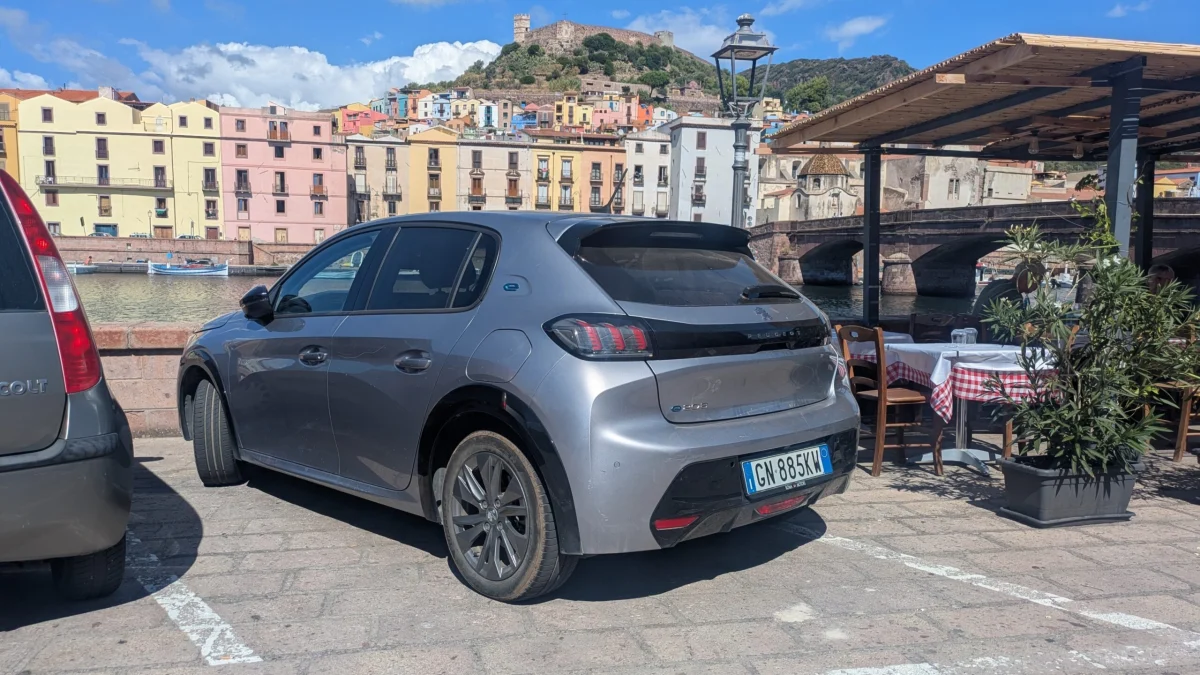
When traveling, there is perhaps no better way to understand the ground-level state of electric vehicle adoption than by renting one. On a recent vacation to Sardinia with his wife, automotive writer Larry Evans decided to sample the Peugeot E-208, continuing a personal tradition of testing new EVs while exploring different regions. Islands like Sardinia offer an ideal testing ground for battery-powered vehicles, and the contrast was immediately apparent compared to a trip earlier this year to Naples, with far more EVs visible on the island roads. For a vacation, the clean, quiet operation of an electric vehicle provides a remarkably relaxing experience, allowing passengers to better appreciate their surroundings without the drone of an internal combustion engine. Furthermore, with petrol prices in the region hovering well over two euros per liter—roughly equivalent to nine dollars a gallon—choosing an EV undoubtedly offered substantial financial savings over the course of the journey.
Picking up the vehicle at Olbia airport from local rental provider Drivalia allowed for a reasonable rental rate, though the car itself bore some typical rental fleet wear and tear. It was not pristinely clean upon delivery; notably, the interior of the windshield featured a film that appeared to be spray-on suntan lotion, creating glaring visibility issues when driving into low sunlight or facing the headlights of oncoming traffic. Fortunately, a few napkins and some routine effort quickly resolved the issue.
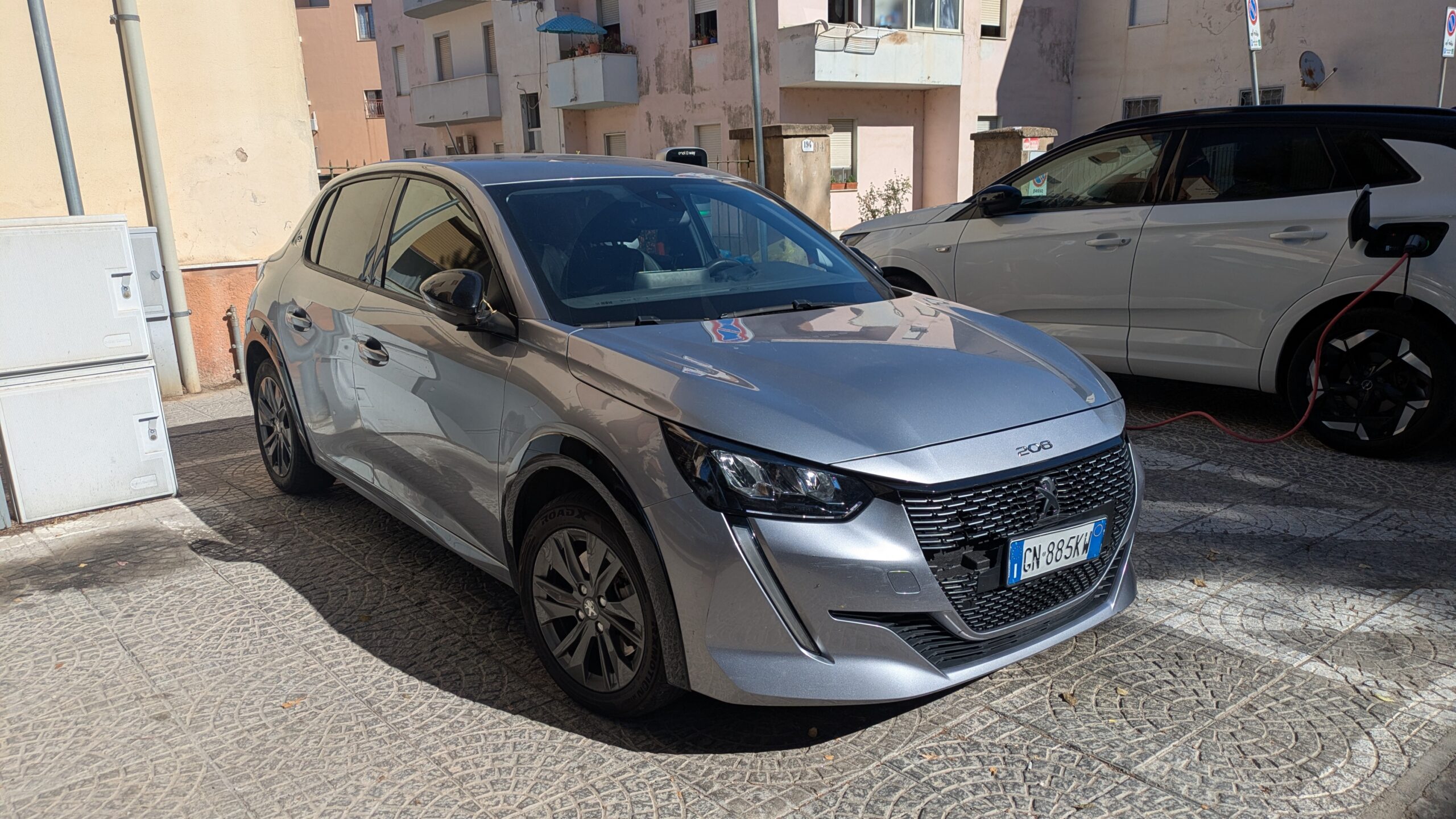
The Peugeot E-208 is available with powertrain options utilizing either a 100 kW or a 115 kW motor, with the smaller motor paired to a correspondingly smaller battery pack, though performance differences between the two remain minimal in daily driving. The specific entry-level model tested featured the smaller battery, carrying a WLTP range rating of 363 kilometers, while the larger battery variant extends that capability to 433 kilometers. In the Italian market, the E-208 starts at 34,480 euros, including value-added tax. This represents a significant price premium over the standard gasoline-powered 208, which commands a starting price of 18,100 euros with VAT. Positioned above the regular electric lineup is the performance-oriented E-208 GTi, starting at 43,650 euros and featuring a robust 207-kW motor capable of launching the hatchback from zero to 100 kilometers per hour in a brisk 5.5 seconds.
Measuring 4,055 millimeters in length, the E-208 sits neatly in size between current subcompact hatchbacks like the BYD Seagull and upcoming next-generation compact EV alternatives. Accessing the cabin revealed slightly narrow door openings that required a deliberate duck of the head, though headroom and seating comfort proved adequate once settled inside, supported by straightforward manual seat adjustments.
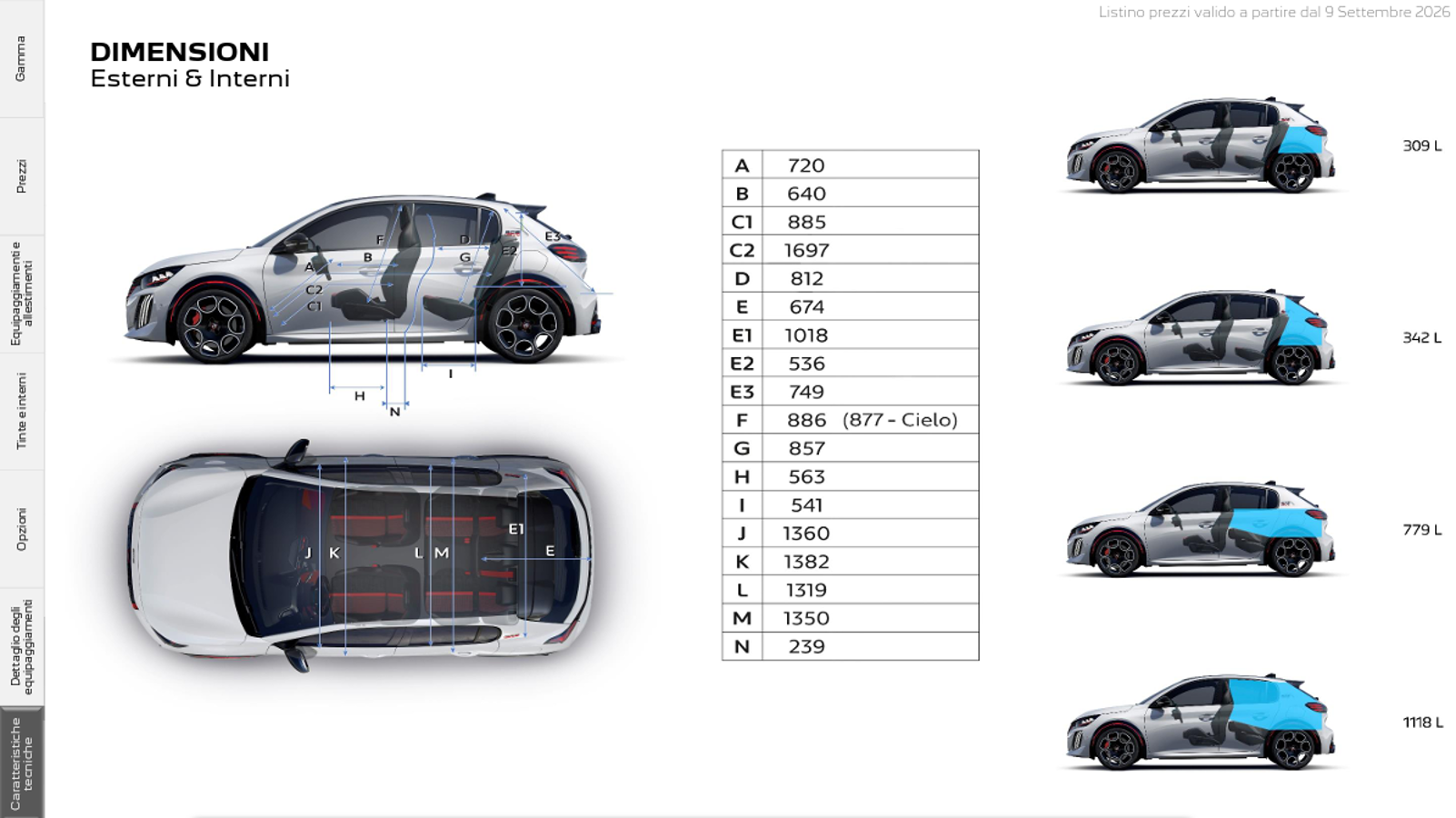
Cargo space inside the hatchback is inherently limited, though the trip’s luggage requirements were easily managed by utilizing the empty back seat. Interestingly, Peugeot’s official marketing materials provide multiple cargo measurements to accommodate different consumer perspectives. These figures include standard liquid measurements calculated from the floor to the top of the seatbacks, alongside the Tesla-centric liquid measurement standard extending all the way to the roof, which also factors in underfloor volume if applicable. Given that Tesla popularized a trend of varied manufacturer-created measurement standards that often render comparative figures confusing, Peugeot’s transparent approach in offering clear, alternative metrics makes apples-to-apples vehicle comparisons much simpler and more refreshing.
As an entry-level powertrain on a rental vehicle, the E-208 was never going to set any drag racing records, but its power output felt entirely adequate for standard driving conditions. The instantaneous torque characteristic of electric motors gave the hatchback a noticeably punchier feel at low speeds compared to a comparable internal combustion engine vehicle of similar output.
However, the vehicle’s architectural roots as an adapted internal combustion engine platform quickly became apparent. The E-208 lacks a front trunk, or frunk, as well as underfloor storage compartments in the rear where an exhaust muffler would traditionally reside. Furthermore, it lacks the specialized aerodynamic optimizations found on many purpose-built electric vehicles. As a result, energy efficiency suffered noticeably on high-speed highways compared to slower, winding backroads.
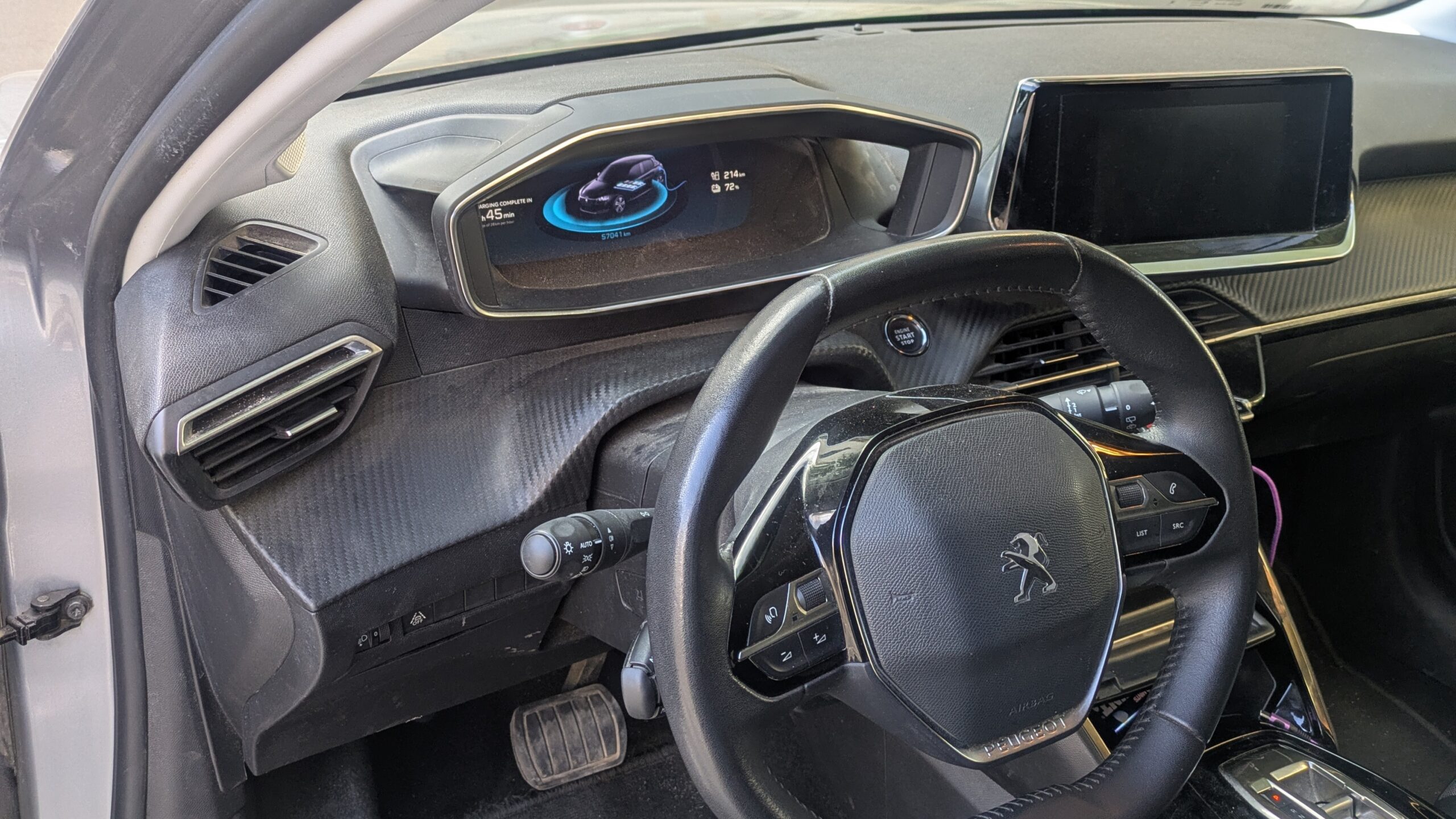
Range anxiety proved a non-issue as the vehicle’s real-world capability of around 300 kilometers per charge easily covered daily excursions. The rental counter had initially warned that public charging might present a challenge, but reality proved a mixed bag. In Alghero, where the couple stayed, a multi-stall Level 2 public charger was conveniently located just a couple of blocks from their lodging. The routine became simple: plugging the car in after daily adventures and returning to find adequate range restored following dinner. The entire charging experience in Alghero was smooth and hassle-free, eliminating any need to seek out Level 3 fast chargers—none of which were spotted during that portion of the trip anyway.

The situation changed dramatically upon reaching Olbia for the final night before a return flight. Having selected a hotel advertised with on-site charging, the travelers arrived to find the dedicated EV stall already occupied by an internal combustion engine SUV. Subsequent visits to three different public charging stations revealed them all to be completely out of service, while a fourth station was blocked entirely by another gas-powered vehicle. Eventually, a functioning charger was located a little over a mile away from the hotel. Although its touchscreen was broken, the unit successfully accepted an RFID card to initiate a charging session.
Experiences like this highlight that European public charging infrastructure still leaves substantial room for improvement. Anyone accustomed to the prolific, highly reliable public charging networks found in regions like China or Tesla’s exceptionally well-maintained Supercharger network would undoubtedly find public infrastructure in parts of Italy disappointing. On a broader infrastructural level, however, energy provider Enel has clearly invested heavily in renewable energy integration across the region. Driving through the northern side of Sardinia revealed extensive installations of solar panels and wind turbines, demonstrating that combining wind and solar power is a natural and effective choice for a sun-drenched island environment.
Examining the vehicle’s physical specifications, the E-208 carries a curb weight of 1,530 kilograms, or roughly 3,373 pounds. While this figure is certainly heavy for a traditional internal combustion engine car of this physical footprint, it remains comparatively lighter than many modern battery-electric alternatives. Still, it is significantly heavier than upcoming competitors like the larger BYD Seagull, which regulatory filings indicate will start at a remarkably light 1,180 kilograms. With a large portion of the E-208’s mass positioned low in the chassis, the car handles sharply and predictably, delivering a classic front-wheel-drive French hatchback driving dynamic that feels eager and responsive. It is easy to see how this lively platform serves as a capable foundation for a hot hatch variant like the GTi.

This combination of responsive handling, a compact physical footprint, and diminished highway efficiency provided ample incentive to bypass fast highways in favor of Sardinia’s winding backroads for the majority of the trip. Practicing smooth driving lines and late apexing at moderate speeds evoked the spirit of driving a dedicated momentum car, akin to a Mazda Miata, albeit at a reduced velocity and with a greater focus on preserving momentum to maximize efficiency. The driving experience was undeniably engaging without alarming the passenger seat occupant. Such dynamics point to a promising future market for lightweight, agile, low-power electric momentum cars, a category that many enthusiasts hope will see expanded options moving forward.
Inside the cabin, the heavy reliance on hard plastics reflected its origins as an economical 18,100-euro internal combustion vehicle. On the technology front, the infotainment system felt somewhat dated compared to newer market entrants. Efforts to connect a smartphone via Bluetooth failed entirely, forcing reliance on a handheld phone held by the passenger for navigation assistance.
When evaluated against the broader European automotive landscape, pricing emerges as a critical factor. While a BYD Seagull offers modern interior quality and advanced technology for under 20,000 euros in Europe, the E-208’s starting price of 34,480 euros places it directly in competition with highly capable alternatives like the XPENG L03, which starts at 34,990 euros in Italy. That larger competitor offers superior motor power, extended range, advanced onboard technology, and a vastly superior interior layout even when compared against the top-tier E-208 GT Exclusive trim priced at 42,430 euros. Spending at that higher tier brings buyers into range of models like the rear-wheel-drive Long Range Ultra L03, featuring 480 kilometers of range and advanced intelligent driving systems.
When viewed through the lens of the North American market, a hypothetical pre-VAT price point around 29,000 euros—roughly 32,660 US dollars—would position the Peugeot directly against established options like the Chevrolet Bolt, where the French hatchback might present a compelling aesthetic argument. However, as EV options continue to multiply rapidly across Europe, the E-208’s value proposition on paper becomes harder to justify strictly through economic metrics.
Numerical comparisons aside, the Peugeot E-208 retains an undeniable sense of character and driving enjoyment. Looking at offerings like the B05 from Stellantis partner Leapmotor reveals a technically superior and far more economical vehicle starting at 23,900 euros, yet Leapmotor’s designs can sometimes feel somewhat generic and lacking in distinctive flavor. Such models represent ideal candidates for aesthetic tuning and brand differentiation.
Merging the advanced EV engineering expertise and production efficiency of vehicles like the Leapmotor B05 with the distinctive styling, chassis tuning, and character of the Peugeot E-208 could yield a truly remarkable product, pairing Chinese electric vehicle technology with classic French design flair. Demand for such a vehicle would likely outpace production capabilities. Consequently, while the current Peugeot E-208 exhibits distinct limitations in pricing and efficiency, embracing deeper technological and manufacturing collaborations could ensure that future generations of the hatchback emerge as resounding commercial successes well beyond the rental car counter.