For decades, the traditional automotive upgrade path followed a predictable, century-old formula: if a driver wanted a more powerful, refined, and luxurious vehicle, the price of admission always involved a larger internal combustion engine. More cylinders, greater displacement, and higher horsepower invariably demanded a steeper purchase price alongside a significant penalty at the fuel pump. It was a compromise that generations of car buyers accepted as the immutable cost of mechanical sophistication. Today, however, that paradigm has been fundamentally upended.
While dedicated advocates of sustainable transportation have long championed fully electric vehicles as the ultimate destination, the automotive market continues to navigate a transitional landscape where many consumers remain hesitant to jump straight to pure battery power. This friction between immediate consumer readiness and long-term electrification goals has placed a renewed spotlight on the psychology of the car buyer. From the consumer’s perspective, the decision to upgrade no longer forces a compromise between environmental efficiency and driving dynamics. Instead, modern vehicle architecture has rewritten the rules of what it means to pay for luxury and performance.
I Want A Luxury Car At A Discount
Reflecting on how the automotive market operated nearly thirty years ago reveals just how rigid the traditional upgrade path once was. Back in 1998, the motivation to purchase a more expensive vehicle was rarely rooted in fuel economy; rather, it was driven by the desire for smoothness, effortless acceleration, and mechanical refinement. Growing up during the 1973 oil embargo had instilled a lifelong mindfulness regarding fuel consumption, yet when the time came to purchase a new vehicle following a career advancement, comfort and driving dynamics quickly took center stage.
At the time, test-driving entry-level luxury sedans like the Lexus GS300 and GS400—priced between $40,000 and $50,000—revealed a level of refinement that standard compact or midsize cars simply could not match. Yet, doubling the typical budget proved difficult to justify. Exploring more modest options, such as the top-tier four-cylinder models of the Toyota Camry and Honda Accord hovering around the $20,000 mark, offered sensible transportation. Both vehicles were competent, but the Honda Accord stood out for its slightly sportier character.
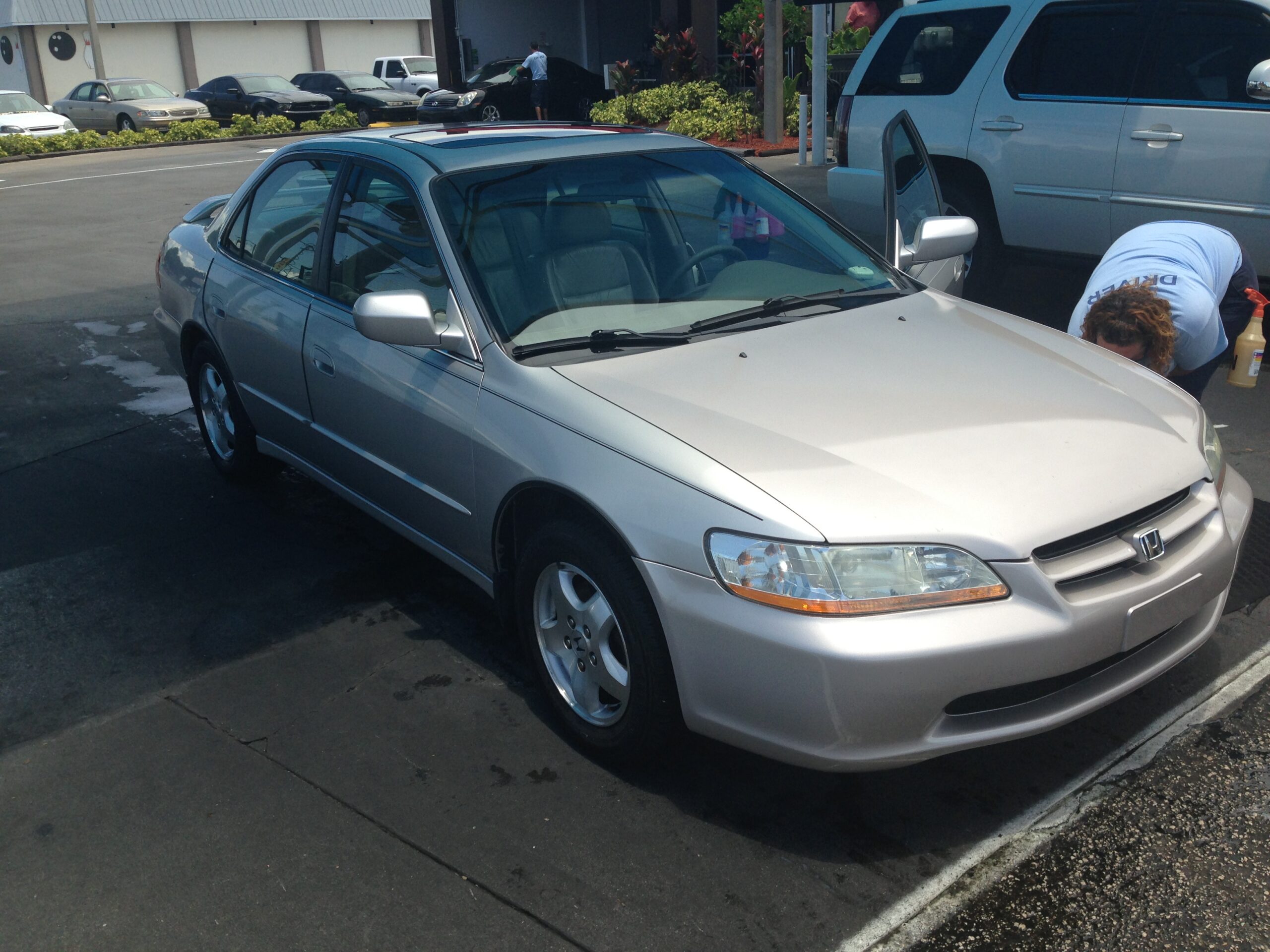
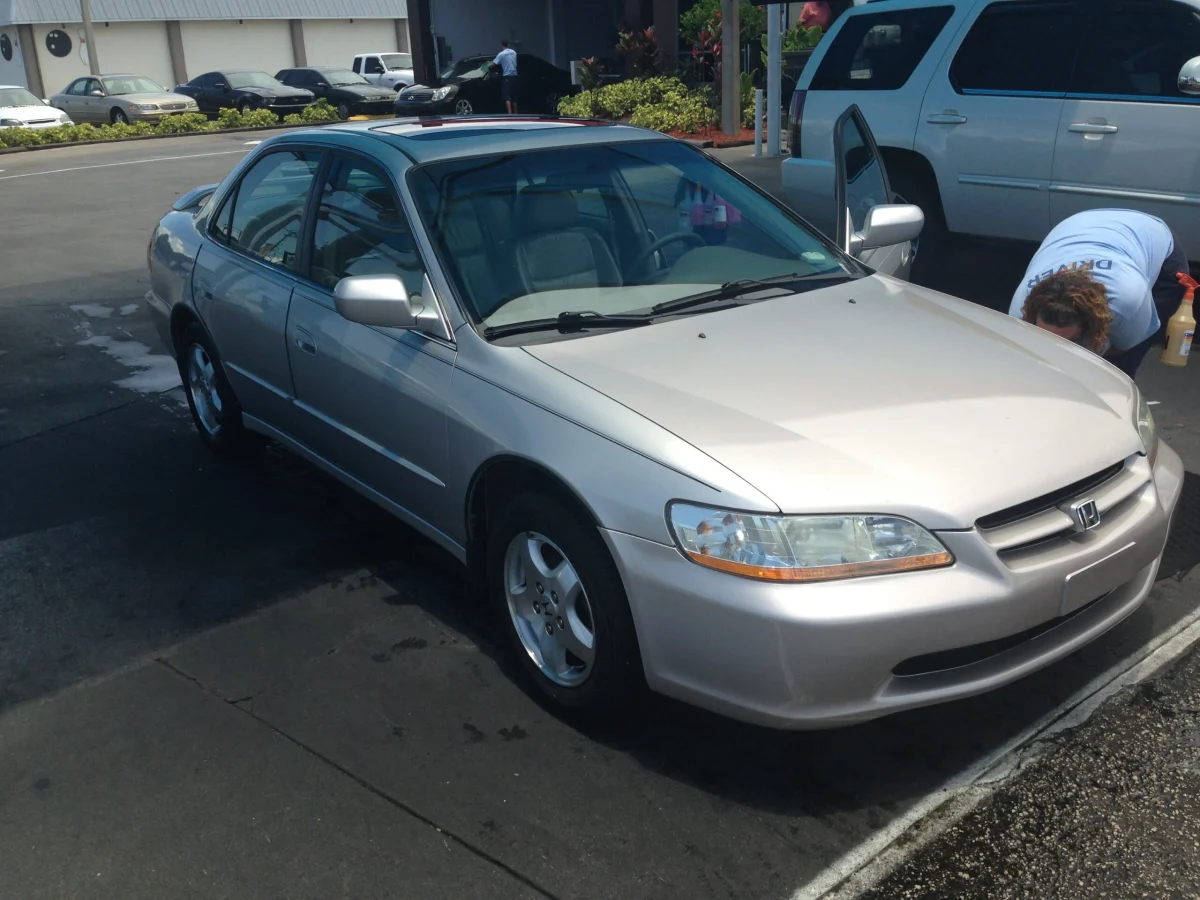
The pivotal moment arrived during a conversation with a dealership representative who suggested testing the V6 variant of the Accord. Skeptical of standard sales pitches, the test drive nonetheless proved transformative. For an incremental price increase of roughly $2,500 over the four-cylinder model, the V6 delivered a driving experience that closely mirrored the much more expensive Lexus models. It was remarkably smooth, powerful, and refined. The four-cylinder engine would have easily satisfied basic commuting needs, but it lacked the effortless composure of a luxury car. The V6 possessed it completely.
That experience illustrated the century-old upgrade path working exactly as intended. Buyers paid more money for more power and willingly accepted worse fuel economy as the price of admission. The underlying motivation was never about saving fuel; it was about attaining a sense of mechanical ease where the vehicle never felt like it was straining under pressure.
The 2027 Automotive Landscape: Everything Has Changed
Fast forward nearly thirty years, and the foundational rules governing automotive engineering and consumer choices have completely shifted. Industry analyses, such as discussions featured on automotive podcasts like Consumer Reports’ Talking Cars, highlight how modern powertrain technology has completely decoupled performance from high fuel consumption. A prime example of this shift is observed in vehicles like the 2027 Kia Telluride Hybrid.
The underlying thesis surrounding modern hybrid technology is striking in its simplicity. When a hybrid variant commands only a modest price premium over its non-hybrid counterpart while delivering a vastly superior driving experience—characterized by enhanced smoothness and immediate acceleration—alongside a dramatic increase in fuel economy, the traditional consumer value proposition changes overnight. It echoes the exact consumer sentiment from decades prior, when buyers willingly paid extra for refinement, except that today’s buyers no longer have to sacrifice efficiency to achieve it.
The empirical data supporting this shift is compelling. The 2027 Kia Telluride Hybrid pairs a turbocharged 2.5-liter four-cylinder engine with advanced electric motors to generate a robust 329 horsepower, outperforming the traditional gas-only version’s 274 horsepower. More impressively, the front-wheel-drive EX hybrid trim achieves an estimated 35 miles per gallon combined, a massive leap compared to the 22 mpg rating of the standard gas-powered EX model. This translates to an extra 13 miles per gallon while simultaneously delivering 55 more horsepower.

While the hybrid commands a higher starting price when compared to the absolute base gas model—largely because electrification packages tend to bypass the two lowest-tier trims entirely—comparing like-for-like mid-level trims narrows the price gap significantly to roughly $2,700.
Yet, looking strictly at fuel economy figures fails to capture the full scope of the modern driving experience. The true transformation becomes evident in everyday driving scenarios, such as highway passing maneuvers. In a traditional gas-powered vehicle, accelerating swiftly from 45 to 65 miles per hour requires the driver to depress the accelerator pedal, wait for the transmission to downshift, and wait further for the engine to spool up its RPMs. In contrast, electrified and hybrid powertrains deliver instantaneous torque. Power is simply there the moment it is requested, often cutting passing times in half and instilling a level of confidence that standard horsepower ratings alone fail to convey.
Acoustic refinement plays an equally critical role in reshaping the modern commute. Traditional internal combustion engines under heavy acceleration frequently produce an intrusive groan, an unmistakable auditory cue signaling that the mechanical components are straining to deliver power. Advanced hybrids and electric vehicles eliminate this strain, operating with near-silent composure. Power delivered without apparent effort recreates the exact standard of luxury and refinement that premium car buyers sought out decades ago. The straining four-cylinder engine noise is replaced by seamless, effortless momentum.
Ultimately, the modern hybrid powertrain is not merely serving as a substitute for a larger displacement engine; it is fundamentally replacing the century-old automotive upgrade path. The historical path relied entirely on increasing physical displacement to gain refinement, resulting in higher costs at both purchase and the fuel pump. The modern path relies on electrification to achieve the exact same psychological and mechanical goals—smoothness, power, and refinement—with the opposite outcome. Where buyers once paid extra money and accepted lower fuel efficiency, they now pay a modest premium to secure both significantly higher output and dramatically superior fuel economy.
While hybrids ultimately represent a transitional phase on the broader journey toward full electrification, they serve as a powerful catalyst for change within the broader consumer market. For the first time in a hundred years, acquiring a vehicle that feels genuinely refined no longer comes with a heavy penalty at the fuel pump.