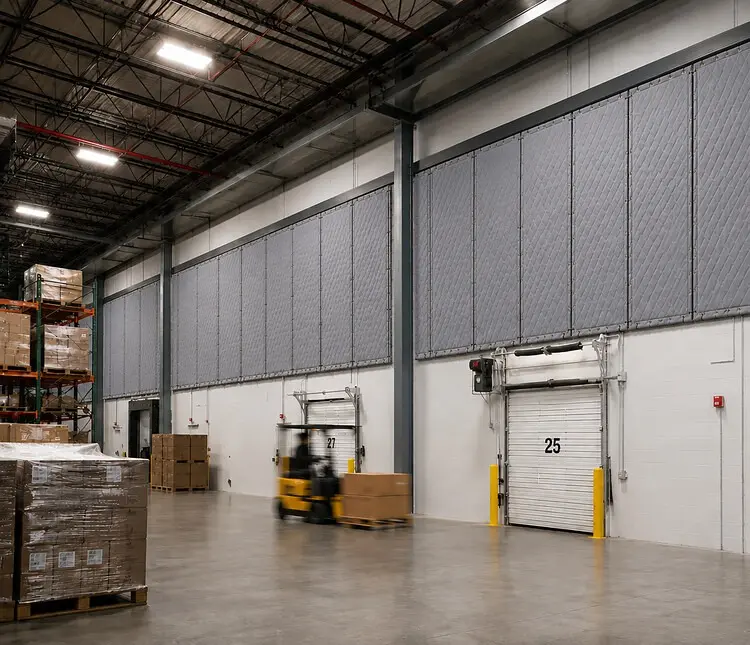
Acoustic design has traditionally been associated with permanent building elements, such as fixed walls, heavy roofs, dense ceilings, and specialized insulation systems, all of which work collectively to control how sound travels through a given environment. However, the realities of modern architecture and interior planning reveal that not all noise sources or spatial configurations are permanent. A construction site evolves constantly as heavy work progresses; machinery is routinely replaced or relocated from one zone to another; industrial facilities frequently incorporate new, louder equipment; and temporary work areas frequently emerge in spaces that were never originally designed to handle high noise levels. Because acoustic conditions are inherently dynamic rather than static, they demand flexible solutions capable of responding fluidly to ongoing spatial transformations. This raises a critical question for modern architecture and spatial planning: what happens when acoustic control becomes a flexible strategy rather than a rigid structural fixture?
Controlling sound within a built environment does not always mean eliminating it entirely. In many practical scenarios, the primary goal is to reduce sound transmission, contain unwanted noise within a specific zone, or minimize its disruptive impact on people working, studying, or living in adjacent areas. The fundamental challenge, however, arises when the source of the noise is mobile. For instance, introducing new heavy machinery, scaling up production lines, or reorganizing a bustling manufacturing floor can dramatically alter existing acoustic conditions without making it logistically or financially feasible to reconstruct the building shell every time a layout changes.
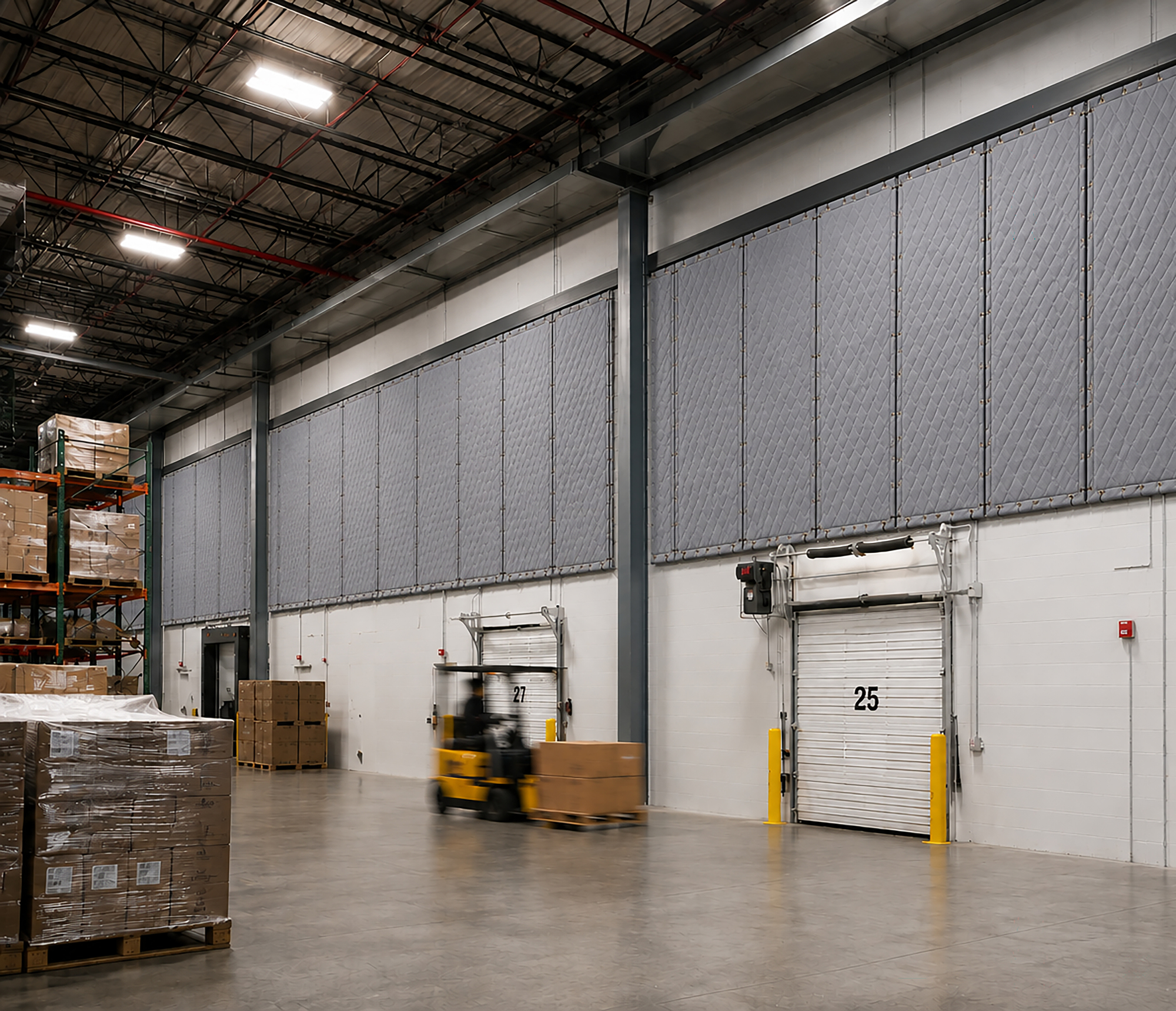
In these complex situations, portable and modular solutions introduce an entirely different operational approach by bringing acoustic control directly to the exact location where sound is produced, rather than relying on permanent modifications to the building envelope. Temporary barriers, specialized acoustic blankets, sound-absorbing curtains, and portable enclosures—such as those manufactured and supplied by Acoustical Surfaces—act as an adaptable secondary layer. These systems can be installed, repositioned, or completely removed according to the shifting needs of each space. By complementing permanent architectural strategies, these mobile interventions transform sound control into an agile element that easily responds to changing industrial, commercial, and creative conditions.
How to Design Spaces Intended to Change
When architects and facility managers design spaces with mobile acoustic systems in mind, they explicitly acknowledge that certain operational needs are entirely temporary. A short-term interior intervention lasting only a few weeks does not necessarily justify a permanent, costly structural modification to the building. Similarly, a factory or warehouse that routinely reorganizes its floor plan to optimize workflow can greatly benefit from using lightweight, movable elements that accommodate these operational evolutions without turning into physical obstacles for future configurations.
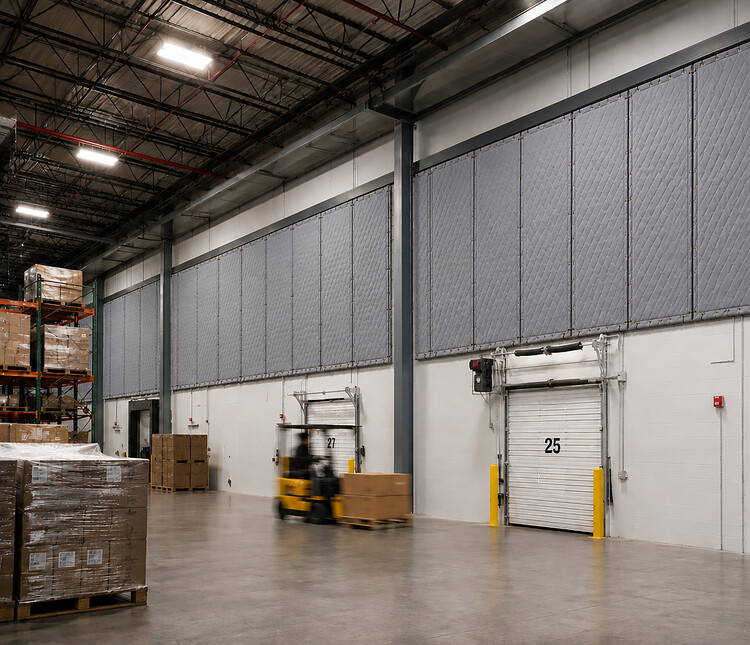
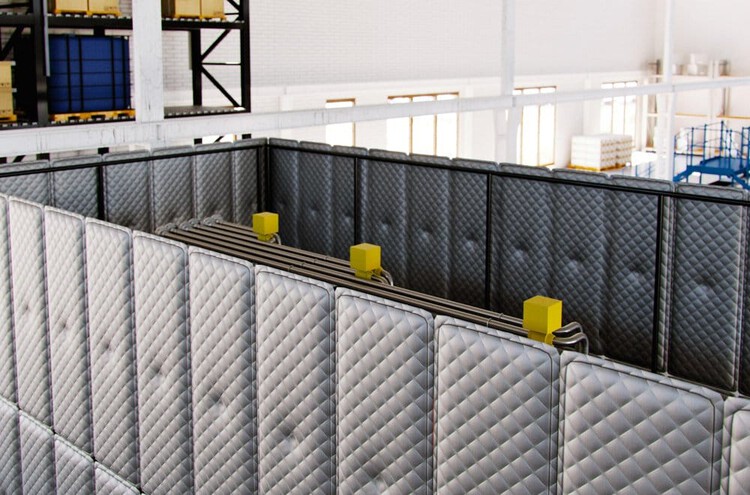
Acoustical Surfaces offers a diverse range of modular solutions—including heavy-duty barriers, sound-dampening blankets, acoustic curtains, and customizable enclosure systems—that can be strategically deployed to create controlled acoustic zones around specific noise sources or to temporarily segregate zones within much larger open areas. Beyond their technical acoustic properties, physical dimensions, or material compositions, these systems make it possible to introduce targeted layers of sound management tailored to the precise conditions of a given moment. An acoustic curtain can effortlessly establish a temporary room separation; a sturdy barrier can clearly define a high-noise work zone; a specialized blanket can help contain and reduce sound transmission around a persistent generator or saw; and a portable enclosure can completely transform the acoustic conditions of a particular workstation without altering the permanent architecture of the room containing it.
Understood collectively as temporary envelopes, these elements function as a form of lightweight infrastructure, modifying the acoustic performance of a space without requiring a complete architectural redefinition. For example, Acoustical Surfaces offers indoor soundproof quilted acoustic curtains that successfully combine sound absorption and sound blocking through flexible, modular designs. These curtains are custom-made to suit specific commercial, industrial, and residential applications, featuring a dense mass-loaded vinyl core available in one- or two-pound-per-square-foot densities. This dense core is enclosed on both sides by a durable, quilted, sound-absorbing material designed to withstand harsh operating environments. Because they are resistant to water and harsh chemicals, these curtains are frequently utilized to isolate heavy machinery, separate noisy industrial work areas, or create movable acoustic barriers that can be easily installed, taken down, and reconfigured as operational demands change.
How to Design Acoustics Without Compromising Flexibility
From professional acting studios and creative production spaces to modern collaborative workplaces, portable acoustic solutions can fundamentally transform not only the subjective experience of a room but also the daily routines of its users. A prime example of this flexibility can be found at Open Shop Studio, where Acoustical Surfaces installed STOP-25 fiberglass quilted curtain panels to provide targeted acoustic separation. These specific panels boasted a Sound Transmission Coefficient (STC) rating of 26 and were engineered to absorb sound efficiently on both sides. By combining an overhead track system with interconnected panels joined seamlessly by vertical Velcro seams, the studio gained the ability to transform a single large open room into several smaller, acoustically isolated spaces, or reconfigure the layout to combine both spatial conditions depending on the day’s activities.
However, creative studios are far from the only environments where design flexibility intersects successfully with advanced acoustics. In contemporary office environments, creating temporary or adjustable acoustic barriers between workers is frequently necessary to optimize everyday workflows while achieving the desired levels of acoustic comfort and personal well-being. At Zamboni’s office, for instance, the required acoustic barrier could not be a permanent addition to the floor plan; it needed to be fully removable and repositionable. To solve this challenge, the office utilized BSC-25 quilted acoustic curtains. These curtains feature a sturdy one-inch black steel tube frame that rests securely on the floor and a one-eighth-inch-thick high-density vinyl core, providing sound-blocking performance comparable to a conventional wood-stud wall finished with drywall panels on both sides. The screens were expertly fabricated with the curtain material extending gracefully beyond the structural frame, allowing one panel to cleanly overlap and connect with the next to form an unbroken acoustic line.
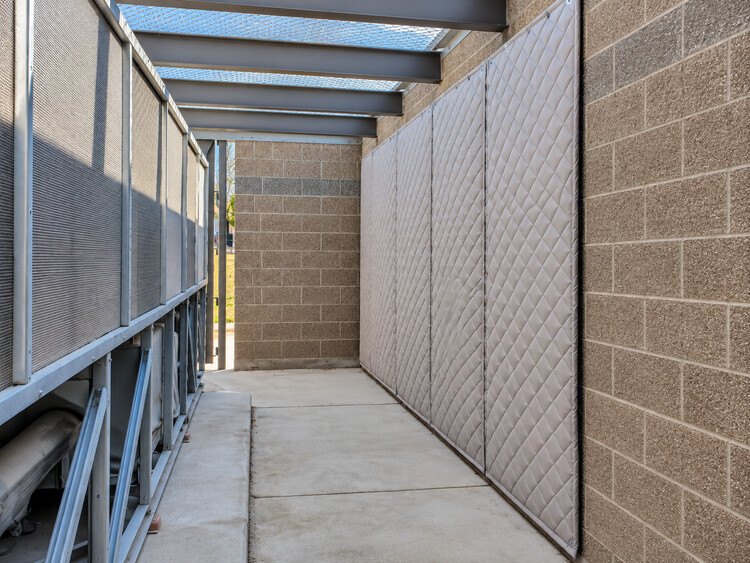
Expanding the way contemporary architecture and interior design understand acoustic management means recognizing that not every spatial challenge is permanent. While traditional walls, heavy ceilings, and built-in insulation materials remain fundamental to establishing a building’s baseline acoustic conditions, mobile solutions offer vital versatility for addressing situations that cannot be fully anticipated during the initial design phase. In response to this dynamic operational reality, architecture can rely just as much on flexible systems that know when to arrive, where to be positioned, and when to be removed, as it does on elements that remain permanently in place. Acoustic control thus evolves far beyond the simple construction of heavy barriers against unwanted sound, maturing into an adaptive strategy that gracefully accompanies the movement, transformation, and temporality of modern spaces.