Welcome to this week’s curation of the best commentary, essays, poetry, and investigative reporting circulating across the literary internet. As autumn settles in, the cultural conversation spans the existential pressures of the digital age, historical retrospectives on legendary writers and activists, and the immediate crises facing books and democratic institutions across the globe.
Celebrating Literary History and the Birth of Ivan Bunin
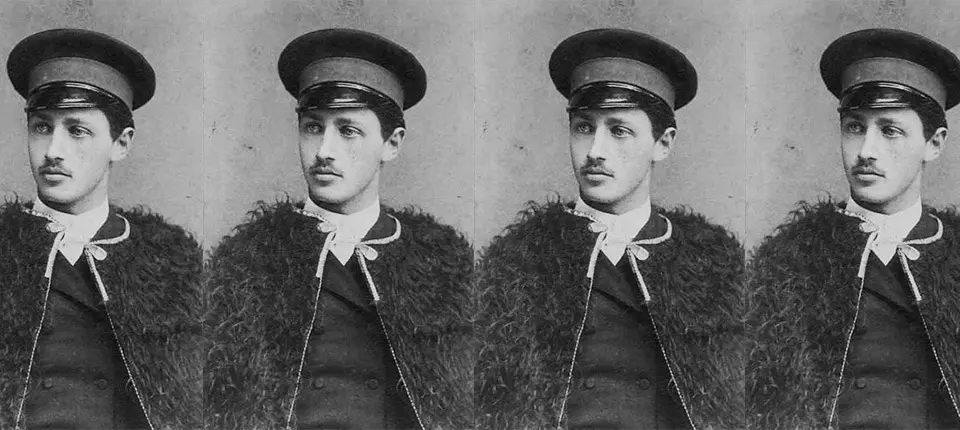
Today marks a significant historical milestone for world literature: the birth of Russian writer Ivan Bunin in 1870. As the first Russian author to win the Nobel Prize in Literature, Bunin’s mastery of prose and poetry continues to cast a long shadow over modern storytelling. His legacy serves as an appropriate backdrop for a week marked by deep reflections on how literature endures, adapts, and bears witness to the human condition amid profound political and technological shifts.
The Writer’s Soul in the Age of Artificial Intelligence
Among the most pressing discussions in contemporary publishing is the relentless advance of artificial intelligence. In a widely discussed essay, commentators examine the automated landscape and argue that despite rapid technological replication across industries, the writer’s soul remains entirely unreplicable. While algorithms generate synthetic text with increasing fluency, the specific weight of human lived experience, vulnerability, and moral consciousness cannot be digitized. This defense of authentic human expression anchors many of the craft notes and creative debates circulating online this week.
Complementing these thoughts on modern creation are reflections from prominent authors on their physical and intellectual processes. Barbara Kingsolver recently shared the unconventional physical mechanics behind her work, explaining why she writes standing up to maintain stamina and perspective. Meanwhile, Adam Wilson offered sharp notes on craft, reflecting on the mechanics of plot versus concept and discussing why certain creative choices—such as writing about a dedicated New York Yankees fan—remain outside his artistic ambitions.
Writers are also confronting how literature intersects with personal trauma, identity, and the demands of academia. Kristen Millares Young has written candidly about the intersecting pressures of motherhood, marriage, and the pursuit of artistic autonomy, exploring what it means to step into one’s power and become a creative force within domestic spaces. In another poignant account, Nafissa Thompson-Spires detailed how surviving a lightning strike fundamentally altered her identity and filtered into the psychology of her main characters. For other authors, research and writing have served as crucial lifelines for survival; one academic reflected on how navigating the rigorous demands of higher education provided a framework for coping with devastating personal loss and grief.
Activism, Politics, and the Preservation of History
Beyond the studio and the study, this week’s literary discourse is heavily charged with political urgency and historical memory. In international affairs, writers are grappling with the devastating human and cultural toll of modern conflict. Oleksandr Mykhed recently shared the harrowing reality of writing in times of war, detailing how Russian bombs and military campaigns have systematically targeted and destroyed Ukrainian books, libraries, and literary archives, effectively attempting to erase a nation’s cultural memory.
This theme of political peril extends into broader democratic struggles. Observers have drawn chilling parallels between historical fascist milestones—such as the German elections of March 5, 1933, that dismantled Weimar democracy—and contemporary political trajectories, including modern democratic strains and global far-right movements, with analyses stretching from European history to the political convulsions in Brazil. Closer to home, critics and essayists have scrutinized the administrative apparatus of the United States, arguing that the modern deportation machinery operates with the systemic violence of an undeclared domestic war.
Environmental activism also takes center stage, with veteran campaigner and writer Bill McKibben discussing the long, arduous struggle for the earth. McKibben reflects on the relationship between grassroots activism, democratic institutions, and the slow, necessary work required to confront climate change. This spirit of resistance and preservation echoes in historical retrospectives, such as examinations of feminist activist Robin Morgan and her instrumental role in protecting and championing the literary legacy of Sylvia Plath. Plath’s work itself is undergoing fresh critical reexamination, with essays exploring the cyclical themes of life, death, and renewal at the heart of her poetry.
Cultural Identity, Translation, and Craft
Questions of language, identity, and translation continue to animate literary criticism across multiple platforms. Cultural commentators have explored the shifting, evolving language surrounding Latinx identity, while trans poetics and the inherent limitations of language have been analyzed through the lens of personal becoming and the failure of traditional vocabulary to capture non-binary experiences. In fiction and poetry, writers from diverse backgrounds are carving out distinct spaces, such as an exploration of what it means to be an Anishinaabe poet operating within a predominantly fiction-driven literary establishment.
The mechanics of translation and international exchange also received prominent attention. The literary world recently gathered for the Frankfurt Book Fair, where cultural figures celebrated the incomparable Heinrich Maria Ledig-Rowohlt translation prize dinner, highlighting the bridge-builders who carry texts across linguistic divides. Translation and editorial relationships form the bedrock of publishing, a dynamic further illustrated by historical examinations of the close professional and personal bond between French novelist Jean Echenoz and his publisher, Jérôme Lindon.
Essays this week also traverse unexpected cultural terrain, ranging from a surprisingly intimate travelogue of Paul Theroux visiting Toronto to a deep dive into the complex, often fraught dynamics that define the relationships between queer individuals and their biological families. In music and sports history, writers revisited Whitney Houston’s iconic, soaring performance at Super Bowl XXV, analyzing the confident complexity of her artistry. Meanwhile, comics historians have traced the lineage of iconic women spies in graphic literature, demonstrating how genre storytelling has long engaged with espionage and subversion.
New Releases, Bestsellers, and Critical Recommendations
For readers looking to discover new works, the publishing landscape offers a wealth of material. This week’s Independent Press Top 40 Bestsellers list highlights the most sought-after fiction and nonfiction titles currently moving through independent bookstores, showcasing the enduring appetite for diverse, risk-taking literature.
Review aggregators have also released their weekly digests, highlighting essential critiques that no avid reader should miss. Among the notable literary notes, Alice Elliott Dark has shared a new afterword for her celebrated short story "In the Gloaming," offering modern readers fresh insight into a contemporary classic that explores love, illness, and family reconciliation.
Whether through poetry that subverts expectations—such as Patricia Lockwood’s striking verses—or deep journalistic inquiries into the mechanics of war, climate, and memory, the literary internet this week reaffirms the vital necessity of reading and writing in an increasingly complex world.