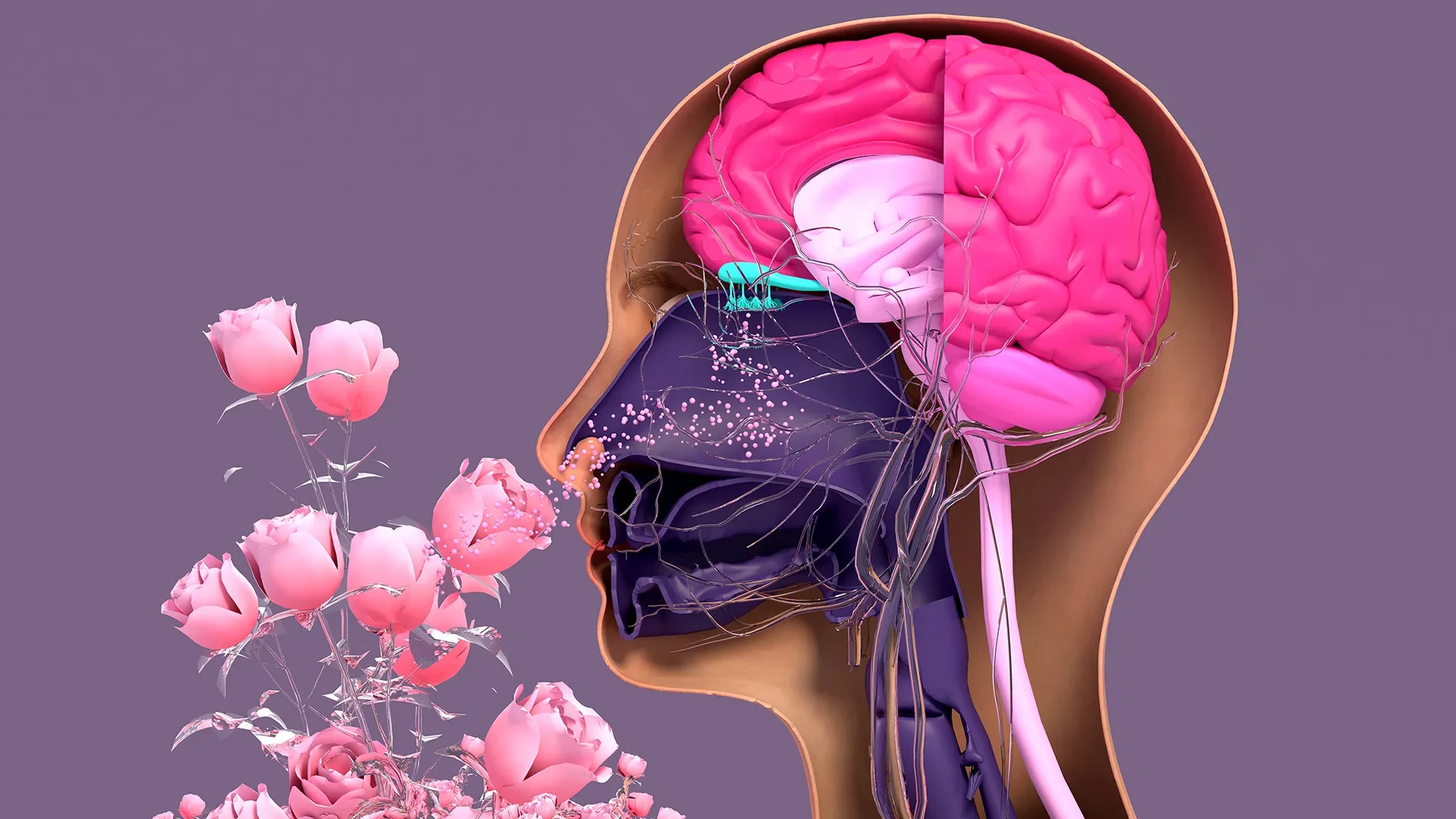
In a significant leap forward for olfactory research, scientists at Tufts University School of Medicine and the Graduate School of Biomedical Sciences (GSBS) have unveiled a new three-dimensional model designed to study the regeneration of nerve tissue within the nose. This innovative approach has led to the discovery that a specific type of stem cell, long dismissed by the scientific community as dormant, plays a far more critical role in preserving the human sense of smell than previously imagined.
The findings, recently published in the journal Cell Reports Methods, offer a new lens through which researchers can examine the complex biological processes that allow our sense of smell to endure, as well as the mechanisms that cause it to fail. By utilizing a mouse-derived organoid—a miniature, simplified version of an organ grown in a laboratory—the team has successfully mapped the intricate communication network between stem cells, shedding light on how they work in tandem to repair the nasal lining and generate new sensory neurons.
The Resilience and Vulnerability of Olfactory Neurons
Unlike the neurons found in the central nervous system, which are notoriously difficult to repair once damaged, the sensory neurons housed within the nasal cavity possess a remarkable, lifelong capacity for regeneration. This constant renewal is a necessity, as these cells are frequently exposed to the harsh realities of the external environment, including pollutants, pathogens, and various chemical irritants.
However, this regenerative cycle is not infallible. Recent years have highlighted just how fragile this process can be. The COVID-19 pandemic, for example, brought the phenomenon of smell loss—or anosmia—to the forefront of public health concerns. Beyond viral infections, chronic exposure to toxins and the natural, inexorable process of biological aging can severely diminish the function of these neurons or impair their ability to replicate. When the rate of damage outpaces the rate of cellular repair, the result is often a partial or complete loss of the sense of smell, a condition that can have profound impacts on an individual’s quality of life, nutritional health, and psychological well-being.
Decoding the Stem Cell Dialogue
At the heart of the Tufts team’s study is the interaction between two primary types of stem cells: horizontal basal cells (HBCs) and globose basal cells (GBCs). Traditionally, scientific consensus favored the view that GBCs were the primary drivers of neuronal regeneration, while HBCs were relegated to a "dormant" status, acting only as a reserve pool activated during catastrophic injury.
The researchers’ new 3D model, however, tells a more nuanced story. By observing the organoids, the team identified a specific subpopulation of HBCs marked by the production of the protein KRT5. Contrary to the old model of dormancy, these HBCs are, in fact, active participants in the generation of new olfactory neurons.
"Our research suggests that these two stem cells may be interdependent," explains Brian Lin, a research assistant professor in the Department of Developmental, Molecular and Chemical Biology and the study’s senior author. "One type that we thought was largely dormant—HBCs—may actually play a crucial role in supporting the production of new neurons and the repair of damaged tissue."
To confirm this, the team selectively depleted these KRT5-producing HBCs from their organoid cultures. The result was a dramatic impairment in the generation of new neurons, confirming that these cells are essential architects of the regenerative process. The study suggests that GBCs and HBCs do not work in isolation but rather maintain a functional dialogue, where the "reserve" cells provide foundational support necessary for the more active GBCs to function effectively.
Age-Related Decline and Future Therapies
The implications of this discovery extend into the realm of aging. As part of their study, the team examined olfactory cells harvested from mice at different stages of life. They observed a distinct, age-related decline in the ability of these cells to generate new neurons.
"We found a decline in the ability of the older mice cells to generate new neurons," Lin notes. "We think this is due to a decrease in the GBC population as we age, but we need to do more work to test this hypothesis and, if so, develop ways to rejuvenate them." This line of inquiry is particularly promising, as it suggests that if the specific mechanism behind this age-related decline can be identified, it may be possible to develop therapeutic interventions to "recharge" these stem cell populations, potentially reversing age-related sensory loss.
Democratizing Olfactory Research
A major focus for the research team was accessibility. Led by Juliana Gutschow Gameiro, a former Ph.D. student visiting from the State University of Londrina in Brazil, the project aimed to create a model that was not only scientifically rigorous but also practical for laboratories operating with limited resources.
"Because loss of smell is associated with COVID-19, as well as with Parkinson’s disease and other conditions, a much larger number of researchers from a variety of different fields have begun researching olfactory epithelial cells in the last few years," Lin says. "We wanted to develop an easy-to-use model so that non-stem cell biologists and those working in labs with limited resources could use it to better understand how olfactory neurons regenerate and what happens that causes that process to diminish or fail completely."
By standardizing an easy-to-create 3D model, the team hopes to catalyze a broader, more collaborative effort across the scientific community. The organoid platform allows for high-throughput testing that is both faster and more cost-effective than traditional methods involving whole animals or complex, resource-heavy cell cultures.
The Path Toward Human Organoids
While the mouse model has provided a foundational breakthrough, the ultimate goal remains the development of a human olfactory organoid. Such a tool would be transformative, allowing for pre-clinical drug screening that could lead to targeted treatments for patients suffering from permanent or long-term smell loss.
Organoids have already become a staple in the study of other organs, such as the lungs and kidneys, but human olfactory tissue has proven notoriously difficult to replicate in the lab. The primary challenge, according to Lin, lies in the collection and purification of the tissue.
In clinical settings, obtaining olfactory tissue involves a procedure where a specialized brush is inserted deep into the nasal cavity under anesthesia—a process similar to that used for COVID-19 testing. However, the resulting sample is a mixture of various cell types, and separating the olfactory stem cells from the surrounding respiratory stem cells is an arduous, often imprecise task.
"It’s challenging to get pure olfactory tissue from humans," Lin explains. The research team is currently shifting its focus toward developing a simple, cost-effective technique for isolating these specific human stem cells and successfully coaxing them to grow and thrive in a laboratory environment.
As the scientific community continues to grapple with the long-term consequences of viral infections and the challenges of an aging population, the work being conducted at Tufts provides a vital roadmap. By revealing the hidden, active role of previously overlooked stem cells, researchers are moving closer to unlocking the biological secrets of the sense of smell, offering hope that the ability to smell, once lost, might one day be restored.