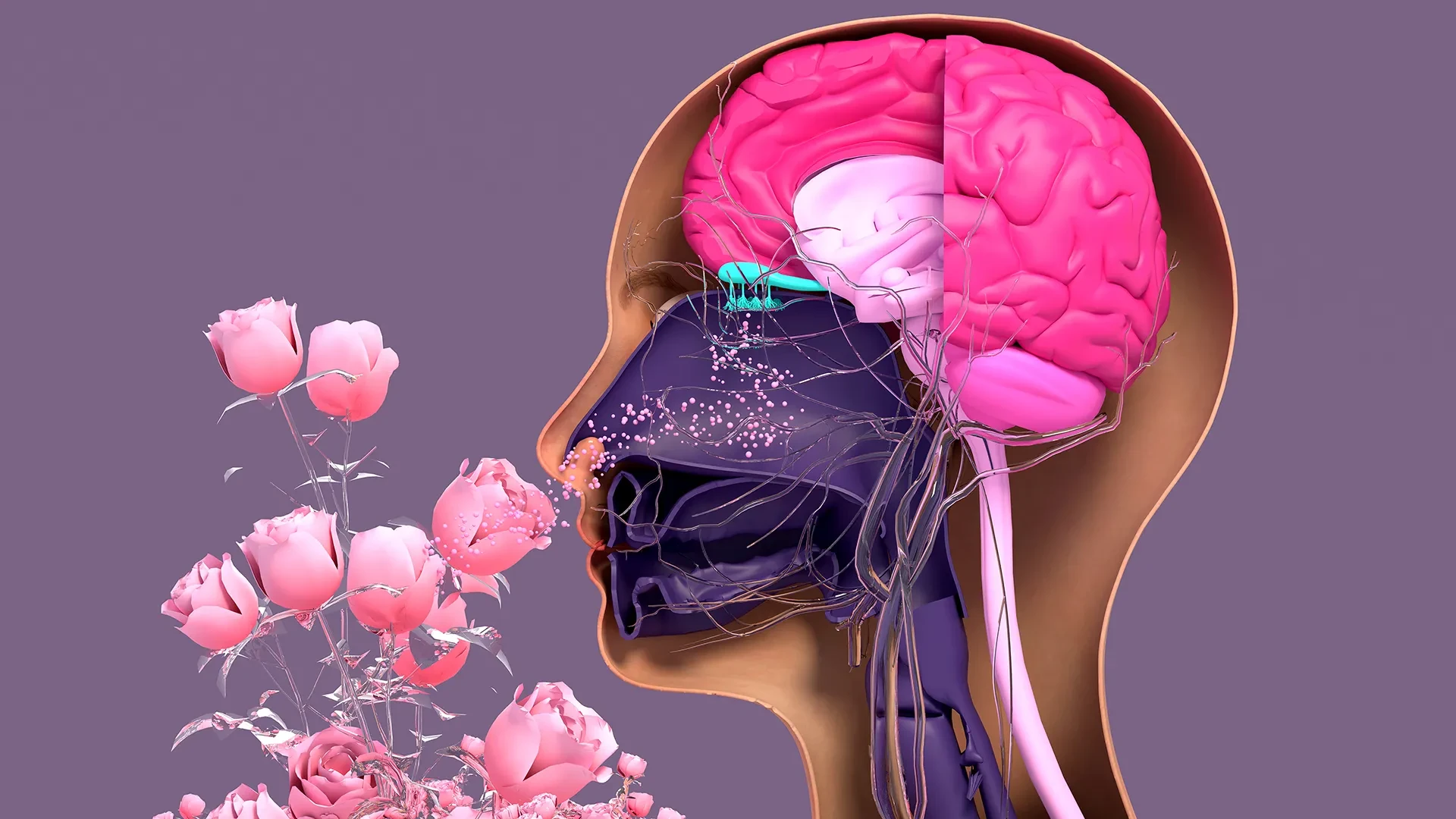
Researchers at Tufts University School of Medicine and the Graduate School of Biomedical Sciences (GSBS) have unveiled a sophisticated, three-dimensional model designed to study the complex regeneration of nerve tissue within the nose. This scientific advancement has led to the surprising discovery that a specific type of stem cell, long considered dormant by the scientific community, may actually play a vital and active role in preserving the human sense of smell.
Unlike the cells found in the central nervous system, which are notoriously difficult to repair once damaged, the sensory neurons located in the nasal cavity possess an extraordinary capacity for regeneration. This ability allows them to replenish themselves throughout a person’s entire lifetime, despite the fact that they are in constant contact with the outside environment and exposed to a barrage of pathogens, irritants, and environmental toxins.
However, this resilience is not invincible. The functionality of these neurons can be severely compromised by viral infections—most notably SARS-CoV-2, the virus responsible for COVID-19—as well as by prolonged exposure to airborne toxins or the natural, inexorable process of aging. When these sensory neurons lose their ability to replicate or function correctly, patients often experience a partial or complete loss of smell, a condition known as anosmia, which can have profound effects on quality of life, nutrition, and mental health.
To better understand the biological mechanisms behind this failure, the research team at Tufts developed a new, three-dimensional olfactory tissue mouse model, often referred to as an organoid. This tool provides a controlled environment for scientists to observe how neurons are continually formed in the nose and, crucially, to identify the precise biological triggers that cause this process to falter during disease progression or as the body ages.
The team’s findings, which were published recently in the journal Cell Reports Methods, clarify the complex relationship between two primary types of stem cells found in the nasal epithelium: horizontal basal cells (HBCs) and globose basal cells (GBCs). The study demonstrates that these two populations do not act in isolation; rather, they communicate and support one another to develop new smell-sensing nerve tissue.
"Our research suggests that these two stem cells may be interdependent," explains Brian Lin, senior author on the study and a research assistant professor in the Department of Developmental, Molecular and Chemical Biology at Tufts. "One type that we thought was largely dormant—HBCs—may actually play a crucial role in supporting the production of new neurons and the repair of damaged tissue."
By utilizing the 3D organoid model, the team identified a specific subpopulation of HBCs, which are marked by their distinct production of the protein KRT5. Previously, HBCs were largely overlooked in the regenerative process because they were believed to be inactive, sitting on the sidelines until a catastrophic injury occurred. The research revealed that these KRT5-positive cells are actually active participants in the formation of new olfactory neurons. To confirm this, the researchers selectively depleted these cells from the organoid cultures. The result was a significant and immediate impairment in the generation of new neurons, underscoring that these cells are essential, rather than peripheral, players in the regenerative cycle.
The study also delved into the impact of age on these regenerative pathways. By growing cells from mice of different ages within the model, the researchers observed a clear decline in the ability of cells derived from older subjects to generate new neurons. "We found a decline in the ability of the older mice cells to generate new neurons," Lin notes. "We think this is due to a decrease in the GBC population as we age, but we need to do more work to test this hypothesis and, if so, develop ways to rejuvenate them."
A Accessible Model for Global Research
A key priority for the development of this 3D model was accessibility. The lead author of the study, Juliana Gutschow Gameiro—a former Ph.D. student who visited the GSBS from the State University of Londrina in Brazil—was instrumental in ensuring the methodology remained practical for diverse laboratory environments. Lin emphasizes that Gameiro was deeply dedicated to creating a protocol that could be implemented in labs with limited budgets and specialized equipment.
The urgency for such a tool has never been greater. The global surge in smell loss associated with the COVID-19 pandemic has acted as a catalyst for olfactory research. Beyond viral-induced damage, the loss of smell is a well-documented early symptom of neurodegenerative conditions such as Parkinson’s disease. Consequently, researchers from a wide array of scientific disciplines—many of whom are not specialists in stem cell biology—have turned their attention to the olfactory epithelium.
"We wanted to develop an easy-to-use model so that non-stem cell biologists and those working in labs with limited resources could use it to better understand how olfactory neurons regenerate and what happens that causes that process to diminish or fail completely," Lin says. By lowering the barrier to entry, the team hopes to accelerate the pace of discovery across the global scientific community.
Looking Toward Human Organoids
The ultimate objective of this research is to move beyond the mouse model and create a human-derived organoid. Such a model would serve as a high-precision platform for drug screening, potentially allowing researchers to test therapeutic compounds in a laboratory setting before ever reaching a human clinical trial. This could lead to effective, targeted treatments for the millions of people who currently suffer from chronic loss of smell.
Organoids have already transformed the study of other organs, including the lungs and kidneys, by providing a method that is faster, more cost-effective, and more ethically sound than relying on whole-animal studies or traditional two-dimensional cell cultures. However, creating a functional human olfactory organoid presents unique hurdles.
"It’s challenging to get pure olfactory tissue from humans," Lin explains. The standard collection method involves a professional anesthetizing the patient and using a brush—similar in appearance to a COVID-19 test wand—to gather cells from deep within the nasal cavity. In humans, unlike in the mouse models, the respiratory stem cells and the olfactory stem cells harvested during this process are notoriously difficult to separate. Because the respiratory cells often outgrow the olfactory cells in culture, it is hard to maintain a pure population of the specific neurons required for study.
The next major challenge for the Tufts research team is to develop a refined, inexpensive, and reliable technique to isolate these human olfactory stem cells and coax them into healthy, thriving growth in the lab. If successful, this would represent a significant leap forward in regenerative medicine. By bridging the gap between basic biological discovery and practical medical application, the researchers hope to unlock new ways to repair the nose’s delicate machinery and restore one of the most vital, yet often overlooked, human senses.