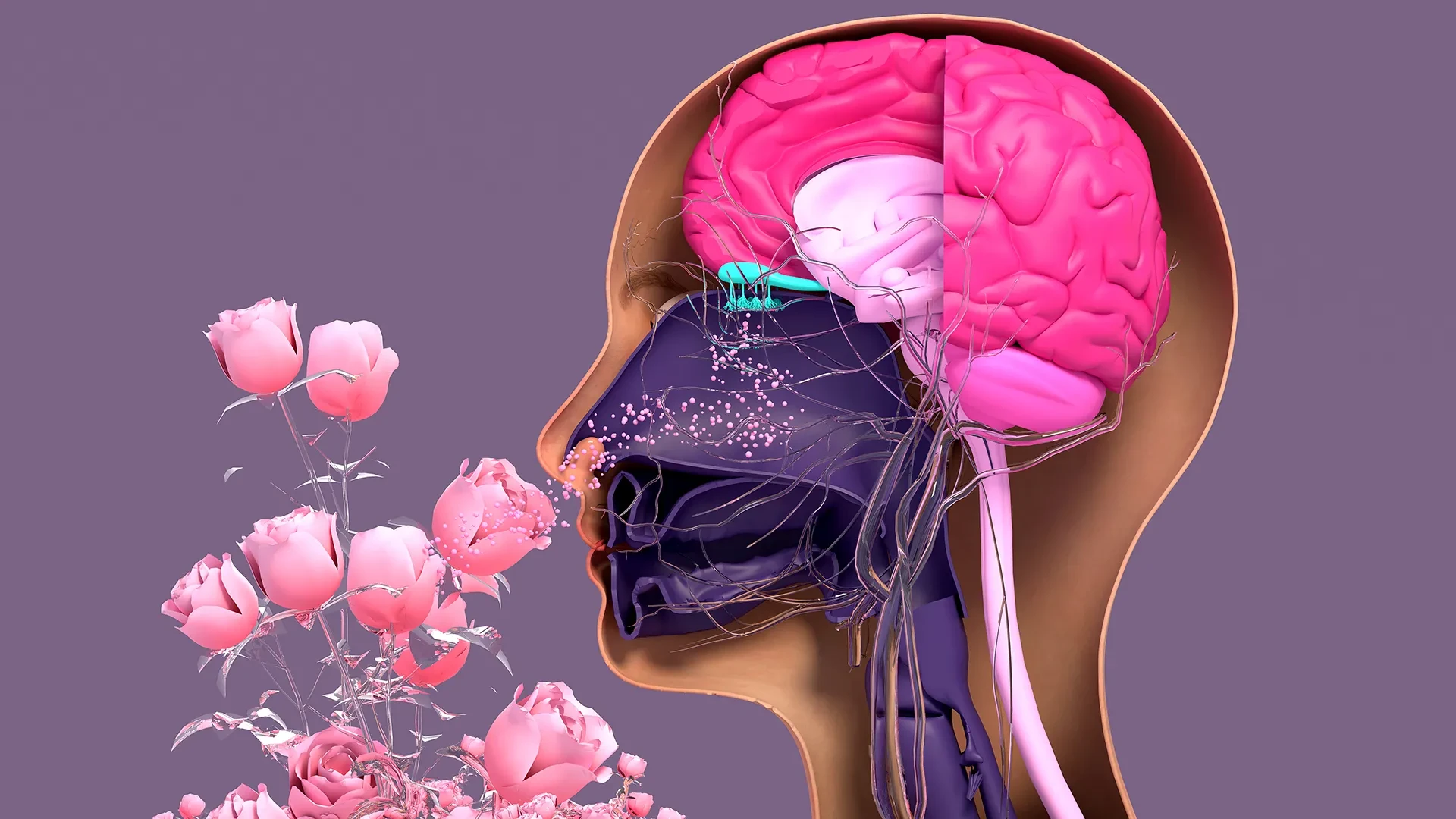
A team of researchers at Tufts University School of Medicine and the Graduate School of Biomedical Sciences (GSBS) has achieved a significant breakthrough in understanding how the nose preserves our sense of smell. By developing a sophisticated, three-dimensional model to study nerve tissue regeneration, the team has uncovered that a specific type of stem cell—previously dismissed as dormant—actually plays a critical, active role in maintaining the olfactory system.
Unlike the cells found in the central nervous system, which are notoriously difficult to repair once damaged, the sensory neurons within the nasal cavity possess a remarkable, lifelong capacity for regeneration. This biological resilience allows the nose to recover from near-constant exposure to environmental hazards, toxins, and pathogens. However, this regenerative capacity is not infinite. Viral infections—most notably the respiratory damage associated with COVID-19—along with chronic exposure to environmental toxins and the natural processes of aging, can impair the function of these cells. When the replication process falters, the result is often a partial or complete loss of smell, a condition that can have profound impacts on a person’s quality of life, nutritional intake, and safety.
To better investigate the mechanisms behind this decline, the Tufts research team devised a new, three-dimensional olfactory tissue mouse model, or organoid. This tool allows scientists to observe the formation of neurons in real-time and analyze exactly why this process begins to fail as a body ages or succumbs to disease. The study, which was recently published in the journal Cell Reports Methods, provides a granular look at the intricate communication network between two vital populations of stem cells in the nose: horizontal basal cells (HBCs) and globose basal cells (GBCs).
Uncovering the Role of "Dormant" Stem Cells
For years, the scientific community operated under the assumption that HBCs were largely quiescent, acting as a "reserve" pool that remained dormant until a catastrophic injury required a massive tissue repair effort. However, the data generated by the Tufts organoid model challenges this long-standing paradigm.
"Our research suggests that these two stem cells may be interdependent," explains Brian Lin, senior author on the study and a research assistant professor in the Department of Developmental, Molecular and Chemical Biology at Tufts. "One type that we thought was largely dormant—HBCs—may actually play a crucial role in supporting the production of new neurons and the repair of damaged tissue."
Through the use of the 3D model, the team identified a specific subpopulation of HBCs, distinguished by their production of the protein KRT5. These cells appear to be far more active than previously hypothesized, serving as essential architects in the development of new smell-sensing nerve tissue. The researchers tested the importance of these cells by selectively depleting them from the organoid cultures. The result was a dramatic impairment in the generation of new neurons, proving that KRT5-producing HBCs are not merely backup cells, but rather essential, active participants in the ongoing regenerative process.
The study also shed light on the frustrating reality of age-related sensory loss. By comparing cells derived from mice of different ages, the researchers observed a clear decline in the regenerative potential of the tissue as the subjects grew older. Lin points to a decrease in the GBC population as a primary suspect for this decline. While this remains a working hypothesis, the team views it as a promising area for future therapeutic intervention. If scientists can confirm that the loss of GBCs is the primary driver of age-related olfactory decline, it may be possible to develop targeted treatments designed to "rejuvenate" these populations and restore function.
An Accessible Model for Global Research
A primary objective for the research team was to ensure that this new tool would be accessible to a wide array of laboratories, including those that might not have access to high-end, prohibitively expensive equipment. Lead author Juliana Gutschow Gameiro, a former Ph.D. student visiting GSBS from the State University of Londrina in Brazil, played a pivotal role in designing a model that is both highly effective and easy to implement.
"Because loss of smell is associated with COVID-19, as well as with Parkinson’s disease and other conditions, a much larger number of researchers from a variety of different fields have begun researching olfactory epithelial cells in the last few years," Lin notes. The surge in interest surrounding smell loss, largely spurred by the COVID-19 pandemic, has highlighted a gap in the availability of simple research tools.
By prioritizing a "user-friendly" design, the team hopes to empower non-stem cell biologists and labs with limited resources to contribute to the field. Understanding how olfactory neurons regenerate—and identifying the specific biological "tipping points" that cause that process to fail—is a complex task that requires data from many different laboratories across the globe. The Tufts model serves as a standardized, inexpensive bridge that could significantly accelerate the pace of discovery.
The Path Toward Human Organoids and Drug Discovery
The development of the mouse model is only the first step in a much larger, long-term research trajectory. The ultimate ambition of the team is to translate these findings into a human organoid model. Such a tool would provide an invaluable platform for high-throughput drug screening, allowing researchers to test various pharmaceutical compounds to see if they can stimulate regeneration in patients whose sense of smell has been permanently or significantly diminished.
Organoids offer a distinct advantage over traditional research methods. They allow for pre-clinical trials that are significantly quicker and more cost-effective than using whole animal models or static, two-dimensional human cell cultures. While organoid technology has already revolutionized the study of other organs—with successful models now existing for the lungs, kidneys, and liver—human olfactory tissue has proven notoriously difficult to replicate in the lab.
The challenge, according to Lin, lies in the collection and isolation of the necessary cells. Obtaining pure olfactory tissue from human subjects requires an invasive procedure where a brush, similar to those used in COVID-19 testing, is inserted deep into the nasal cavity. The primary complication, which differs significantly from the mouse model, is that human respiratory stem cells and olfactory stem cells are collected simultaneously during this process. Separating these two distinct types of cells, and then coaxing them to grow and differentiate in a laboratory environment, is a significant technical hurdle.
As the team looks toward the future, their focus is on refining a simple, inexpensive technique for the isolation of these human stem cells. By successfully coaxing these cells to thrive in the lab, they hope to unlock new therapeutic possibilities for millions of people worldwide. While the work is ongoing, the success of the mouse-tissue organoid represents a major leap forward, transforming the way scientists conceptualize the life cycle of the cells that allow us to perceive the world through scent. Through their work, the researchers at Tufts are proving that even the most "dormant" cells may hold the key to restoring one of our most vital, yet often overlooked, senses.