When Vitor Matos arrived at the Swansea.com Stadium in November 2025, the mood surrounding the club was far from celebratory. The Swans were adrift, morale was fragile, and the grim specter of relegation loomed over a fanbase accustomed to higher ambitions. Skeptics were vocal, questioning the appointment of a manager whose senior resume amounted to a mere 12 matches in the Portuguese second division. Yet, as the calendar turns one year later, the narrative has shifted dramatically. Ten games into the current Championship campaign, Swansea City sits proudly at the summit of the table, a testament to a managerial appointment that, in hindsight, appears nothing short of a tactical masterstroke.
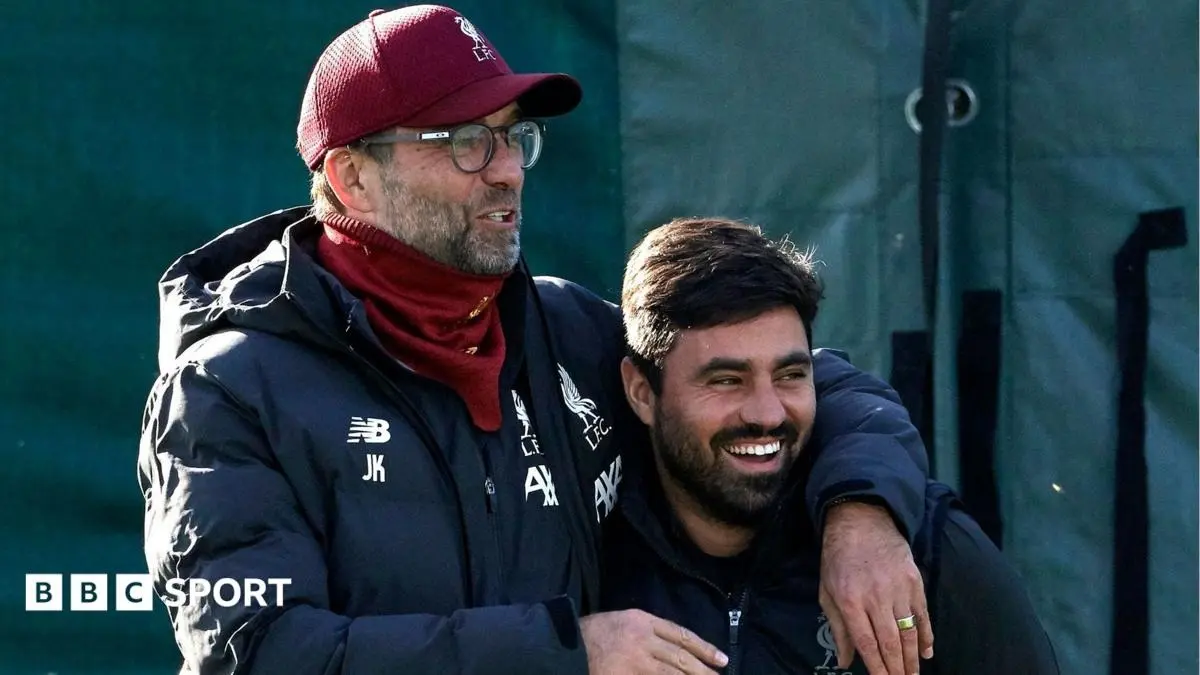
The skepticism that greeted Matos’ arrival was understandable, but it ignored the deep, intricate apprenticeship he had served long before stepping into the spotlight. While those 12 games at Maritimo were the only ones on his senior managerial record, they were the culmination of a 23-year journey that took him from the grassroots of Portugal to the elite echelons of European football. Matos is a product of a global footballing education, having spent five transformative years at Liverpool as an elite development coach under Jurgen Klopp, followed by a stint as Pep Lijnders’ right-hand man at Red Bull Salzburg. It is a curriculum vitae that blends the raw intensity of English football with the tactical sophistication of the continental game.
To understand how Matos has orchestrated this turnaround, one must look at his foundational philosophy. It is a style of play deeply rooted in the high-octane principles he absorbed while at Anfield. "Liverpool influenced me a lot in terms of counter-pressing, pressing, intensity, and what makes you grow as a team," Matos explains. For the 38-year-old, this is not merely a tactical preference; it is a core belief system. "The most important thing is how much you believe in your idea, and this style is how I see football. That’s why I wanted this to be the foundation for our team."
However, to label Matos simply as a disciple of Klopp would be a reductive oversight. His game model is a mosaic, drawing from a variety of sources. His time spent in the Chinese Super League, his exposure to the tactical rigors of FC Porto, and his education under the tutelage of Klopp and Lijnders have all coalesced into a distinct, evolving identity. "I started at a really young age wanting to be a coach and was influenced by many different styles," he adds. This intellectual curiosity has allowed him to build a side that is not just a copy of his predecessors, but a synthesis of global tactical trends tailored to the unique demands of the Championship.
The immediate priority upon replacing Alan Sheehan was not purely tactical; it was psychological. Matos understood that a squad burdened by the fear of failure could not play the expansive, aggressive football he envisioned. "The most important thing was to make the team feel confident again, to make the players fall in love with playing with each other," he reflects. He recognized that confidence and tactical structure are inextricably linked. By demanding a higher level of aggression without the ball, he provided the players with a sense of purpose. A high regain or a committed tackle became a catalyst for team spirit, creating a positive feedback loop that permeated the dressing room.
Tactically, the transition began with a commitment to stability. Matos opted for a disciplined back four, ending the indecision that had plagued the team’s previous formations. "Before I arrived, there was some change between a back four and a back five. I thought the squad was built for a back four at that time and to give consistency to the players, sticking with that was another priority," he notes. Within this 4-3-3 framework, the mandate was clear: be brave, take risks, and press with unrelenting intensity.
Yet, Matos’ genius lies in his flexibility. While his principles—pressing, intensity, and ball retention—are fixed, the methods by which he achieves them are fluid, shaped entirely by the personnel at his disposal. He rejects the notion of a ‘one-size-fits-all’ approach, instead adopting a holistic view of each player. He seeks to understand them not just as tactical cogs, but as human beings with unique backgrounds, motivations, and emotional drivers. Only by fostering that deep connection, he believes, can a coach extract the maximum value from a squad.
This adaptability is most evident in how Swansea handles different defensive setups. Matos approaches the age-old problem of breaking down low blocks versus aggressive, man-marking systems with a sophisticated, multi-layered strategy. "How we solve problems depends on if we play against a man-marking team or a complete zonal team," he explains. When faced with a traditional zonal defense, the objective is to manipulate the opposition’s structure, creating movement that pulls defenders out of position and leaves pockets of space for runners. It is the classic pursuit of the ‘free player’ that has defined the most successful teams in recent history.
However, the modern game has seen a surge in man-to-man pressure, a tactic that aims to eliminate the ‘free player’ by locking down every individual on the pitch. To counter this, Matos has borrowed from his experiences in the Far East. "In China, I understood that to arrive at a more positional game, you could have different steps beforehand," he says. Rather than stretching the pitch horizontally and demanding that players constantly win 1v1 battles, he encourages his team to operate in closer proximity. By creating overloads in specific zones, Swansea generates a rhythm that makes it difficult for opposing defensive structures to track their movements.
"If you spread them over space, you are demanding that, technically, they can solve many situations 1v1," Matos observes. "If they come closer to the ball, you can generate more possibilities. You can create a tempo that allows other players to be better in the big spaces." This approach allows Swansea to circulate the ball, bait the press, and then strike with speed once the opposition is disorganized. It is a patient, calculated method of disarming even the most aggressive man-marking systems.
Off the pitch, Matos carries himself with a maturity that belies his 38 years. He views his role as a bridge between generations, a leader who must balance the rigid demands of professional football with the human needs of a diverse squad. He credits his time with Jurgen Klopp for shaping his leadership style. "In the end, what I try to do is to value everyone in the right way. I try to make the best of everyone and try to allow everyone to be themselves. Only when you are yourself can you really add value to something," he says.
This empathy is vital in a sport where players arrive from vastly different walks of life. Whether a player comes from the favelas of Brazil, the academies of Germany, or the grit of the UK, Matos acknowledges that their paths to the professional game have been vastly different. "Maybe I had a good house to live in and maybe one of them didn’t, so he might be more emotional than me," he says. "Trying to understand them, trying to have sensitivity to that, is important."
Ten games into the season, Swansea City is not just winning; they are doing so with an identity that has clearly resonated with both the squad and the supporters. The doubts that surrounded Matos’ arrival have been replaced by a quiet confidence. As he navigates the grueling Championship schedule, he remains grounded, keeping his focus on the singular objective that drives every manager. "Knowing all of that," he concludes, "in the end we all are here for one thing: to win the next game." For a club that was looking into the abyss just twelve months ago, that clarity of purpose under Matos has proven to be exactly what was required.