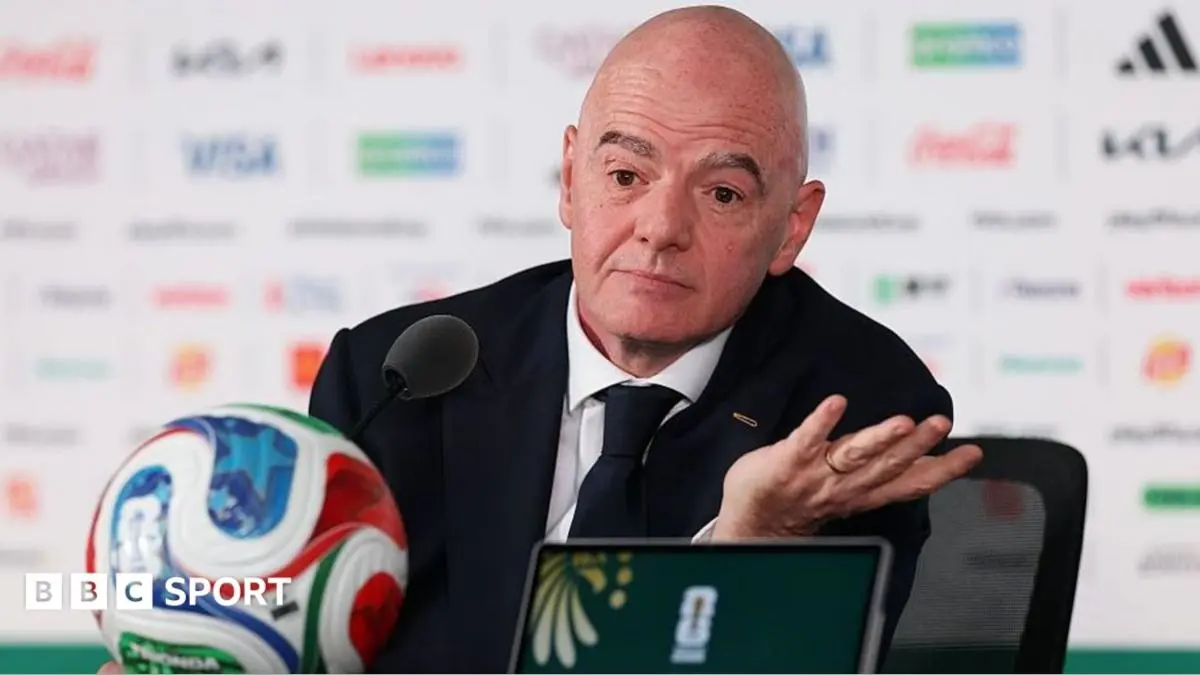
FIFA President Gianni Infantino has issued a formal apology to the FIFA Council regarding his controversial "Fifa Forward Enterprise" (FFE) proposal—a plan that would have effectively sold off a portion of the organization’s commercial rights to a private equity firm. However, the apology has failed to quell the growing internal dissent, with senior officials warning that Infantino’s leadership remains in jeopardy unless he provides full disclosure of the documents involved and offers definitive answers to a series of pointed questions regarding his governance.
The FIFA Council, the primary decision-making body of world football’s governing organization, convened in Zurich on Thursday for a high-stakes meeting. It marked the first time the assembly had gathered since the clandestine nature of the FFE proposal was brought to light and subsequently abandoned. The meeting, which lasted three-and-a-half hours, served as a volatile backdrop for a broader critique of Infantino’s management style, as the president faced intense scrutiny not only over the FFE project but also regarding a series of other contentious administrative issues, including the handling of disciplinary matters, internal awards, and the distribution of funding to national football associations.
The FFE proposal had originally been designed to hand over a significant slice of FIFA’s commercial revenue streams to a private investment entity, a move that critics argued would have fundamentally altered the financial independence of the organization. When the existence of the plan emerged, it triggered immediate alarm across the footballing landscape, prompting FIFA to scrap the initiative. Yet, the disappearance of the proposal has not ended the debate; instead, it has shifted the focus toward the lack of institutional transparency that allowed such a plan to be formulated behind closed doors in the first place.
Debbie Hewitt, the Football Association (FA) chair and a FIFA vice-president, emerged from the Zurich meeting as a leading voice of dissent. Her comments following the session underscored a deepening rift between the president and several influential member associations. According to Hewitt, the meeting failed to provide the clarity that council members had been seeking, as their specific requests for documentation regarding the FFE project were ignored or deferred.
"One of the disappointing things is that we didn’t get answers to anything that we had specifically requested—for example getting the papers from FFE," Hewitt stated during a post-meeting briefing. The frustration was palpable, as Hewitt detailed how she had attempted to hold the president accountable in real-time. "I asked the question ‘why not?’—and we were asked to submit those questions in writing."
The procedural requirement to submit formal, written questions is viewed by many as a tactic to stall or minimize public accountability. For Hewitt, the matter is existential for the organization. She articulated a clear ultimatum that has sent shockwaves through the corridors of FIFA headquarters: "I think the man has to answer those questions, and if he doesn’t answer those questions now, he’s not fit to be FIFA president—and that was what was shared in the meeting."
The nature of Infantino’s apology appears to be a point of significant contention. While the president acknowledged the error in his communication, critics argue that his remorse is performative rather than substantive. According to reports from inside the room, Infantino’s apology was framed primarily around his failure to consult the council before advancing the FFE, rather than an admission of wrongdoing regarding the intent of the commercial sell-off itself.
Hewitt was quick to highlight this distinction, suggesting that a true apology requires a commitment to radical transparency. "Infantino said in his apology… what he really apologized for was not bringing it to the council," she noted. "If you regret it that deeply, share it with us."
The sentiment within the council reflects a growing impatience with the opaque decision-making processes that have come to define Infantino’s tenure. By keeping sensitive financial strategies hidden from the very council tasked with overseeing FIFA’s long-term health, Infantino has invited a level of skepticism that is now proving difficult to manage. The demand for the FFE papers is not merely a request for information; it is a test of whether the FIFA president recognizes the authority of the Council or if he continues to operate as an executive with unilateral powers.
The tension in Zurich was further compounded by a broader agenda that touched upon several other controversial topics. Among these were questions surrounding the handling of Folarin Balogun’s suspended red-card ban, a matter that drew criticism for appearing to circumvent standard disciplinary procedures. Additionally, the Council addressed the governance of the FIFA Peace Prize and the complexities of funding allocations for national associations, which remain a lifeline for smaller federations but a point of political leverage for the leadership.
The cumulative effect of these issues has created a climate of profound distrust. When asked whether there had been any shift in the stance held by UEFA—the European governing body—regarding their support for the FIFA president, Hewitt was candid. "From my position, nothing has shifted," she stated, adding that she has received no new information that would alter her assessment of the current leadership. While acknowledging that the president is "apologetic," she signaled that words alone are no longer sufficient to secure the confidence of the member associations.
The proceedings in Zurich highlight a pivotal moment for FIFA. For years, the organization has sought to reform its image and distance itself from the corruption scandals of the past decade. However, the FFE proposal has reawakened fears of back-room deal-making and the prioritization of commercial gain over the democratic principles that are supposed to guide the sport’s development.
The requirement for Infantino to provide the documentation requested by the Council is now the central point of leverage for those advocating for reform. If the president continues to stonewall the requests, the pressure on his leadership is expected to mount, potentially leading to a more formal challenge to his authority. Conversely, if he chooses to release the documents, it could either provide the transparency required to move forward or potentially reveal further details that might exacerbate the crisis.
As the meeting concluded, the atmosphere remained one of unresolved tension. The FIFA Council is designed to act as a check and balance on the president, and the events of the last few days suggest that the council is beginning to assert that authority more aggressively. The call for the release of the FFE papers serves as a clear message: the council is no longer content to be a rubber stamp for executive decisions.
The situation remains fluid, with observers noting that the lack of internal consensus, particularly regarding the European bloc’s skepticism of the current administration, indicates that the coming months will be critical for Infantino’s future. The demand for transparency is not just about a single commercial project; it is about the governance culture of the world’s most powerful sports organization.
As the dust settles on the Zurich meeting, the focus turns to how FIFA’s leadership will respond to the ultimatum delivered by Hewitt and her peers. With the pressure mounting, the path forward for Gianni Infantino appears increasingly narrow, requiring either a level of openness he has yet to demonstrate or a justification for his past actions that satisfies a skeptical and increasingly vocal council. The sport of football, and the millions of fans and stakeholders who rely on the integrity of its governing body, will be watching closely to see if the president chooses the route of full disclosure or risks a definitive fracture in his administration.