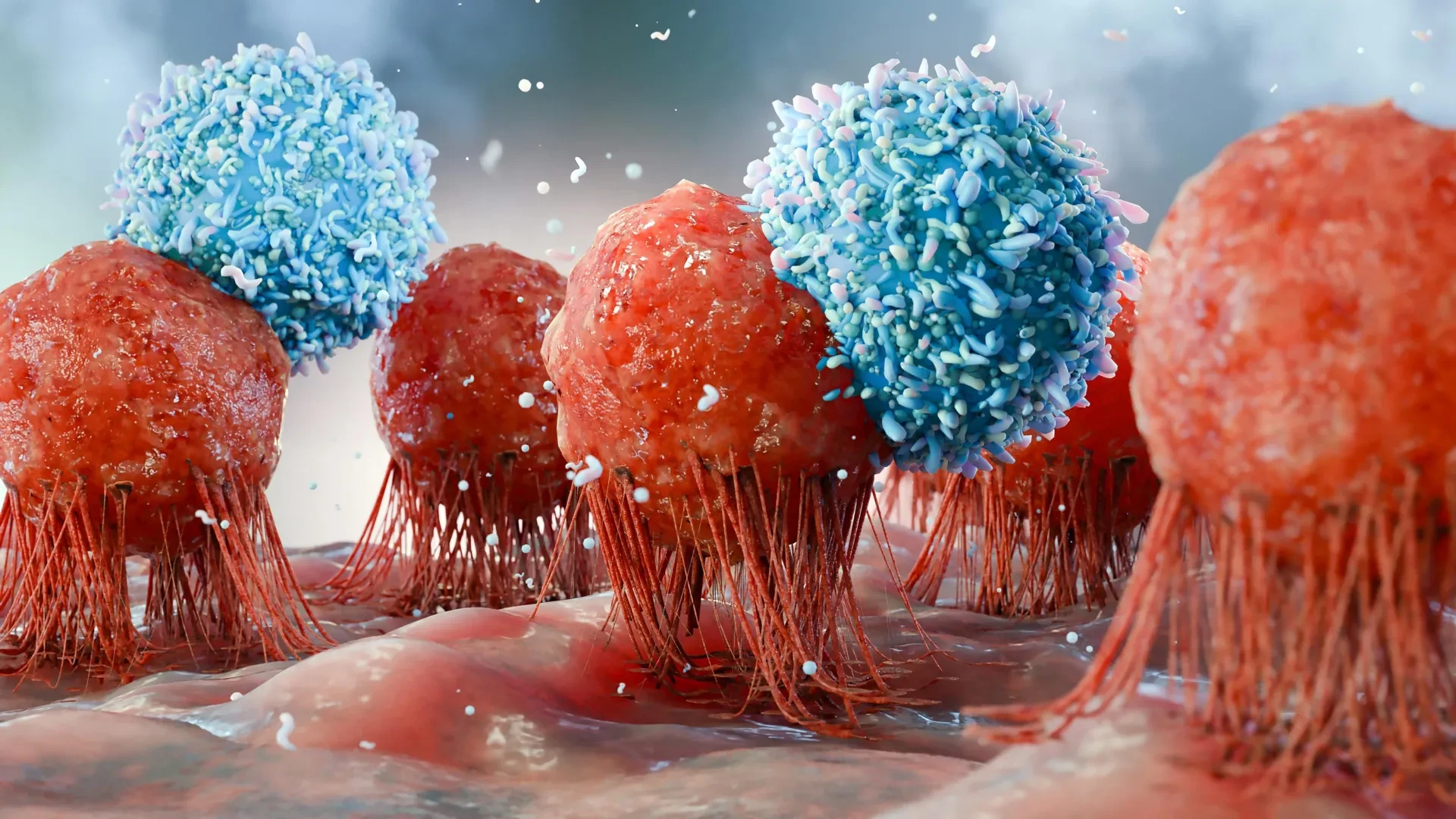
In a significant leap for the future of immunotherapy, scientists at the University of Southern California (USC) have pioneered a novel method to produce a potentially renewable supply of cancer-fighting immune cells. This breakthrough, recently detailed in the journal Cell, offers a promising new strategy for treating malignancies by overcoming one of the most persistent hurdles in modern medicine: the logistical and biological difficulty of manufacturing and sustaining an effective army of immune cells within a patient’s body.
By focusing on immature cells—specifically granulocyte-monocyte progenitors (GMPs)—that possess the innate capacity to develop into powerful immune defenders, the research team has established a system for generating large numbers of genetically engineered cells. These cells are designed not only to recognize and infiltrate tumors but also to trigger the body’s natural immune responses. In preclinical experiments involving mice, these engineered cells successfully engrafted into the bone marrow, continuously produced fresh immune cells, and significantly slowed the progression of both aggressive blood cancers and solid tumors.
Challenging the Conventional Understanding of Immune Development
The discovery carries implications that extend far beyond oncology, effectively challenging a long-standing paradigm in stem cell biology. Historically, the capacity for "self-renewal"—the ability of a cell to divide repeatedly while maintaining its original identity—has been almost exclusively associated with hematopoietic stem cells (HSCs). These master cells are the progenitors of all major blood and immune cell types in the human body.
In contrast, progenitor cells like GMPs were previously thought to be further along in their developmental journey, committed to producing a more limited range of cells with little to no capacity for long-term self-renewal. However, the USC team, led by corresponding author Qi-Long Ying, MD, PhD, a professor of stem cell biology and regenerative medicine at the Keck School of Medicine of USC, demonstrated that this view is incomplete. Under precisely controlled laboratory conditions, the researchers found that GMPs do not simply march toward maturation. Instead, they can be coaxed to self-renew, multiplying extensively while retaining their unique identity and their capacity to generate functional immune cells.
"The prevailing view has been that long-term self-renewal in the blood system is primarily a property of the hematopoietic stem cells that can generate any type of blood or immune cell," Dr. Ying explained. "We found that, under the right conditions, GMPs can also self-renew, dividing extensively while keeping their identity and ability to produce functional immune cells. That gives us a scalable starting point for engineering cell therapies for cancer, infectious disease, and potentially many other conditions."
Harnessing Macrophages as Potent Anti-Tumor Weapons
At the heart of this study is the macrophage, a versatile immune cell whose name, derived from Greek, literally translates to "big eaters." These cells are central to the body’s defensive architecture, possessing the ability to engulf bacteria, cellular debris, and, crucially, malignant cells. Beyond their phagocytic capabilities, macrophages act as conductors of the immune system, emitting chemical signals that influence and coordinate the behavior of other immune cells.
While macrophages are ideal candidates for immunotherapy—particularly because they naturally migrate into tissues and have the ability to penetrate solid tumors—translating them into a clinical treatment has been fraught with difficulty. Current therapies, most notably CAR-T cell therapy, have achieved remarkable success in treating blood cancers but have struggled to gain traction against solid tumors. Macrophages offer a potential solution to this limitation due to their innate mobility. However, once fully matured, macrophages are notoriously difficult to cultivate in large quantities in a laboratory setting. They are also sensitive to the stresses of freezing and storage, and when administered to a patient, they often aggregate in organs like the liver or lungs rather than dispersing to the tumor site, or they disappear too quickly to maintain a therapeutic effect.
By shifting their focus to the progenitor stage—the GMPs—the researchers bypassed these roadblocks. The team, led by first author Shi Yue, MD, developed a specialized chemical cocktail that allows GMPs to survive and thrive in the lab for extended periods. This environment keeps the cells in a "progenitor state," preventing them from prematurely maturing while ensuring they remain ready to differentiate into functional macrophages when the time is right.
Engineering for Enhanced Efficacy and Scalability
The ability to maintain a renewable source of these cells creates a platform that is both scalable and highly programmable. To test the clinical utility of these progenitors, the researchers employed chimeric antigen receptor (CAR) technology. By genetically engineering GMPs to carry these receptors, the scientists enabled the cells to identify specific molecular markers on the surface of cancer cells, effectively turning the macrophages into targeted hunters.
In a further effort to bolster the immune response, the team equipped some of these progenitors with an additional signal designed to recruit and stimulate other immune cells, including T cells. This dual-action approach proved particularly effective in experimental models. Because this added signal remained functional even when the immune characteristics of the donor cells did not perfectly match those of the recipient, the research opens the door to the potential creation of "off-the-shelf" allogeneic therapies. Such treatments, produced in large, standardized batches from donor cells, would represent a significant shift from the current, costly, and time-consuming practice of creating personalized cell therapies from each patient’s own immune system.
The reliability of the platform was further validated by a team at Stanford University, led by Ravi Majeti, MD, PhD, who independently replicated the expansion and engineering of the GMPs. "This method for the expansion and engineering of GMPs opens the door to numerous translational applications, much like T cell expansion and engineering," said Dr. Majeti, who serves as the Director of the Institute for Stem Cell Biology and Regenerative Medicine at Stanford. "We have already demonstrated engineering of these cells to drive multiple potent functions, and there is a lot more to be explored."
Preclinical Success and Future Horizons
In mouse models, the therapeutic potential of the engineered GMPs was clear. Once administered, the cells successfully migrated to the bone marrow and other niches within the body where blood cells are generated. Unlike mature macrophages, which may be rapidly cleared from the body, these progenitors acted as a sustainable, internal factory, continuously generating fresh cohorts of engineered immune defenders.
When tested against both blood cancers and solid tumors, the CAR-equipped GMPs significantly slowed disease progression. The therapeutic impact was notably amplified when the cells possessed both the CAR receptor and the immune-activating signal, demonstrating a robust and broader anti-tumor response.
The researchers also explored the potential of this technology beyond oncology. In a study of chronic granulomatous disease—an inherited condition where immune cells are unable to destroy certain bacteria and fungi—the administration of engineered GMPs successfully restored the animals’ ability to fight off infections. This finding suggests that the platform could eventually serve as a versatile toolkit for treating a variety of inherited immune deficiencies and infectious diseases.
While the results are highly encouraging, the researchers emphasize that this is a preclinical milestone. The transition from mouse models to human clinical trials will require rigorous investigation to ensure that these engineered progenitors can safely persist and function within the complex environment of the human body. Nonetheless, the study establishes a new framework for cellular therapy, suggesting that the "developmental stage" of a cell is just as critical as its genetic programming. As Dr. Ying noted, the future of immunotherapy may well depend on the ability to harness these versatile, renewable progenitors to build a more resilient and effective defense against disease.
The research team, which included experts from across USC, Creighton University, Stanford, and Harvard, was supported by a diverse array of organizations, including the Chen Yong Foundation of the Zhongmei Group, Myelogene Inc., the L.K. Whittier Foundation, and several institutional and research awards. The study, "Expansion and CAR engineering of granulocyte-monocyte progenitors for cellular immunotherapy," marks a foundational step toward a new era of scalable, off-the-shelf cell therapies.