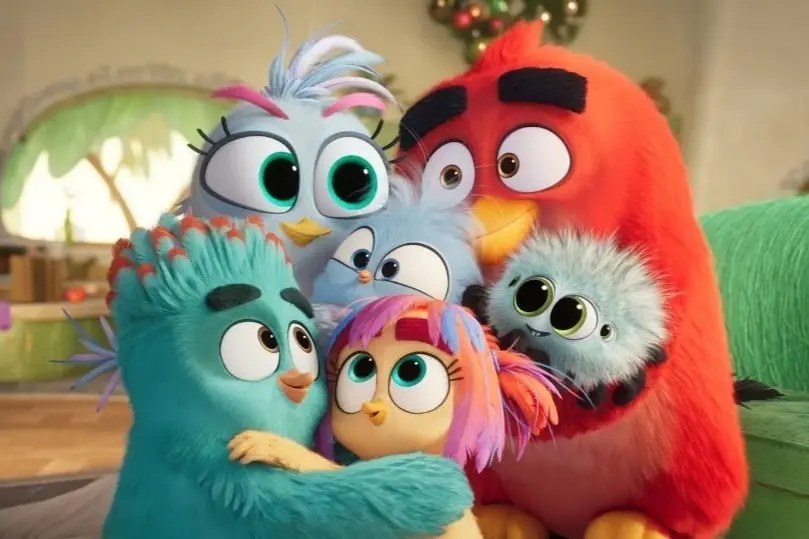
When the red-feathered protagonist of The Angry Birds Movie 3 returns to the silver screen this December, audiences will likely feel a comforting sense of familiarity. To the casual viewer, Red—the hot-tempered avian icon voiced once again by Jason Sudeikis—will look exactly as he did in his previous cinematic outings. However, beneath that recognizable exterior lies a massive technical overhaul. As DNEG Animation took over the reins for the third installment of the blockbuster franchise, the studio faced the daunting challenge of reconstructing the film’s digital assets from the ground up, ultimately developing a sophisticated automation system that transformed their production pipeline.
The transition was far from a simple hand-off. Because the proprietary grooming, rigging, and surfacing tools used by Sony Pictures Animation on the first two films were not compatible with DNEG’s existing infrastructure, the team had to essentially start from scratch. VFX supervisor Patrick Harboun, speaking at the View Conference in Turin, illustrated the magnitude of this challenge by joking about the state of their early digital assets. "We had to start from this—a plucked chicken version of Red," Harboun said, noting that even the underlying geometry of the character model required extensive reworking before they could even begin the process of rebuilding his signature plumage.
Respecting the IP and Analyzing the "Unwritten Rules"
While the technical process was a total rebuild, the creative philosophy remained conservative by design. The goal was not to reinvent the characters, but to ensure consistency for a global fanbase. "He’s similar by choice," Harboun explained, emphasizing that once a piece of intellectual property reaches the level of popularity enjoyed by Angry Birds, it effectively belongs to the audience.
To maintain that sense of continuity, the DNEG team embarked on a rigorous analysis of the previous films. Animators scrutinized the earlier movies frame by frame, cataloging the specific geometry of Red’s narrowed eyes, the precise angles of his beak, and the subtle boundaries of his facial expressions. This deep dive allowed them to codify what Harboun described as the "unwritten rules" of the franchise—identifying exactly when a stretched or squashed expression stopped feeling like Red. These insights were compiled into a comprehensive style guide and a reusable library of facial expressions, ensuring that while the tools had changed, the character’s soul remained intact.
The result of this meticulous work is a character that feels familiar yet subtly refined. Red’s feathers have been given a slightly softer appearance, while his eyes and beak now feature firmer, more toy-like surfaces. The studio deliberately avoided adding a unique "spin" to the character, adhering to the belief that their job was to honor the legacy of the brand rather than leave a stylistic fingerprint.
Innovation Through New Characters and Technical Hurdles
While Red and Silver—the latter voiced by Rachel Bloom—remain the central figures as they navigate the complexities of parenthood, the film introduces over 20 new characters, providing the animation team with more room for creative experimentation. Among the new arrivals are Red and Silver’s children: the aspiring athlete Glider (voiced by Walker Scobell), the temperamental June (played by Emma Myers), and the youngest, Olly (voiced by Psalm West). The family’s pet spider, Fuzzy (voiced by James Austin Johnson), also presented a unique design challenge. "The goal was to make a spider that even an arachnophobe would love," Harboun noted.
One of the most complex technical hurdles involved the character of Olly, whose glasses serve as his primary means of expression. Because the lenses were intended to act as his eyes, the team had to figure out how to incorporate blinking eyelids and shifting brows within the confines of the eyewear. Their solution, dubbed "Pancake Eyes," involved duplicating and flattening portions of the baby bird’s facial rig directly behind the lenses. By then restoring the curvature and allowing the expressions to interact with the character’s exaggerated squash-and-stretch animation, the team ensured that Olly’s emotions remained clear and expressive despite his spectacles.
Automating the Workflow: "Human Learning"
The most significant efficiency gain during the production of The Angry Birds Movie 3 came from a sophisticated performance-effects process. Building upon techniques DNEG pioneered for The Garfield Movie, the studio implemented a system that automatically simulated effects on fur, feathers, and skin deformation once a character’s animation was approved.
The system was designed to handle the heavy lifting, rendering a preview and flagging shots that required bespoke artist attention. As the crew encountered new production challenges, they continuously refined the reusable templates for each character. Harboun was quick to clarify that this was not a product of machine learning, but rather "human learning." The artists maintained the templates and oversaw the system’s logic.
Early in the production schedule, the automated process could handle roughly 25% of the shots. By the later stages, that figure had climbed to 75%. Harboun emphasized that this did not mean machines were doing the animation; rather, it freed up the studio’s artists to focus their talents on "hero work"—the most complex and character-driven moments of the film.
To further streamline production, the team introduced additional innovations, including a secondary, invisible layer of fur that activates when a character stretches, effectively preventing the dreaded "bald patches" that can occur in digital animation. They also developed one-click tools for building props like ropes and hay, allowing animators to manipulate these environmental elements independently without needing to constantly request assistance from other departments.
Managing Color and Depth
Production designer Jeanie Chang’s saturated, tropical color palette presented its own set of hurdles. Because the film is so vibrant, maintaining the character’s visual identity across different lighting conditions was a constant balancing act. Lighting references were painted directly over layout images to guide the team, but individual character lighting still required adjustment in almost every scene. "In every given situation, Red always needs to be red," Harboun remarked.
As the franchise expands the scope of its world, the film will introduce audiences to Pigtropolis, the city serving as the home to the series’ pig residents. Harboun revealed that the opening sequence underwent a significant change late in production, shifting from a night scene to a daylight setting to better establish the tone.
Looking ahead to the film’s theatrical release on December 23, Harboun offered a specific recommendation for audiences: the 3D experience. "I’m usually not a fan of 3D, but I really recommend that you check out the 3D version," he said. For the DNEG team, all the technical innovation—from the automated fur systems to the "Pancake Eyes"—ultimately serves a single purpose: to reinforce the identity of characters that audiences have come to know and love. While the underlying machinery of the franchise has been entirely rebuilt, the characters themselves remain the familiar, red-feathered heroes that fans expect.