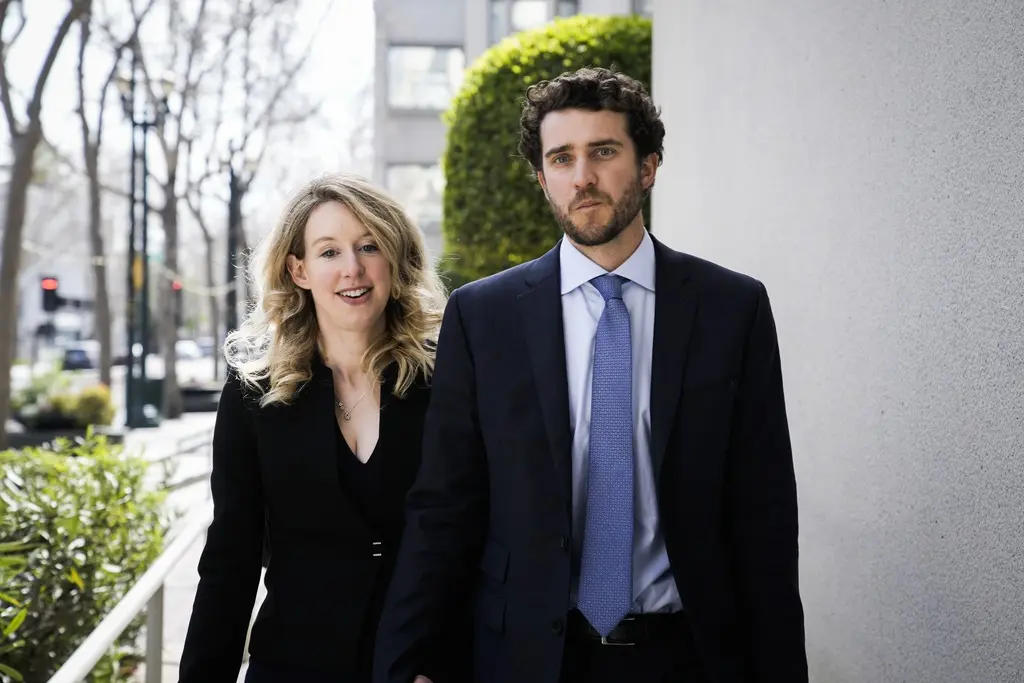
In a candid appearance on the "All-In" podcast, Billy Evans, the partner of disgraced former Theranos CEO Elizabeth Holmes, has addressed the public’s polarizing reaction to the new documentary You Can See Everything. Directed by Nathan Fielder and Lance Oppenheim, the film, which premiered to significant critical acclaim and mounting Oscar buzz at last month’s Telluride Film Festival, offers an intimate—and often uncomfortable—look at the final days of Holmes’ life before she began her 11-year prison sentence.
As the film makes its way into theaters, Evans has stepped into the spotlight to explain the couple’s controversial decision to grant an intimate film crew access to their home during one of the most volatile periods of their lives. For many, the film is a chilling window into the mind of a woman convicted of massive fraud; for Evans, it was a deliberate attempt to humanize a figure whose public persona has become synonymous with deception.
The Motivation Behind the Lens
The decision to participate in such an invasive project was not made lightly, according to Evans. He explained that the primary motivation was to counter the "ossified" narrative that has surrounded Holmes since the collapse of her blood-testing startup, Theranos. After years of intense media scrutiny, countless investigations, and a high-profile criminal trial, Evans argued that the public version of Elizabeth Holmes had become static, defined entirely by her legal downfall.
"[The context going in] is Elizabeth is facing an 11-year sentence. She’s been prevented from speaking publicly in any way, shape or form and this would come out after that period in which she is now allowed to talk," Evans stated during the podcast interview. He emphasized that the documentary was never intended to be a legal defense or an attempt to re-litigate the facts of her case. "There’s been a lot of media produced on her. There’s been a lot of people who have told her story. That narrative is pretty ossified. The whole idea was: here she is, see her and make up your own mind."
Evans noted that, due to the restrictions placed upon her during the lead-up to her incarceration, Holmes was legally barred from discussing the specifics of her criminal case. Therefore, the film’s structure was designed to sidestep the legal battleground entirely. By showing her in mundane, domestic settings, the filmmakers sought to present a portrait of the person behind the headlines, rather than the CEO behind the scandal. "Practically, at this time she was not allowed to talk about the case, so she was gonna follow the rules and not talk about the case," he added.
A Quest for Humanization
For Evans, the documentary serves as a macro-level version of the personal experiences he has had with his own friends and family since he first began his relationship with Holmes. He described a recurring cycle where those closest to him—including his grandmother—initially expressed disbelief and concern upon learning of his involvement with the former executive.
"I have gone through this consistent experience with the people who love me most, from my grandmother to my best friends," Evans explained. "They’d hear I knew [Elizabeth Holmes] or I was falling for this person and now we’re going to have a kid… in the beginning, every single one of these people thought I was crazy. ‘Do you know who she is?’"
His response to these concerns was always the same: a plea for them to meet her in person. According to Evans, the effect of those face-to-face meetings was transformative. He claimed that when people interacted with Holmes in "totally natural environments"—such as hiking or helping a friend—their perceptions shifted radically. The documentary, he argued, was intended to scale that personal experience to the general public, providing an opportunity for viewers to "sit with her" and form an opinion based on observation rather than reputation.
Backlash and the Power of Perception
Despite these intentions, the release of You Can See Everything appears to be producing the exact opposite effect of what the couple may have hoped for. Rather than softening the public’s stance, the film has served to amplify the widespread distrust and backlash that have followed Holmes for years.
The initial marketing for the film, particularly an A24-produced teaser trailer, set a dark and foreboding tone that immediately colored audience expectations. The trailer featured footage that many viewers found deeply unsettling, highlighting Holmes’ demeanor and her assertions that she did not commit the crimes for which she was convicted. The imagery, paired with a haunting score, created a visceral reaction that seemed to confirm, rather than challenge, the public’s negative perception of her character.
Evans, who has notably not yet viewed the final cut of the documentary, seems aware of the potential for the film to damage their image further. During the "All-In" interview, he admitted with a touch of self-reflection that the project might have been a miscalculation. "I haven’t seen it. I might think this is the dumbest thing I have ever done," he said. He acknowledged that the trailer’s aesthetic, particularly the music, was clearly crafted with an "anti-Holmes" bent, conceding that she "looks insane" in the promotional footage.
Navigating the Surreal
When asked if he felt nervous about the film’s release and the potential for a fresh wave of public vitriol, Evans remained stoic. Having spent years at the center of a media firestorm that began in 2017 when he and Holmes first met, he appears to have developed a thick skin.
"Am I nervous? I have been through so many intense, surreal experiences that it takes a bit to raise my blood pressure," Evans remarked. While he acknowledged that there is "certainly concern" regarding how the film will be received, he stood by the decision. Ultimately, he framed it as a choice they made together, accepting the risks that come with inviting the public into their private lives.
The couple’s life has been marked by major milestones amidst the legal chaos. Holmes and Evans welcomed their first child, a son named William, in 2021, while the legal proceedings against Holmes were still in full swing. Their daughter, Invicta, followed in 2023. These domestic details, often highlighted in the documentary to provide a sense of normalcy, are part of the reality Evans wanted the public to see—a life that exists alongside the wreckage of the Theranos empire.
As the film continues to garner attention and spark debate, the question remains whether the attempt to "humanize" Holmes will ever succeed, or if the public’s view of her is as firmly set as the legal verdict that sent her to prison. For now, the documentary stands as a testament to their attempt to regain control over a narrative that has long since moved beyond their influence. Evans’ appearance on the "All-In" podcast serves as a final, desperate plea for a fair hearing—a request that, in the court of public opinion, remains largely unanswered.