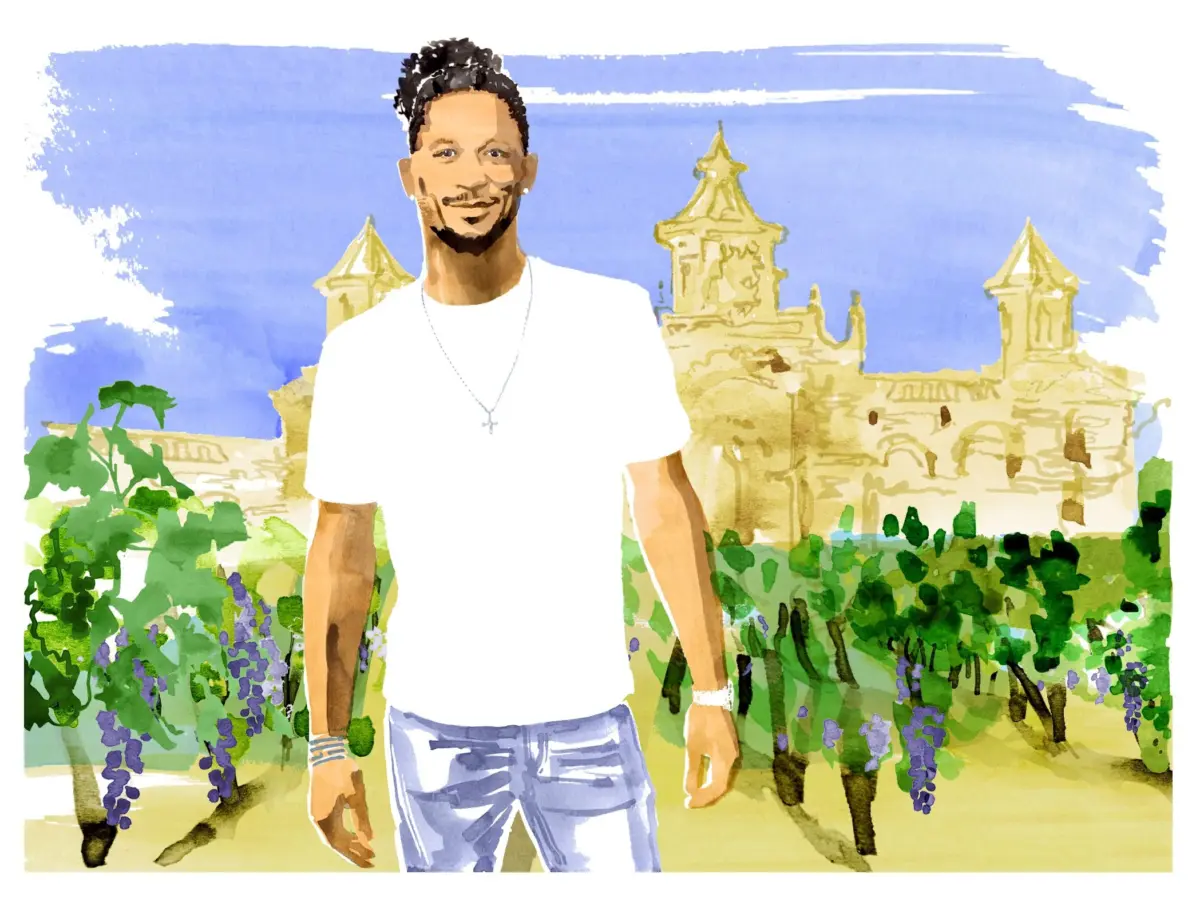
For New York Knicks shooting guard Josh Hart, the path to recovery after a grueling NBA championship run was not found in a cryotherapy chamber or a massage room, but rather in the historic, sun-drenched vineyards of France. Fresh off the high of the 2025–2026 NBA championship, Hart, alongside his wife, Shannon, traded the bright lights of Madison Square Garden for a 10-day European excursion that served as both a victory lap and a much-needed respite from the relentless pace of professional basketball.
The transition from the intense media obligations, celebratory parades, and the physical toll of a championship season to the quiet, rolling hills of Europe was a deliberate choice for the couple. Traveling with friends, they navigated a curated itinerary that took them through the iconic streets of Rome and Paris and the coastal beauty of Capri. Yet, while those destinations offered their own distinct allure, it was a four-day stint in the heart of Bordeaux that truly captured Hart’s imagination and solidified his burgeoning passion for oenology.
Hart’s interest in wine is far from a new development. He traces the roots of his hobby back to his tenure with the Los Angeles Lakers, where the camaraderie of the locker room often extended to the team plane. It was there, sharing vintages with teammates LeBron James and Rajon Rondo, that Hart first began to appreciate the complexity and culture behind the label. What started as a casual curiosity during long cross-country flights has blossomed into a sophisticated hobby that offers him a rare sense of intellectual and sensory escape from the pressures of the league.
For a man accustomed to the modern, high-tech environments of professional sports facilities, the ancient cellars of Bordeaux offered a profound contrast. Describing the region as a "traveling history book," Hart found himself captivated by the subterranean architecture of the local wineries. He spoke with genuine wonder about exploring dark, cool wine caves—spaces where the air is thick with the scent of age, characterized by the damp presence of mildew and mold that marks the slow passage of time. To a connoisseur like Hart, these caves were not just storage units for bottles; they were sacred spaces housing vintages that dated back to the 1880s, providing a tangible connection to a past that predates the modern era of athletics by more than a century.
Over the course of his stay, Hart visited roughly seven wineries, an immersion that allowed him to move beyond the surface-level appreciation of wine and into the technical nuances of production and tasting. Among the highlights of his trip was a visit to the storied Château Lynch-Bages. The estate, known for its prestige and tradition, provided the setting for one of the most memorable experiences of Hart’s entire European tour.
Following a quintessential French lunch, the co-owner of the estate, Kinou Cazes-Hachemian, facilitated a semi-blind taste test for the group—a ritual she described as one of her favorite ways to engage with visitors. In a semi-blind tasting, the participants are aware of which wines are present, but they are not told the order in which they are being poured, requiring them to rely entirely on their palates to identify the characteristics of each vintage.
The exercise was comprehensive, featuring six distinct bottles, including the esteemed 2018 Château Haut-Bataille and the classic 2010 Lynch-Bages. The winery staff meticulously labeled each glass, and the guests were provided with paper to record their assessments. The stakes were low, but the challenge was significant. The only "gimme" in the lineup was the 2025 Blanc de Lynch-Bages, the lone white wine among the reds, which every member of the party correctly identified.
For Hart, the stakes felt personal, rooted in a competitive history with his wife. He recalled a humbling experience from five or six years ago, during the nascent stages of his wine education, when Shannon had tested him with just two bottles: a 2016 Château Pontet-Canet and a selection from Nine Suns in Napa Valley. He had missed the mark entirely, and he jokingly noted that his wife had never let him live it down since. This time, however, the result was different. Demonstrating the growth in his palate and the depth of his dedication to the craft, Hart correctly identified every wine in the flight, even managing to outperform his host, Cazes-Hachemian.
The victory was met with good-natured fanfare from the staff, who presented Hart with a commemorative pin bearing the phrase, "Keep Calm and Drink Lynch-Bages." It was a gesture that acknowledged not just his performance, but his infectious enthusiasm for the subject. The staff seemed to recognize that, for Hart, this was not a fleeting tourist attraction, but a genuine point of interest that he would be discussing long after his return to the United States.
Looking toward the future, the experience has already spurred further planning. Hart and his wife have begun discussing potential trips to the vineyards of Burgundy and the champagne houses of the Champagne region for the following year. Yet, despite the allure of new territory, Hart remains deeply drawn to the region that provided him with such a rich experience. He confessed that he would happily return to Bordeaux tomorrow if the opportunity arose. The combination of the region’s deep historical resonance, the genuine warmth of the hospitality, the quality of the intellectual discourse surrounding the craft, and the sheer pleasure of the long, lingering lunches and dinners made the trip an unparalleled experience.
As Hart prepares to pivot back to his professional duties—with the 2026–2027 NBA regular season set to tip off on October 20—the lessons of his trip serve as a reminder of the importance of balance. Whether he is on the court executing a play for the Knicks or sitting at a table in a French cellar evaluating the notes of a 2010 vintage, Hart’s approach remains one of focus and curiosity. The life of an NBA athlete is defined by high-stakes performance and public scrutiny, but in the cellars of Bordeaux, Josh Hart found a different kind of intensity—one that, for a few days at least, was measured not in championship rings or final scores, but in the subtle, enduring beauty of a glass of wine.