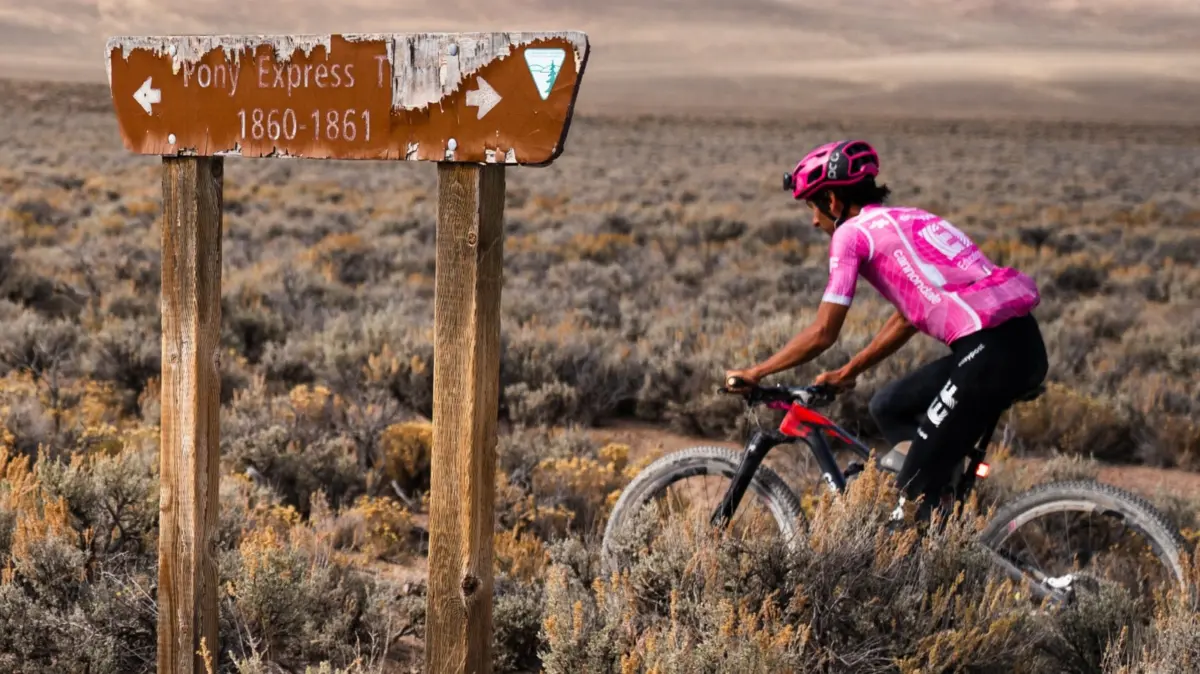
The modern world is frequently described as shrinking, knit together by high-speed fiber-optic cables, instant messaging, and global aviation networks that render vast oceans and continents traversable in a matter of hours. Yet, the physical geography of the United States remains as formidable, sprawling, and unforgiving as it has ever been. Proving this exact point with sheer human endurance, Australian professional cyclist Lachlan Morton completed a grueling cross-country odyssey last week, following the historic route of the legendary Pony Express.
Over the course of 6 days, 21 hours, and 15 minutes, Morton pedaled his way across the American West, ultimately besting an endurance milestone that had stood for more than a century and a half. His remarkable run shattered the 1861 record originally set by the relay riders who carried Abraham Lincoln’s inaugural address to California by an incredible 19 hours and 45 minutes. The 1,966-mile journey served as a fitting and arduous farewell for Morton from EF Education-EasyPost, widely recognized as the sole American team competing on the elite UCI World Tour.
For those whose memories of secondary school U.S. history are hazy, the Pony Express was a high-stakes, hyper-fast mail delivery service that bridged the gap between St. Joseph, Missouri, and Sacramento, California. Operating during an era when modern infrastructure was virtually nonexistent west of the Mississippi River, the service aimed to transport letters across the perilous continental interior in ten days or less entirely by horseback. When the enterprise was officially established in 1860, St. Joseph marked the absolute westernmost terminus of the United States railway system. Anyone hoping to cross the mighty Missouri River and venture further west overland had to do so by foot, on the back of a horse, or crammed into a bouncy stagecoach.
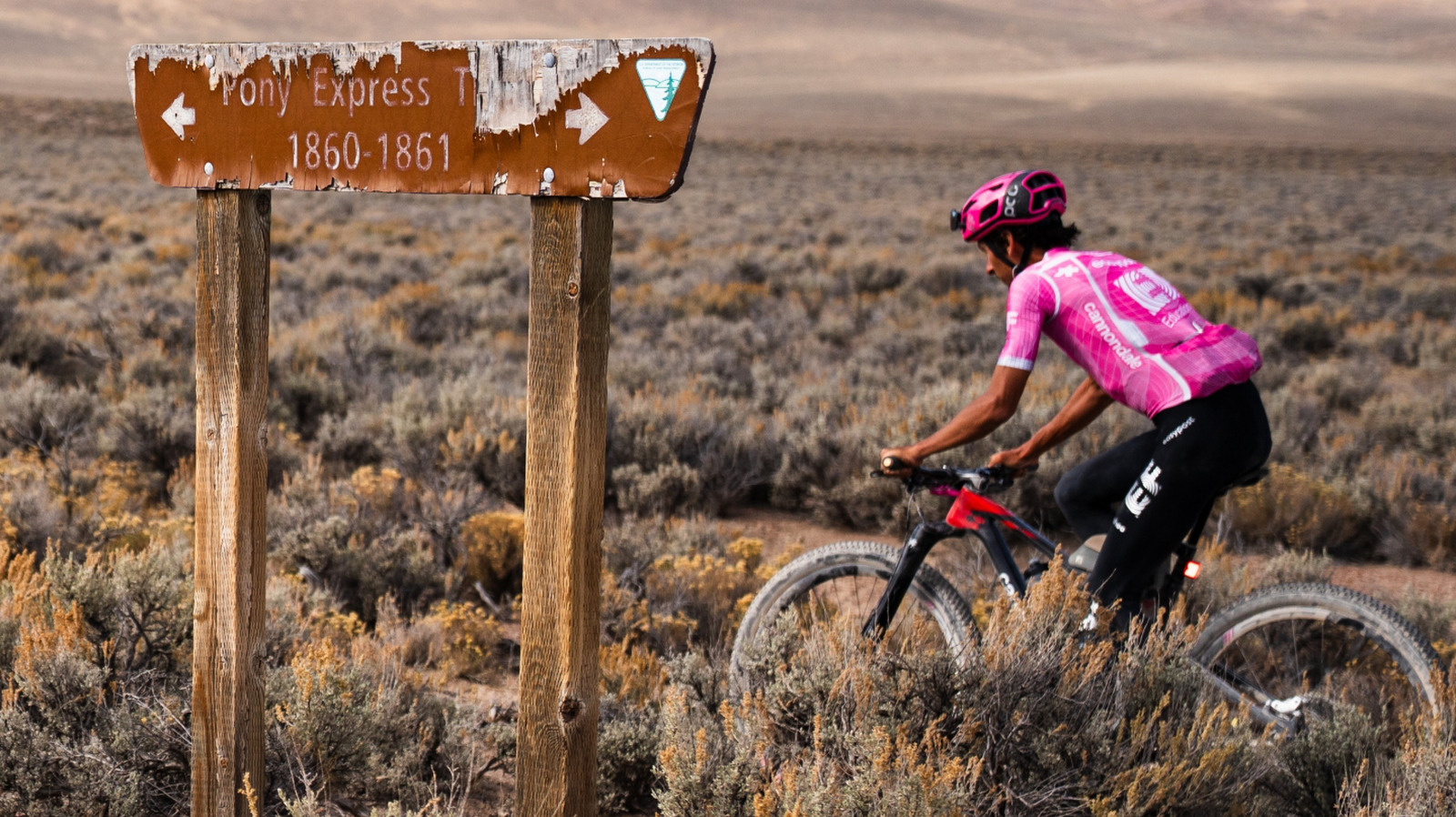
The rapid expansion of the American frontier prompted deep questions about supply lines and communication. With California experiencing an explosive population boom following the historic gold rush of 1848, the demand for fast, reliable coast-to-coast communication skyrocketed. Despite filling a vital cultural and logistical need, the Pony Express was never a financially viable business venture. According to records maintained by the Smithsonian Institution, the service charged an exorbitant $5.00 per half-ounce—on top of regular postage rates—making it far too expensive for the average citizen.
Operating under this immense financial strain, the iconic enterprise proved remarkably short-lived. After just 18 months in active operation, the Pony Express became completely obsolete and was forced to file for bankruptcy. Its demise was sealed in October 1861 with the triumphant completion of the first transcontinental telegraph line, which allowed messages to flash across the continent in seconds rather than days. Across its entire brief, perilous history, the Pony Express delivered roughly 35,000 letters, cementing its legacy not in corporate profits, but in the gritty folklore of the American frontier.
Different horses for different courses
Even though the enterprise survived for only a brief window of time, the legend of the Pony Express looms remarkably large in the American imagination. The sheer danger of delivering mail across the rugged, untamed expanse of the American West turned the riders—predominantly young men and teenagers—into revered historical figures, celebrated widely for their extraordinary bravery, resilience, and fortitude.
Reflecting on the psychological weight of the endeavor, Morton expressed profound admiration for the historical participants. The appeal for him was deeply rooted in the history of the landscape. He noted that it is a wild concept to step into the mindset of a teenager trying to earn some money, faced with the staggering opportunity to mount a horse with a leather mochila full of mail and ride flat out through the night for 75 miles. These riders traversed remote, treacherous terrain that virtually no one else dared to cross, performing an act of undeniable courage that remains difficult to fathom today. For Morton, undertaking the ride was a way to gain a truer, more visceral understanding of what those young men experienced and the immense difficulties they faced more than 150 years ago.
True to the spirit of historical resourcefulness, Morton approached the route using a methodology that mirrored the operational logistics of the original Pony Express. The historic mail service relied on fixed stations spaced roughly a dozen miles apart, allowing riders to constantly swap tired mounts for fresh horses. Because the historic route is far from fully paved today, Morton needed an equally adaptable fleet. He opted to continuously switch between a road bike, a gravel bike, and a mountain bike to adequately handle the constantly shifting, often hostile terrain. Rather than building permanent stations along the trail, the EF Education-EasyPost crew provided mobile support, tailing the cyclist in a dedicated truck carrying his rotation of "fresh" bikes.
It was about the journey, not the destination
The grueling journey to Sacramento proved to be every bit as difficult as Morton and his support team anticipated. As he pushed westward, the elements threw relentless obstacles in his path. He expertly dodged sticky, clinging mud patches across the plains of Nebraska, fought against punishing headwalls of wind sweeping through Wyoming, and carefully navigated freezing mountain passes over the Rockies to avoid hypothermia. Later, he had to grind his way through fine, choking "moon dust" in the expanses of Nevada.

Additional anxiety loomed large toward the end of the expedition with warnings that Hurricane Rachel might churn inland, bringing even stronger winds and the genuine threat of washed-out roads during his final grueling day traversing the Sierra Nevada mountain range. Fortunately, the severe weather held off, remaining dry enough for Morton to finally pedal across the finish line at the historic Pony Express Terminal in Sacramento.
Throughout the exhausting endeavor, Morton actively embraced the historic struggles of the route while finding joy in meeting local residents along the way. Communities along the trail displayed immense pride in their local history, cheering him on as he passed. To keep enthusiasts connected, EF Education-EasyPost broadcasted the Australian cyclist’s live GPS coordinates online. This enabled a dedicated community of "dot-watchers" to track his progress and even physically join Morton for stretches of the route to offer roadside encouragement—including a serendipitous encounter with a Dutch student studying at the University of Wyoming who turned out to show support.
Both the original Pony Express of the 19th century and Morton’s modern record-breaking cycling run serve as enduring reminders that the fundamental human drive to conquer vast distances and connect communities has remained a core pillar of the American psyche for well over a century and a half.