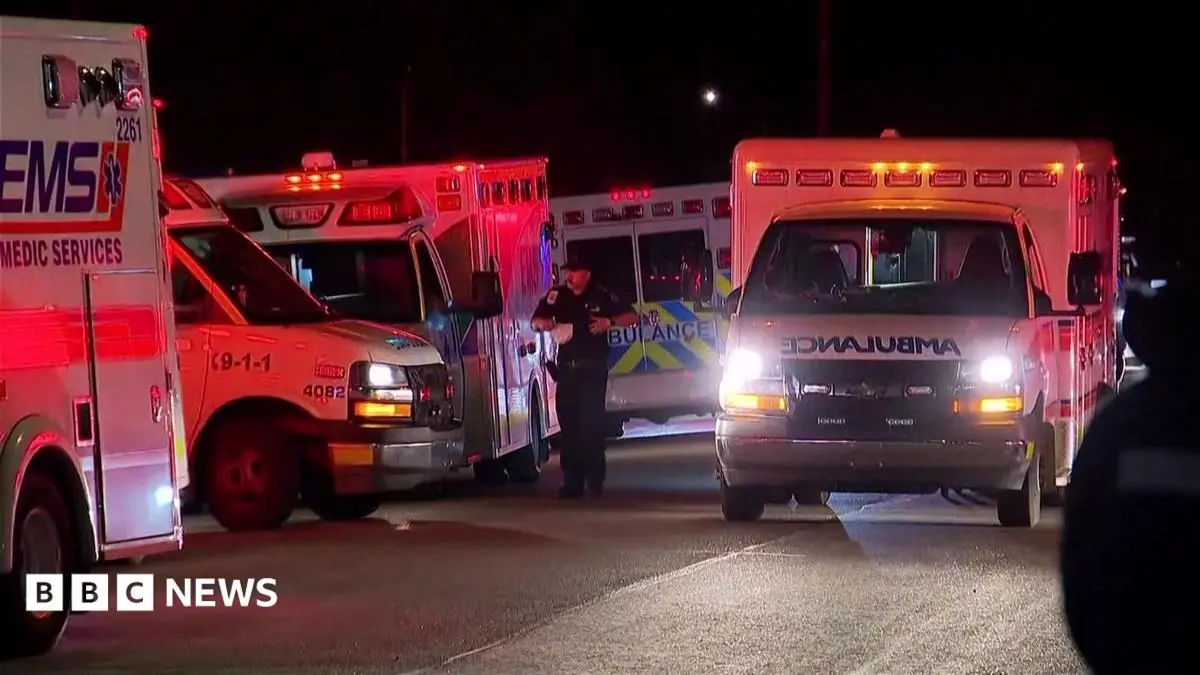
A profound sense of shock and mourning has descended upon Alberta after a catastrophic fire erupted at Canadian Forces Base (CFB) Wainwright on Saturday, resulting in multiple fatalities and a significant number of injuries. The incident, which unfolded during a live-fire military training exercise, has triggered a massive emergency response and placed regional healthcare facilities under extreme duress.
The Canadian Armed Forces (CAF) confirmed that the incident occurred at approximately 16:00 local time (22:00 GMT) on Saturday. While official casualty figures remain subject to a rigorous assessment process, the military has indicated that it will not disclose specific details regarding the identities or final counts of the deceased and injured until the assessment is complete and the next of kin have been notified. However, reports from Global News, citing unnamed military sources, have suggested that at least seven individuals lost their lives, with dozens more suffering from varying degrees of injury.
A Rapidly Escalating Disaster
The fire is believed to have been sparked when a live-fire training exercise inadvertently struck a gas line or gas well on the grounds of the base. CFB Wainwright, located in central Alberta, serves as one of the most vital and active training hubs for the Canadian military, hosting thousands of personnel for tactical exercises throughout the year.
The situation was exacerbated by extreme environmental conditions. According to the Municipal District of Wainwright, the blaze spread with terrifying speed, fueled by high winds that reached gusts of up to 100km/h (62mph). The intensity of the fire allowed it to breach the perimeter of the base, creating a rapidly expanding zone of danger that forced local authorities to scramble an immediate containment effort.
Defence Minister David McGuinty addressed the gravity of the situation shortly after the incident, describing the scene as "very, very active and delicate." Speaking to reporters, McGuinty expressed his profound concern, noting that he could not recall a peacetime incident of this magnitude in recent memory. Despite the confusion and chaos that typically accompanies such a disaster, the government was quick to address speculation regarding the cause. A defence department spokeswoman confirmed on Sunday morning that while investigations are in the early stages, there are no indications that the explosion and subsequent fire were the result of any terrorist activity or malicious intent.
Healthcare Facilities Under Strain
The scale of the disaster became immediately apparent when the Royal Alexandra Hospital in Edmonton declared a "code orange." This protocol is reserved for mass casualty incidents, signaling that a healthcare facility is preparing to receive a surge of patients that exceeds normal capacity. The declaration triggered a massive mobilization of medical staff, surgical teams, and emergency resources across the Edmonton region.
Dr. Warren Thirsk, an emergency department physician at the Royal Alexandra Hospital, provided a harrowing account of the pressure facing the medical staff. Speaking to the Canadian Broadcasting Corporation (CBC), Dr. Thirsk explained that the influx of patients was of such a magnitude that it risked overwhelming the city’s entire healthcare network.
"It is more patients than any of us want to count right now," Dr. Thirsk said. "It’s a disaster. It’s a one in every 15 to 25-year disaster." The gravity of his words underscored the severity of the burns, trauma, and inhalation injuries sustained by the victims of the fire, many of whom were soldiers in the midst of training when the gas line was struck.
A Community in Mourning
As the fire was brought under control by local fire crews, the focus shifted to the human toll. Prime Minister Mark Carney issued a statement expressing his condolences, noting that his "thoughts are with all the brave women and men affected" by this tragedy. The sentiment was echoed by officials across the country, as the nation grapples with the loss of service members in such a sudden and violent manner.
For the town of Wainwright, the impact is personal. Mayor Bruce Pugh spoke of a "heavy day" for his community, emphasizing the deep, symbiotic relationship between the town and the military installation. "We have neighbours who are either serving or former members of the Canadian Armed Forces," Pugh told the CBC. "We’re integrated, our kids play in the same hockey teams, attend the same schools."
The mayor expressed his belief that this event will inevitably be remembered as the largest-ever mass casualty event to hit the region. The proximity of the base to the town means that many of the families affected are also the families of local residents, further tightening the social fabric of grief that has enveloped the area. Local authorities have urged civilians to steer clear of the vicinity of the base to allow emergency vehicles and investigators unrestricted access, as the "delicate" work of site analysis and recovery continues.
Ongoing Investigation and Response
The investigation into how a training exercise led to the rupture of a gas line is expected to be lengthy and exhaustive. Military investigators are working alongside provincial authorities to determine the sequence of events that led to the breach. Questions remain regarding safety protocols, the proximity of training grounds to energy infrastructure, and the impact of the high winds on the containment of such a volatile site.
As of Sunday, fire crews had successfully contained the blaze, preventing further spread into the surrounding countryside. However, the military remains in a state of high alert as they transition from emergency response to recovery. The base, usually a hive of activity, remains largely locked down while investigators comb through the charred remains of the training area.
For the Canadian Armed Forces, the focus remains on the well-being of the survivors and the respectful handling of those who perished. The "code orange" at Edmonton hospitals remains in effect as staff continue to stabilize the wounded, many of whom are expected to require long-term specialized care.
The tragedy at Wainwright serves as a somber reminder of the inherent dangers faced by military personnel, even during routine exercises meant to prepare them for the defense of the nation. As the investigation progresses, the residents of Wainwright and the broader Canadian public await answers, hoping to understand how a day of training transformed so quickly into a national tragedy. For now, the town and the military are united in a common cause: supporting the families of the victims and navigating the difficult days ahead as they attempt to reconcile with the scale of the loss.