By Nick Thorpe
Reporting from Tirana, Albania
The streets of central Tirana have transformed into a volatile landscape of smoke, sirens, and confrontation as anti-government protests entered their fifth consecutive day on Saturday. What began as a series of student-led demonstrations in the summer has metastasized into a broad, increasingly desperate movement against the administration of Prime Minister Edi Rama, fueled by mounting allegations of corruption and a growing sense of disenfranchisement among the youth.
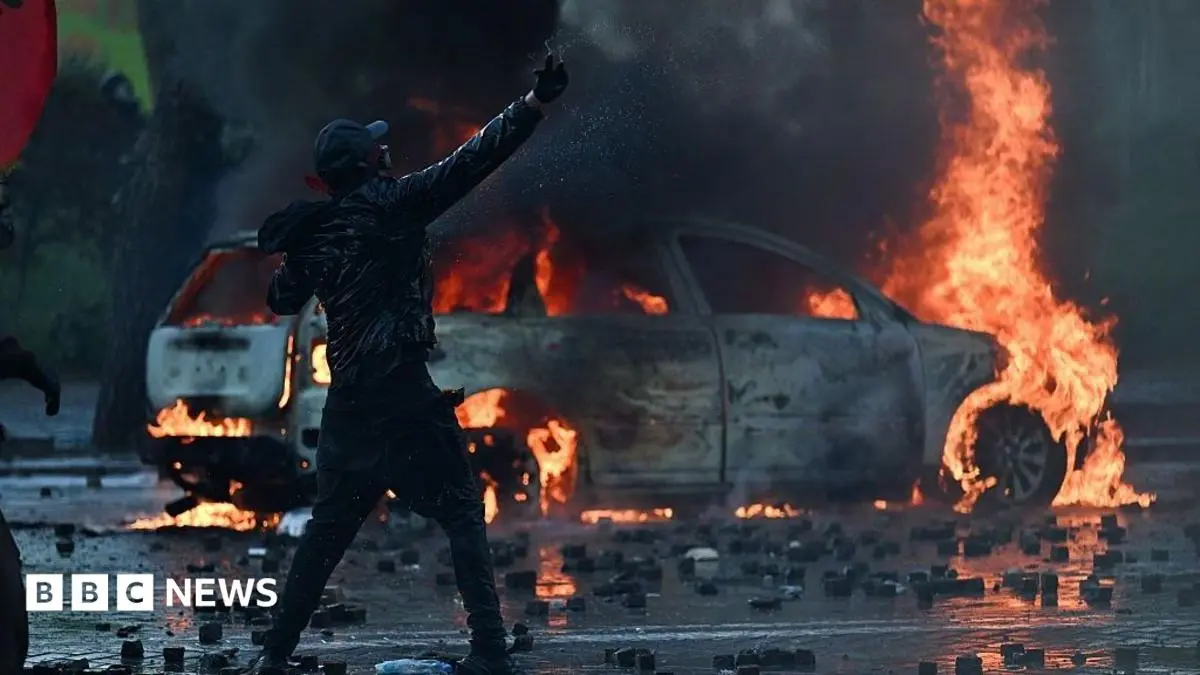
Throughout Saturday, masked protesters—the majority of them high school and university students—engaged in pitched battles with riot police. The air was thick with the acrid smell of tear gas, while the rhythmic, percussive booms of petrol bombs echoed off the government buildings. The intensity of the clashes has escalated significantly, with police deploying water cannons and, according to reports from the scene, using rubber bullets for the first time to disperse the crowds.
The focal point of the early afternoon was the Ministry of Education, which has become a symbolic fortress for the state’s authority. As police lines attempted to hold their ground, they were met with a relentless hail of rocks and firecrackers. The response from law enforcement was immediate and heavy-handed; volleys of tear gas were fired into the throngs of demonstrators, causing mass panic and forcing groups to scatter into side streets.
Despite the heavy police presence, the protesters remained undeterred. Many came prepared for the chemical onslaught, wearing gas masks or improvised face coverings. Volunteers could be seen moving through the dense clouds of white vapor, handing out syringes filled with saline solution to help fellow demonstrators wash the stinging irritant from their eyes. The scene was a stark reflection of the deep-seated grievances driving this movement: a generation of young people who feel that peaceful methods have failed and who are now, in their own words, turning to the streets to force change.

A Capital Under Siege
By mid-afternoon, the center of gravity for the protests shifted toward the office of Prime Minister Edi Rama, located on the city’s main boulevard. Here, the crowd density reached its peak, swelling to numbers far exceeding those of the previous four days. The boulevard, usually a symbol of the city’s aspirations toward modernization, became a claustrophobic theater of conflict.
Riot police, shielded by their heavy gear, faced a steady, punishing barrage of cobblestones and fireworks. The police responded in kind, launching repeated volleys of tear gas that, at times, landed deep within the crowd, creating pockets of chaos and injury. Yet, the pattern remained consistent: as soon as the gas began to clear, the protesters, fueled by a mixture of anger and defiance, would reorganize and renew their assault.
The atmosphere was further darkened by the sight of black smoke billowing from a burning vehicle, a grim testament to the violence that has overtaken the capital. The constant wail of sirens—ambulances and police cars alike—split the air, signaling the toll of the day’s activities. As dusk settled over Tirana, the arrival of police special forces to reinforce the riot lines signaled a hardening of the state’s resolve.
The human cost of these five days is already substantial. Dozens have been injured on both sides of the barricades. Authorities have confirmed that 80 individuals have been formally charged with disorder, while hundreds more have been detained, arrested, or are currently under investigation. For those living or working in the city center, the area increasingly resembles a war zone, littered with the debris of broken glass, charred remnants of items, and the lingering residue of chemical deterrents.
The Voices of the Uprising
Amidst the chaos near the scorched education ministry, 19-year-old George stands as a representative of the movement’s resolve. A medical student who funds his education by working as an electrician, he is draped in a scarf and wearing protective goggles—the standard uniform of the modern Albanian protester. He has been participating in the demonstrations since they began in early June, and today, he clutches two rocks in his gloved hands.

When asked if he harbors concerns about the potential for causing serious injury to the officers standing on the other side of the line, George is firm, if conflicted. "We have mothers too. We have family too," he says. "We were peaceful for 135 days. Now we are trying to do like in France… we are trying to make a revolution. Our government doesn’t want peace, so we are using violence."
This sentiment is echoed by many others, including those even younger than George. Klea, a 17-year-old in her first year of university, is among those who have abandoned their classrooms to take to the streets. "All the students are boycotting their university classes and left school to fight for our rights," she explains. She also voices a common suspicion among the demonstrators: that the protests have been infiltrated by provocateurs intent on smashing stores and banks specifically to discredit the movement and justify a harsher crackdown.
The Political Impasse
The current unrest poses an existential challenge to the political status quo. Prime Minister Edi Rama has held power for 13 years, dominating the Albanian political scene in much the same way his rival, Sali Berisha of the opposition Democratic Party, did for decades before him. The protesters, however, reject this binary. They claim they are fighting against the "whole corrupt political class," rather than seeking to trade one party for another.
Osman Stafa, a prominent journalist for News24 and an outspoken activist, articulated the desire for a clean break. He has called for the formation of a neutral, caretaker government for a period of one year, tasked solely with the mandate to organize free and fair elections.
However, the Prime Minister remains defiant. Rama, who has long been viewed as a darling of the European Union—an organization Albania is actively seeking to join—finds himself in an uncomfortable position. On Saturday morning, he took to social media to defend his record, urging his citizens not to forget the "extraordinary things" his government has achieved.

Rama pivoted by blaming the unrest on the opposition Democratic Party, characterizing the violence as part of a "sinister agenda of foreign actors" aimed at sabotaging Albania’s progress toward EU membership by 2030. He did not, however, identify which foreign actors he was referring to.
A Leader Caught in the Middle
The current wave of protests has severely damaged the carefully curated image of Edi Rama as a visionary leader steering a developing nation toward prosperity. His political survival is now threatened not only by the rage in the streets but by a series of high-level investigations spearheaded by the special prosecution service—a body established in 2019 under significant pressure from the EU and the United States.
These investigations have begun to chip away at the inner circle of the administration. The recent arrest of the powerful secret service chief, Vlora Hyseni, has sent shockwaves through the capital. Hyseni is accused of assisting Ergys Agasi—a prominent businessman, former government official, and a close personal friend of the Prime Minister—in evading justice. Agasi is also currently under arrest. While Agasi’s legal team has denied all allegations of corruption, and Hyseni claims her contact with him was related to intelligence recruitment, the optics are damaging.
Several media outlets in Albania have alleged that Agasi served as an intermediary between the Prime Minister and various organized criminal groups. While Rama has openly admitted to knowing Agasi, he has vehemently denied any knowledge of illegal transactions or involvement.
Lutfi Dervishi, a veteran political analyst and university lecturer, characterizes the situation as a dangerous trap for the Prime Minister. "Edi Rama is caught between a rock and a hard place," Dervishi told the BBC. "He’s the victim of his own success. By concentrating so much power in his own hands, he has made himself the only person the people blame for their grievances."

With the Socialist Party holding a commanding majority of 83 out of 140 seats in the Albanian Parliament, and with no parliamentary elections scheduled until 2029, there is no easy constitutional exit from this crisis. As the night continues to fall over Tirana and the sounds of the struggle persist, the country remains in a state of deep uncertainty, with thousands of citizens demanding a future they feel is currently being denied to them.