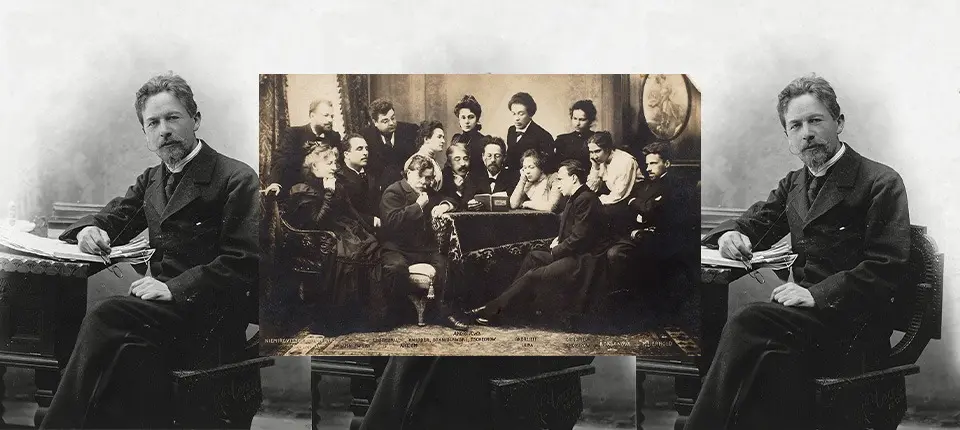
Today in literary history marks a notorious anniversary that proves even the greatest masters of the craft were not immune to devastating initial failures. On this day in 1896, Anton Chekhov’s masterwork The Seagull premiered at the Alexandrinsky Theatre in St. Petersburg to a brutal, resounding flop. The hostile reception and the audience’s outright rejection of his pioneering dramatic vision plunged the playwright into such profound despair that he famously vowed, “Not if I live to be seven hundred will I write another play.” Fortunately for world literature, Chekhov recovered from the trauma of that opening night, though the legendary misfire remains one of the most famous theatrical anecdotes in history, highlighting the often-treacherous gap between revolutionary art and contemporary audience comprehension.
Beyond this historical reflection, the broader literary internet this week offers a rich tapestry of deep-dive interviews, cultural critiques, historical reckonings, and poetic explorations across the global publishing landscape.
Among the standout conversations, Adam Johnson sits down with Amitav Ghosh to discuss The Wayfinder, exploring the intricate mechanics of storytelling and the myriad ways a single narrative thread can be unspooled. The intersection of literature, history, and current global crises remains a pressing theme across platforms. Writers and critics continue to examine how profound geopolitical shifts—such as the devastation in Gaza—have irrevocably altered the cultural and political landscape of the Middle East. Similarly, the work of bearing witness takes center stage as Oksana Lutsyshyna curates an essential reading list of new Ukrainian literature, spotlighting vital voices like Artur Dron, Andriy Lyubka, and Lena Lyagushonkova, whose writings capture the harsh realities of endurance and conflict.
History, both grand and intimate, echoes through several other notable pieces. E. L. Shen reflects on the profound journey of understanding an assassinated ancestor through the act of writing about him, turning historical research into a deeply personal act of reclamation. In local American history, readers are introduced to Biddy Mason, the remarkable Black matriarch whose vision, resilience, and labor helped build the foundational infrastructure of Los Angeles. This historical re-evaluation extends to darker chapters of European civilization, with explorations into the systemic slaughter of nonconformist women during medieval European witch hunts, as well as examinations of how newspapers historically functioned to democratize knowledge and expand civic participation.
The contemporary literary world is also grappling with the rapid evolution of technology and corporate structures. In publishing and tech circles, a fascinating paradox has emerged: major publishing houses are aggressively suing big tech companies over copyright and data scraping while simultaneously embracing artificial intelligence tools within their own operations. On the economic front, cultural commentators and economic analysts dissect the modern housing crisis, pointing toward greed-driven corporate algorithms as a primary culprit behind skyrocketing rent prices.
Artistic creation, inspiration, and the physical realities of the writing life receive ample attention from authors navigating their own creative processes. Bonnie Garmus speaks with Jane Ciabattari about her new coming-of-age novel, Peck & Peck, which centers on a world of poets and poetry. This cinematic and literary fascination with poets is further analyzed through a look at three recent films that reveal how contemporary media perceives and portrays the poetic calling. Meanwhile, Will Maclean shares the unvarnished reality of what it takes to draft a novel, cheerfully admitting to ruining a notebook in the pursuit of a finished manuscript, while a separate dispatch explores how a novel can be born among the opulent superyachts of Monaco.
For those looking to expand their personal reading lists, the literary web offers diverse recommendations and critiques. David Naimon shares what is currently on his "To Be Read" nightstand, while Bonnie Jo Campbell curates a selection of seven literary ghost stories designed to haunt unsuspecting readers. Jonathan Cheng provides five essential books for understanding North Korea’s enduring cult of personality, and another feature offers five essential texts for comprehending the rich, complex history of the Venetian ghetto and Jewish history.
Poetry and personal essays also find a vibrant home online this week. Eric Amling shares a new poem titled "Cruise Control," offering readers a fresh lyrical voice. Nonfiction reflections range widely, from Al Sharpton remembering his late mentor, Jesse Jackson, and Anand Giridharadas analyzing how Sharpton successfully shapes modern narratives of justice, to more eccentric reflections, such as what a relationship with a rescue raccoon can teach a person about themselves. Culinary and cultural identity intersect when Melissa King reflects on what cooking and care meant growing up Cantonese-American in Southern California.
Other thoughtful essays challenge everyday assumptions, such as a sharp critique of the ubiquitous white wall in interior design and its hidden cultural meanings, alongside explorations of the unexpected beauty and hidden ecological danger of preserving boglands and peatlands. Photographers Jean-Pierre and Eliane Laffont are celebrated for their visceral documentation of radical social change during the American counterculture of the 1960s and 70s, while rural writers and critics push back against endless stereotypes, arguing that rural American life means something fundamentally different to everyone who experiences it.
Finally, the week rounds out with the essential metrics of the industry: the latest Independent Press Top 40 Bestsellers for both fiction and nonfiction, alongside the five most crucial book reviews of the week, ensuring readers stay fully informed on the pulse of contemporary letters.