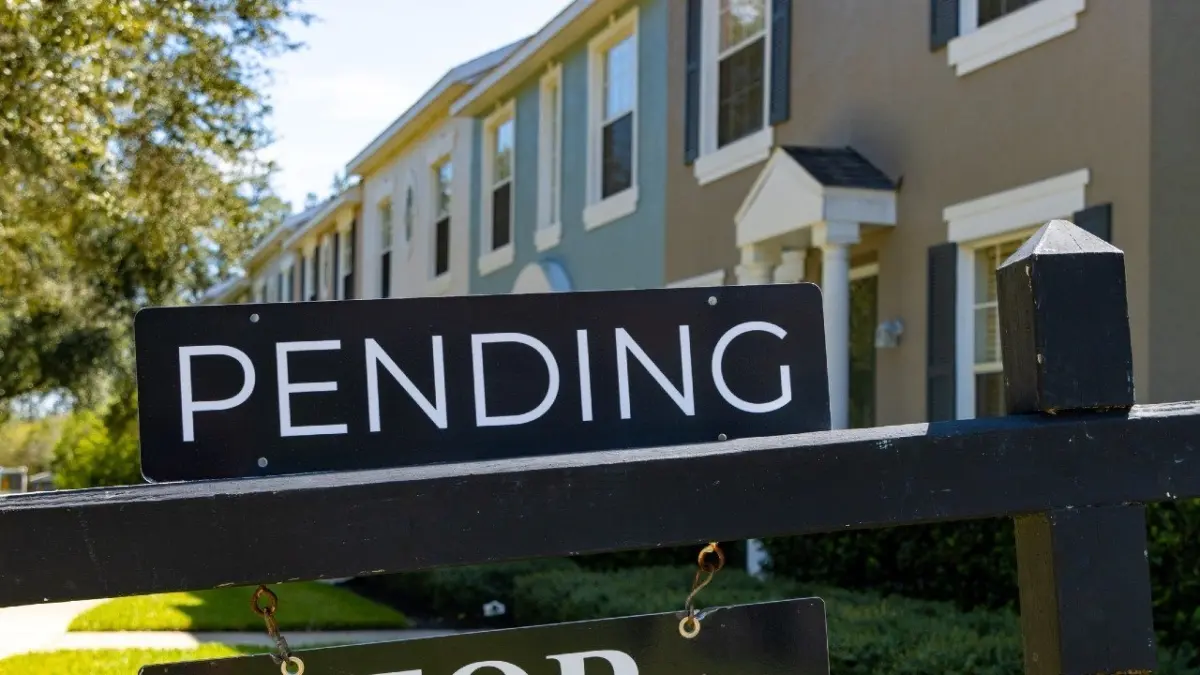
Pending home sales suffered a notable setback in September, retreating significantly on both a monthly and an annual basis as mortgage rates surged past the psychologically and financially significant 7% threshold. This sharp increase in borrowing costs severely eroded the purchasing power of prospective homebuyers across the country, sidelining many who had hoped to enter the market during the traditionally favorable autumn buying season.
According to the latest Pending Home Sales report released on Tuesday by the National Association of Realtors, contract signings experienced a steep decline of 7.3% in September compared to August. The downturn was even more dramatic when measured against the previous year, with pending home sales plummeting by 11.3% compared to September 2025. This contraction underscores the profound sensitivity of the contemporary housing market to sudden shifts in financing costs, even during periods when other market fundamentals might otherwise point toward increased activity.
Market conditions weakened significantly over the course of the month, driven primarily by fast-rising mortgage rates, according to National Association of Realtors Chief Economist Lawrence Yun. While broader economic indicators such as job growth and steady income gains can typically provide a solid foundation to support home purchases, Yun noted that housing affordability remains acutely vulnerable to changes in mortgage rates. When borrowing costs climb rapidly over a short period, the immediate impact on monthly mortgage payments quickly outpaces incremental gains in household earnings, forcing many potential buyers to reconsider or postpone their homeownership plans.
The autumn season historically tends to favor buyers, offering a window of opportunity characterized by less intense competition, a cooling of aggressive bidding wars, and a more deliberate pace. This year proved to be no exception to that seasonal norm, presenting several positive developments for those actively searching for a home. Home asking prices fell for the 11th consecutive month in September, providing some measure of welcome pricing relief. Additionally, the proportion of sellers making price reductions edged upward, and overall housing inventory continued to climb, giving buyers a wider selection of properties to choose from.
However, these favorable baseline market conditions were largely overshadowed by macroeconomic headwinds. With mortgage rates climbing to their highest levels in nearly three years, a vast segment of the buyer pool displayed extreme reluctance to dive into the market. The daunting combination of elevated purchase prices and soaring interest rates proved too formidable a barrier for many households, neutralizing the benefits of rising inventory and declining list prices.
The broader outlook for the remainder of the year suggests that these affordability challenges will persist, according to Realtor.com senior economist Hannah Jones. Jones anticipates that mortgage rates will remain stubbornly elevated in the near term, heavily influenced by recent inflation data that has continued to run hot. Recent economic reports indicate that both headline and core inflation measures have picked up momentum, complicating the broader monetary policy landscape.
As a direct result of these persistent inflationary pressures, financial markets are increasingly pricing in the possibility of another Federal Reserve rate hike before the conclusion of the year, Jones explained. Against that difficult backdrop, prospective homebuyers will likely continue facing formidable affordability hurdles through the end of the year. This situation is further aggravated by the reality that broader wage growth is currently running below the rate of inflation, a dynamic that continues to erode real consumer purchasing power and leaves fewer financial resources available for a substantial down payment or higher monthly debt service obligations.
The confluence of these factors highlights a complex and challenging environment for the U.S. housing market as it transitions into the final stretch of the year. While inventory levels are improving and sellers are increasingly demonstrating flexibility through price adjustments, the overarching weight of high mortgage costs continues to dictate the pace of housing activity, leaving many market participants waiting on the sidelines for a meaningful shift in macroeconomic conditions.