For years, the global fascination with the Nordic way of life has smoldered like a slow-burning fire, waiting for the right moment to ignite. Long before the Swedish philosophy of lagom—the pursuit of the optimal, balanced life—swept across international bookstores and lifestyle blogs, the region’s distinct ethos toward health and harmony had already begun to permeate global consciousness. This quiet, persistent influence is perhaps best evidenced by the success of works like Lagom, an international bestseller that has seen over 15 foreign editions, reflecting a deep-seated human desire for the intentional, measured living that defines the Scandinavian experience.
The Nordic region is, by all accounts, synonymous with the concept of wellbeing. From the restorative heat of traditional Finnish saunas to the invigorating, circulation-boosting effects of Swedish massages, these practices have transcended their geographical origins to become global pillars of self-care. Each nation within the region offers a specific, evocative contribution to this collective wisdom: Denmark has gifted the world hygge, an ode to intentional presence and cozy contentment; Norway champions friluftsliv, the deeply ingrained practice of open-air living; Finland provides sisu, a unique term for the gritty resilience needed to navigate life’s hardships; and Iceland has birthed a form of "Viking wellness," defined by the stark, transformative contrast of geothermal hot baths and freezing cold dips.
While these cultural touchstones bear different names and originate from distinct landscapes, they are all branches of the same tree. What makes these Nordic trends so profoundly appealing to a global audience is not merely their exoticism, but the robust, egalitarian foundations upon which they are built. These practices are not reserved for the elite or the athletic; they are communal, accessible, and deeply rooted in the philosophy that true wellbeing should be sustainable for everyone, from a professional athlete in their prime to an elder seeking mobility and peace of mind.
Central to this wellness culture is a profound, government-sanctioned relationship with the natural world. Concepts such as Allemansrätten in Sweden—the "right to roam" that grants citizens and visitors free access to nature—foster a symbiotic existence with the outdoors. This accessibility is a cornerstone of the Nordic egalitarian ideal, ensuring that a forest trail or a lakeshore is not a luxury, but a birthright. It is against this backdrop of simplicity, sustainability, and connection to the land that the latest Nordic trend, Nordic walking, has emerged as a surprisingly practical and highly effective movement.
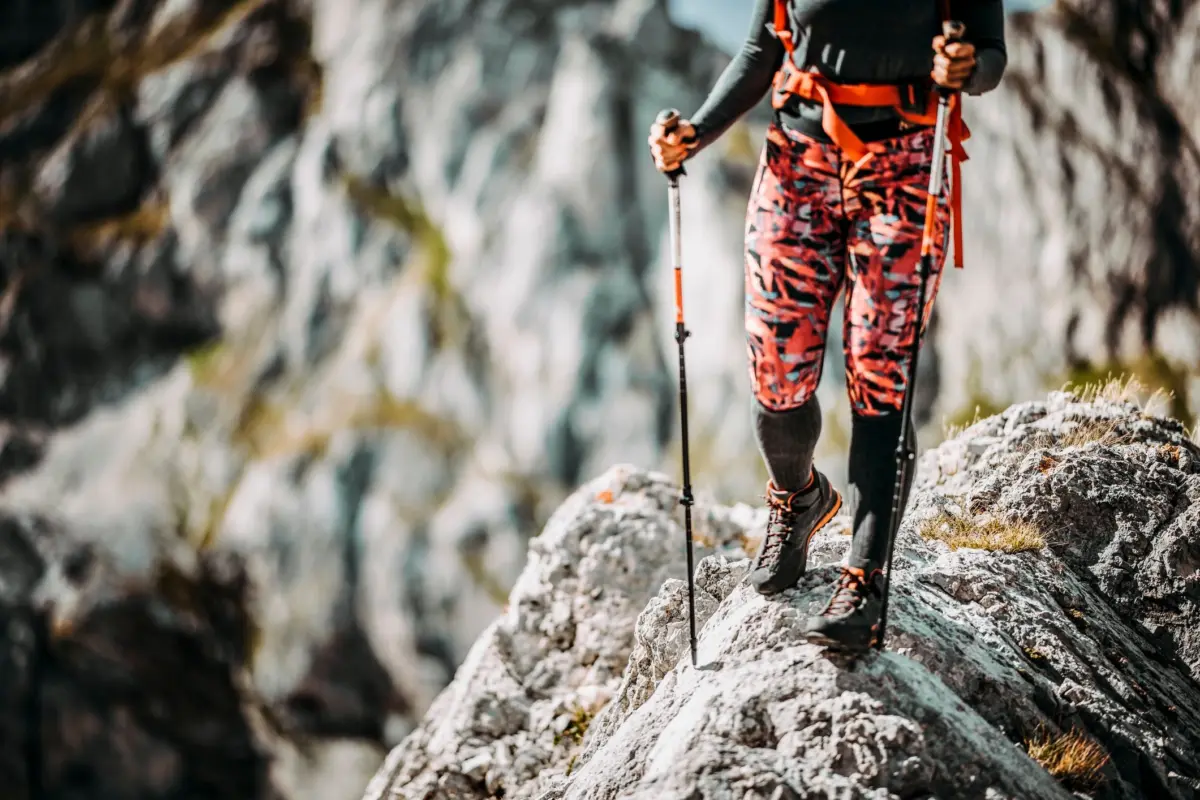
To the uninitiated, Nordic walking might appear to be little more than hiking with trekking poles, but this would be a miscategorization. The activity has far more utilitarian, athletic origins. It was born out of a question common to many winter-sport enthusiasts: how do cross-country skiers maintain their peak physical conditioning when the snow melts and the cross-country trails disappear? By taking their specialized poles to the dirt paths and running trails of summer, these athletes found an efficient, high-intensity way to mimic their winter sport.

The International Nordic Walking Federation (INWA), founded in 2000, now oversees the practice across more than 40 countries, where it has evolved into a multifaceted pursuit encompassing health, fitness, recreation, social connection, and even competitive sport. While the practice has roots in the 1930s, when competitive skiers first began using poles with running shoes for off-season training, it was a Finnish physical education teacher named Leena Jääskeläinen who first formalized the concept for the general public in 1966. This moment marked a significant shift, moving the activity from the exclusive domain of elite training into the realm of everyday public health.
Aki Karihtala, the president of the INWA, has been at the forefront of this movement for decades. "I started Nordic walking in 1998 because it is a fun, social and efficient form of physical activity," Karihtala explains. At the time, he was leading the sports division at Exel, the Finnish company that stands as the world’s largest manufacturer of cross-country ski poles. It was Karihtala and his team at Exel who ultimately coined the term "Nordic walking." Under their guidance, the activity began to gain international momentum, breaking down barriers of age, culture, and religion. "There are no boundaries," Karihtala notes, emphasizing that the activity’s accessibility is its greatest asset.
In 1997, Exel engineered the first dedicated "Nordic Walker" poles, designed specifically for the unique mechanics of the activity. The adoption was rapid and widespread; within just one year of the product’s launch, over 500,000 Finns—out of a total population of roughly five million at the time—had experimented with the discipline. The efficacy of the exercise lies in its biomechanics. By using ergonomically designed poles, practitioners are able to engage the entire body, effectively working the upper and lower muscle groups simultaneously while significantly reducing the impact and pressure typically placed on the knees and hips. To ensure that newcomers can harness these benefits safely, the federation developed the INWA 10 Step Method, a standardized approach to teaching the proper technique.
The rise of Nordic walking is not merely a story of fitness equipment, but a reflection of a shifting global appetite for a slower, more intentional life. Katja Presnal, a Finnish trend and branding expert, has spent two decades analyzing the pulse of consumer habits, yet her own journey has brought her full circle. Having reached millions of readers through her digital platforms, Presnal eventually found that the most compelling "trend" was the one she had lived since childhood. After years of traversing the globe and reporting on the latest movements, she chose to stop "preaching trends" and instead began "walking the walk."
Presnal relocated to a 100-year-old former dairy in the Finnish countryside, surrounded by the lakes and forests of the Turku archipelago. For her, Nordic walking is not just a workout; it is a way to reclaim the richness of her upbringing. "It was about making everyday life a wellness regimen and creating my own 365-day retreat," she says. She notes that the desire for this slow-living experience is something she once sought out in the rolling hills of Tuscany, only to realize that the wellness she was searching for had been an intrinsic part of her Nordic heritage all along.

The appeal of Nordic walking, particularly in the current climate, lies in its low threshold for entry. It requires minimal financial investment and offers a physical intensity that can be tailored to any fitness level, making it the perfect vehicle for those looking to adopt a more active, outdoors-oriented lifestyle. Beyond the physiological benefits, Presnal highlights the profound social connectivity that the activity fosters. In a world increasingly dominated by digital interactions, the simple, rhythmic act of walking with others—poles in hand—provides a grounded, human-centric way to connect.
The transformation of these Nordic habits into a global trend is a phenomenon that surprises many who grew up within the culture. "People are now discovering Nordic lifestyles," Presnal observes. "You don’t recognize your Nordic way of living as something special that could become a global trend or could be taught and shared with somebody because it’s just a part of who you are."
As interest continues to grow, it is clear that the appeal of the Nordic approach lies in its authenticity. It is not a manufactured wellness fad designed to be discarded at the end of a season, but a series of time-tested rituals born from a deep, respectful relationship with the environment. Whether it is through the meditative silence of a forest walk, the communal heat of a sauna, or the rhythmic stride of Nordic walking, the region offers a blueprint for wellbeing that is as enduring as the landscape itself. For those looking to integrate these practices into their own lives, the path is simple: it begins with stepping outside, embracing the elements, and finding the balance that has served the North for generations.