Thousands of years after it unleashed one of the most cataclysmic volcanic events in recent geological history, one of Earth’s most formidable supervolcanoes is showing signs of renewed life. A team of scientists from Kobe University, working in tandem with the Japan Agency for Marine-Earth Science and Technology (JAMSTEC), has uncovered compelling evidence that a massive, subterranean magma reservoir beneath Japan’s Kikai caldera is slowly refilling. The discovery provides a rare, unprecedented glimpse into the life cycle of these geological giants, offering a potential roadmap for understanding how supervolcanoes recover from world-altering eruptions.
The Kikai caldera, a largely submerged volcanic system located south of Kyushu, Japan, was the site of a catastrophic eruption approximately 7,300 years ago. That event, widely considered the largest volcanic eruption of the Holocene epoch—the current geological period that began 11,700 years ago—left an indelible mark on the landscape and climate of the region. By studying this underwater giant, researchers are now deciphering the complex processes that allow such colossal systems to recharge their magma supplies, potentially yielding critical insights that could aid in monitoring other supervolcanoes, such as Yellowstone in the United States and Toba in Indonesia.
The Mechanics of Supervolcanic Rebirth
To appreciate the significance of this discovery, one must first grasp the sheer scale of the forces involved. Supervolcanoes operate on a magnitude that dwarfs typical volcanic activity. When a supervolcano erupts, the sheer volume of material ejected is staggering. In the case of a major caldera-forming event, the magma chamber beneath the surface is emptied so rapidly and so completely that the ground above it lacks structural support. The resulting collapse creates a broad, sunken depression known as a caldera.
The volume of magma involved in these events is difficult to conceptualize. Experts estimate that the material ejected during such an eruption could easily bury a landmass as expansive as New York City’s Central Park under a layer of volcanic rock roughly 12 kilometers (7.5 miles) thick. These events are not merely local geological phenomena; they are transformative, often reshaping entire regional landscapes and leaving behind deep scars that persist for millennia.
Despite the fame of systems like Yellowstone or Toba, our scientific understanding of how they "reset" remains incomplete. Scientists have long known that caldera systems are capable of erupting more than once, but the mechanisms driving the accumulation of the immense quantities of magma required for a repeat performance have remained shrouded in mystery. This knowledge gap has made it notoriously difficult for seismologists and geologists to anticipate when, or how, a supervolcano might transition from a period of relative dormancy to a state of renewed threat.
"We must understand how such large quantities of magma can accumulate to understand how giant caldera eruptions occur," says Kobe University geophysicist Nobukazu Seama, underscoring the urgency of the research.
Harnessing the Seafloor as a Laboratory
While the Kikai caldera’s underwater location might seem like a barrier to investigation, it has proven to be an unexpected boon for the research team. Unlike land-based volcanoes, which are often obscured by dense vegetation, human infrastructure, or difficult terrain, the seafloor provides a stable, relatively uniform environment for conducting large-scale geophysical surveys.
"The underwater location allows us to implement systematic, large-scale surveys," Seama explains. By leveraging the surrounding seafloor, the team was able to deploy a sophisticated array of sensors and equipment to map the hidden architecture of the volcano.
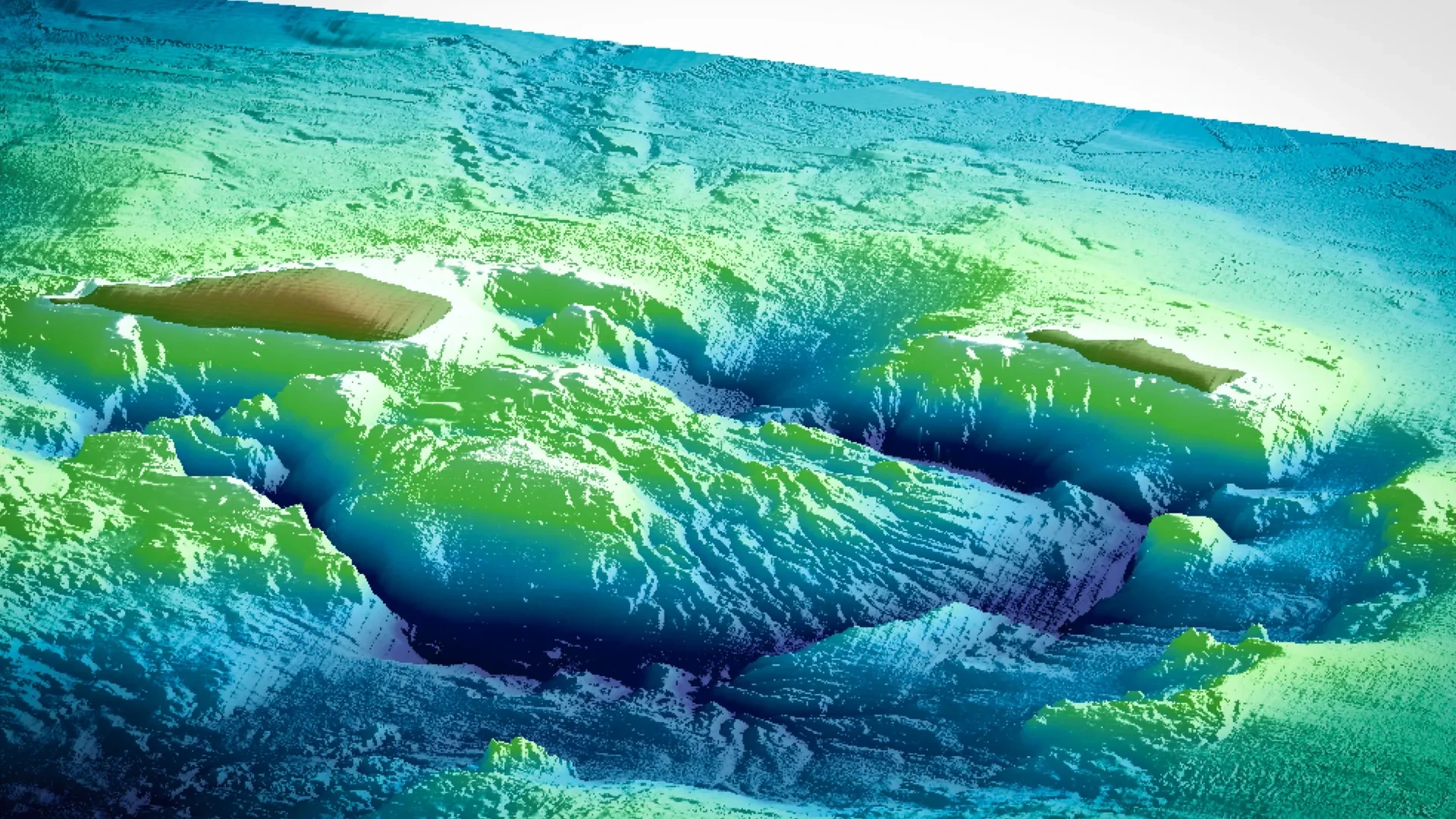
The research team collaborated with JAMSTEC to execute a high-resolution survey of the subsurface. They utilized powerful airgun arrays—devices capable of generating controlled, intense seismic pulses that penetrate deep into the Earth’s crust beneath the ocean floor. As these seismic waves traveled through the rock and molten material, they were captured by a series of ocean bottom seismometers.
The principle behind the method is elegant: seismic waves behave differently depending on the density and state of the material they encounter. By analyzing the speed and refraction of these waves, the researchers were able to create a high-resolution "image" of the subterranean environment, allowing them to map structures that remain invisible to the naked eye. The findings, published in the journal Communications Earth & Environment, confirmed the existence of a substantial, high-density reservoir of magma directly beneath the site of the 7,300-year-old eruption.
Evidence of Fresh Magma Injection
One of the most compelling aspects of the study is the conclusion that the reservoir is not merely a stagnant pool of cooling leftovers from the ancient eruption. Instead, the data points to a dynamic, recharging system.
Geological evidence indicates that a new lava dome has been forming near the center of the caldera over the past 3,900 years. A lava dome typically emerges when highly viscous, thick magma is pushed to the surface but lacks the explosive energy to flow far from the vent, instead accumulating in a characteristic bulbous shape. Chemical analysis of the materials sourced from this dome and other recent volcanic activity shows a distinct composition compared to the ejecta from the major eruption 7,300 years ago.
This chemical signature is a "smoking gun," suggesting that the current reservoir is being fed by fresh injections of magma rising from the deeper crust or the mantle. "This means that the magma that is now present in the magma reservoir under the lava dome is likely newly injected magma," Seama summarizes.
This recharge process, while slow, is a critical piece of the puzzle. It illustrates that Kikai is not a spent force but a living system capable of accumulating new material over thousands of years. This discovery does not necessarily signal that a catastrophic eruption is imminent; rather, it provides a vital baseline for understanding the long-term metabolic cycle of a supervolcano. By mapping this process, scientists can better distinguish between a system that is merely "breathing" and one that is priming for a major event.
Implications for Global Volcanic Monitoring
The implications of the Kikai findings reach far beyond the Japanese archipelago. The model of "magma re-injection" identified by the team offers a plausible explanation for the persistence of large, shallow magma reservoirs beneath other iconic supervolcanoes, including Yellowstone and Toba.
"This magma re-injection model is consistent with the existence of large shallow magma reservoirs beneath other giant calderas like Yellowstone and Toba," Seama notes. The research suggests that the cycles of accumulation and eruption are governed by universal physical processes, where new pulses of heat and material from the deep Earth periodically revitalize existing shallow storage systems.
Moving forward, the researchers aim to refine their seismic techniques to observe these re-injection processes with even greater precision. The goal is to move from observing the static presence of magma to tracking its movement in real-time. By identifying the specific warning signs—such as the rate of magma influx, changes in crustal stress, and shifts in chemical signatures—scientists hope to eventually develop a more reliable system for monitoring the long-term indicators of future giant eruptions.
The study serves as a stark reminder of the immense, hidden forces shaping our planet. By unraveling the secrets of the Kikai caldera, researchers are bringing the scientific community closer to demystifying the life cycles of the world’s most powerful volcanoes, turning what was once a geological black box into a subject of systematic and rigorous study. This research, supported by the Ministry of Education, Culture, Sports, Science and Technology (MEXT) and the Japan Society for the Promotion of Science, represents a vital step forward in our effort to coexist with the dynamic and often unpredictable forces of the Earth.