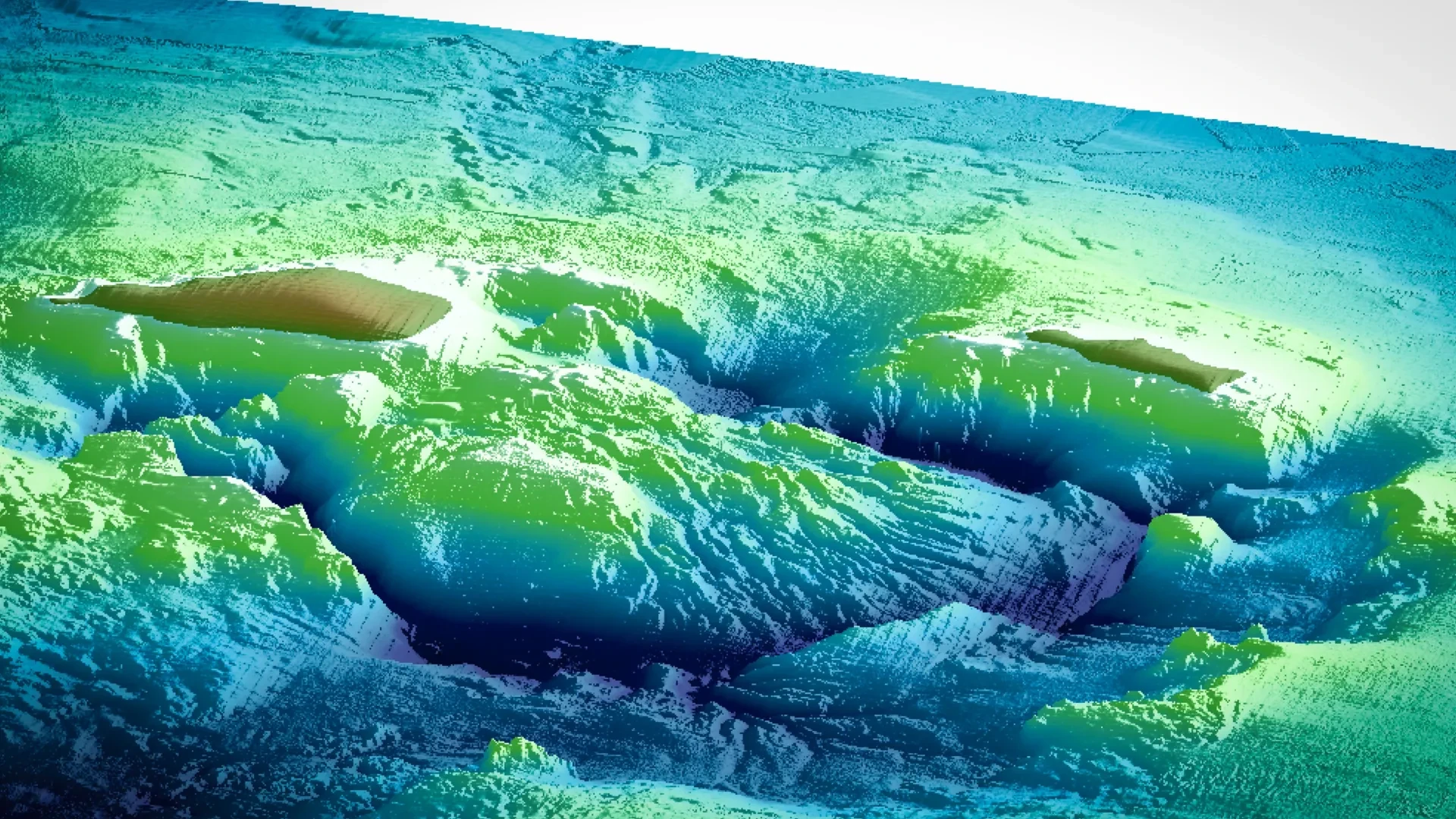
Thousands of years after unleashing one of the most cataclysmic volcanic events in recent geological history, one of Earth’s most formidable supervolcanoes is showing signs of renewed life. A team of researchers from Kobe University, in collaboration with the Japan Agency for Marine-Earth Science and Technology (JAMSTEC), has discovered evidence that Japan’s Kikai caldera is slowly replenishing its massive underground magma reservoir. This finding offers a rare, high-resolution glimpse into the complex life cycle of supervolcanoes and provides a foundation for better understanding the long-term patterns that precede some of the most destructive natural events on our planet.
The Kikai caldera, much of which remains hidden beneath the waters south of Japan, was the site of a staggering eruption approximately 7,300 years ago. Geologists identify this event as the largest known volcanic eruption of the Holocene—the current geological epoch that began roughly 11,700 years ago. The sheer scale of such an eruption is difficult to comprehend; the volume of magma ejected during these events is enough to fundamentally reshape the surrounding geography, burying massive urban centers—such as New York City’s Central Park—under a layer of volcanic debris roughly 12 kilometers, or 7.5 miles, thick.
When a supervolcano releases such an astronomical quantity of material, the structural integrity of the crust above the subterranean reservoir often fails. The ground collapses into the void left behind, creating a broad, shallow basin known as a caldera. These features are the calling cards of Earth’s most powerful volcanic systems, including the famous Yellowstone caldera in the United States and the Toba caldera in Indonesia. Despite the catastrophic impact of these systems, the mechanisms behind how they "recharge" their magma supplies remain a subject of significant scientific debate. Understanding this accumulation process is essential for scientists tasked with monitoring potential hazards, yet the complexity of these systems has historically made it difficult to anticipate when—or how—a major eruption might repeat.
"We must understand how such large quantities of magma can accumulate to understand how giant caldera eruptions occur," says Kobe University geophysicist Nobukazu Seama. The research, which was recently published in the journal Communications Earth & Environment, represents a significant step toward that goal.
A Strategic Advantage in the Deep Sea
While the underwater location of the Kikai caldera might seem like a barrier to scientific observation, it actually provided the researchers with a distinct logistical advantage. Unlike land-based volcanoes, which are often obstructed by dense forests or complex human infrastructure, the seafloor surrounding Kikai offered an unobstructed canvas for a systematic, large-scale geophysical survey.
"The underwater location allows us to implement systematic, large-scale surveys," Seama notes. To probe the secrets hidden beneath the ocean floor, the team deployed a sophisticated array of instruments. By utilizing powerful airgun arrays, the researchers generated controlled seismic pulses that traveled downward through the Earth’s crust. These pulses interacted with the underlying geological structures, and their behavior was captured by a network of ocean-bottom seismometers.
Seismic waves react differently depending on the medium through which they travel. By analyzing the speed and refraction of these waves, scientists can distinguish between solid rock and regions saturated with molten magma. The results of the survey revealed a substantial, high-volume region containing a significant proportion of molten material situated directly beneath the heart of the 7,300-year-old eruption site. The geometric analysis performed by the team confirmed that the dimensions and location of this reservoir align with the magma storage system that fueled the ancient cataclysm, effectively confirming that the volcano is using the same "plumbing" it utilized thousands of years ago.
The Dynamics of Magma Recharge
Perhaps the most compelling aspect of the discovery is the composition of the material residing in this reservoir. Through careful investigation, the team concluded that the current magma is not merely a stagnant remnant left over from the massive eruption 7,300 years ago. Instead, it is the product of a more active, ongoing process.
Evidence for this comes from the development of a lava dome near the center of the caldera, which geological records suggest has been forming over the past 3,900 years. A lava dome occurs when magma is too viscous to flow across the landscape, instead piling up around a volcanic vent. By performing chemical analyses on materials from this dome and other recent volcanic activity, the researchers identified a distinct composition that differs from the debris of the ancient eruption.
This chemical variance is a critical piece of the puzzle. It strongly suggests that the reservoir is being replenished by fresh injections of magma rising from deeper within the Earth’s mantle or lower crust. "This means that the magma that is now present in the magma reservoir under the lava dome is likely newly injected magma," Seama explains. This cycle of replenishment—where an ancient system is "recharged" by new, deep-seated pulses of molten rock—provides a clear picture of how these systems rebuild their strength over millennia.
Crucially, the researchers emphasize that this replenishment process does not imply that another catastrophic eruption is imminent. Rather, it serves as a necessary diagnostic tool. By documenting how these reservoirs are recharged, scientists can begin to map the long-term behavioral patterns of supervolcanoes, moving closer to the ability to identify the warning signs that truly matter.
Implications for Global Supervolcano Systems
The findings at Kikai have implications that reach far beyond the Japanese archipelago. The existence of a magma re-injection model provides a framework that may explain the behavior of other massive volcanic systems worldwide, including the highly monitored Yellowstone and Toba systems. Both of these calderas are known to host large, shallow magma reservoirs, and the mechanisms observed at Kikai offer a consistent model for how those systems might maintain their magma supply over vast stretches of time.
"This magma re-injection model is consistent with the existence of large shallow magma reservoirs beneath other giant calderas like Yellowstone and Toba," says Seama. The study suggests that following a major eruption, the system does not simply go dormant; it enters a long-term cycle of accumulation where new magma gradually filters into the existing reservoir. By understanding this cycle, geologists hope to decipher the "pulse" of a supervolcano, eventually gaining the ability to distinguish between harmless subterranean activity and the precursors to a major event.
Moving forward, the research team intends to refine the seismic techniques utilized in the Kikai study to achieve even greater resolution. The goal is to investigate the movement and storage of magma with enough detail to track the flux of material into the reservoir in real-time. "We want to refine the methods that have proved to be so useful in this study to more deeply understand the re-injection processes," Seama says. "Our ultimate goal is to become better able to monitor the crucial indicators of future giant eruptions."
By shedding light on the silent, slow-motion recharging of the Kikai caldera, this research brings the scientific community one step closer to demystifying the life cycles of the world’s most powerful geological forces. While the risk of a supervolcanic eruption remains a long-term geological concern rather than an immediate threat, the ability to monitor these deep-seated processes represents a significant leap forward in our understanding of Earth’s volatile history and its potential future.
The research was conducted with the support of the Ministry of Education, Culture, Sports, Science and Technology (MEXT) under the Third Earthquake and Volcano Hazards Observation and Research Program, and the Japan Society for the Promotion of Science (grant 20H00199).