"Now you know what it’s like to be in the eye of a storm," said our hiking guide, Audun Rasmussen, his face bright with a grin that seemed entirely at odds with the horizontal rain currently lashing against us. I attempted a nod of acknowledgement, but the relentless wind, howling across the 2,000-foot-high mountain face, simply whipped my head into a wobble. We were suspended on a narrow, multi-edged ridge, shrouded in a thick, grey mist that swallowed the world whole.
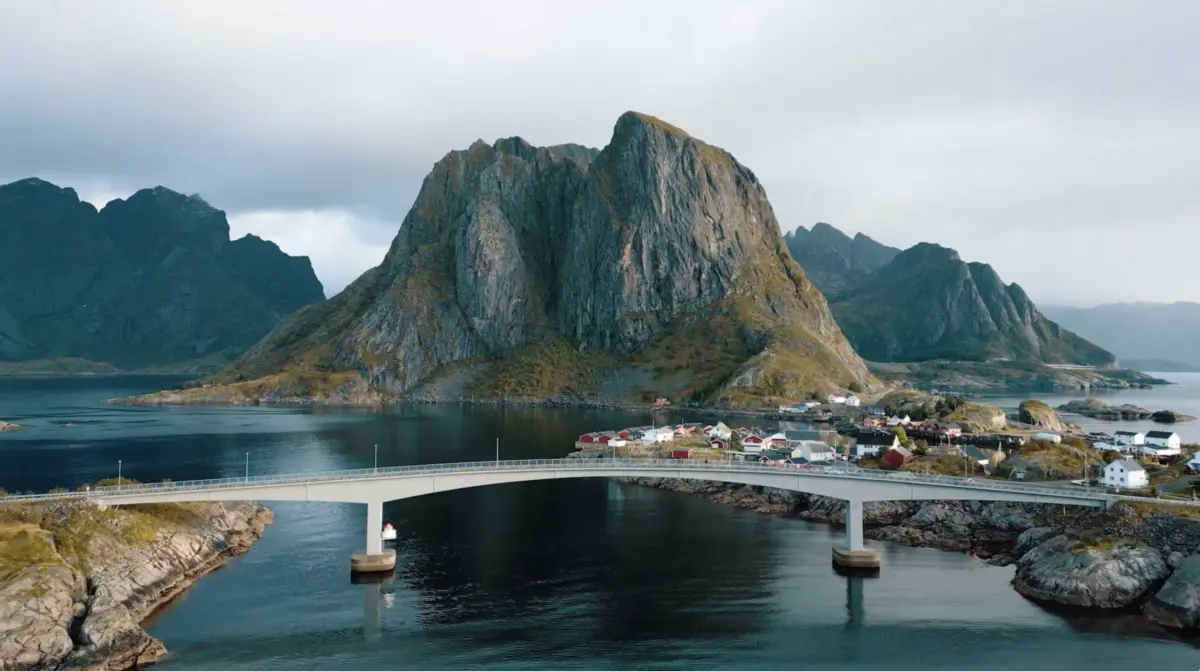
Typically, this part of Northern Norway is marketed on the promise of sweeping vistas—panoramic views of picturesque fishing villages and shimmering freshwater lakes tucked into glacial valleys. But today, the mountains were hidden, and the clouds had descended to cling to every crevice of the jagged, ancient rock. There would be no postcard photos this afternoon, only the raw, visceral sensation of the Arctic elements testing our resolve.

Yet, there was an undeniable sense of achievement. The rain had transformed our ascent into a challenge of grip and grit, turning once-sturdy trails into treacherous chutes of sinking mud and making the rock faces feel like polished, slippery stone. We pushed through thickets of birch, skidded across patches of moss, and used our hands to scramble over the landscape. As we huddled under a rocky overhang for a brief reprieve, the simple pleasures of survival took center stage: reindeer-meat sandwiches, pieces of dried fish, and the iconic Norwegian chocolate-covered wafer known as Kvikk Lunsj—which translates, quite aptly, to "a quick lunch."
It is precisely these kinds of ascents, across a geological foundation that predates the Jurassic period, that draw nearly a million visitors annually to the Lofoten Islands. This small, dramatic archipelago, located 68 degrees north of the Arctic Circle, is a landscape of stark contrasts: spiky, snow-dusted mountains rising aggressively from the dark waters of the Norwegian Sea, and pristine sandy beaches framed by steep fjords. In the height of summer, buoyed by the ethereal glow of the midnight sun, adventurers flock here to camp, scale the peaks, and brave the icy waters.

But I had arrived in late September, long after the summer twilight had faded into the brisk, golden hues of autumn. I wasn’t here to conquer the summits, but rather to discover a different, deeper side of Lofoten—one that is found not on its peaks, but on its plates.
A Culinary Destination on the Edge of the World
In a wind-whipped corner of Sørvågen, a quiet village on the southwestern reaches of the archipelago, a cluster of mustard-colored cabins stands on stilts, jutting out into the sea like sentinels. These buildings, once the heart of a bustling cod factory, have been meticulously transformed into Holmen Lofoten, a unique culinary destination and hotel that has been a sanctuary for food lovers and adventurers since 2007.

The traditional fishing cabins, known locally as rorbuer, are characterized by their corrugated roofs—some still topped with traditional insulating grass—and connected by a network of wooden walkways that hover above the tide. Inside, the rooms are kept deliberately simple, with large picture windows framing the rugged shoreline, allowing the elemental beauty of the landscape to serve as the primary interior design. Everything here feels grounded, hand-hewn, and deeply connected to its maritime history.
During my four-day stay, I was there to witness Kitchen on the Edge of the World, a culinary event series launched in 2018. The program invites world-renowned chefs to the archipelago four times a year, tasking them with creating menus that reflect the wild, unforgiving beauty of the region. This, the 30th edition of the gathering, was helmed by Matt Orlando, a California-born, Copenhagen-based chef who has spent his career in some of the most influential kitchens in the world, including London’s The Fat Duck and New York’s Per Se.

Ingunn Rasmussen, the warm, chatty matriarch behind the project and the sister of our guide Audun, took over the property in 2001. She now runs it alongside her son, Håvar Holmen. As she drove me from the airport, she explained her vision: "I wanted to build a space that felt like home, where we could all log off and reconnect with our natural roots." Ingunn is a fisherman’s daughter who grew up on this very site; she pointed out one cabin where her sister’s childhood scribbles still remain on the wall. After years spent traveling abroad, she returned with a singular determination to breathe life back into this corner of Lofoten, focusing on a restoration that honored the site’s history while expanding the facilities to include new, architecturally sensitive suites.
The Art of Foraging and Local Stewardship
On the first night, we gathered in the living room above the kitchen, a space defined by exposed beams and rustic, sculptural elements—foraged flora, preserved specimens, and raw, found objects—that echoed the weathered coastline outside. The dinner was prepared by Holmen’s resident chefs, a talented, diverse team hailing from as far away as Sicily and the Piauí region of Brazil.

Trays of shrimp croustades circulated through the room, accompanied by cocktails that looked like traditional Negronis but told a uniquely local story: the vermouth was infused with foraged blackcurrant leaves, and the Campari was steeped with dried berries and yarrow flowers. Each sip felt like an autumnal distillation of the hillsides I had seen on my drive in. For those avoiding alcohol, the nonalcoholic options were equally sophisticated, featuring elderflower tonics crafted from freshly picked wild hops.
"Holmen was created because we want to show our guests the Lofoten Islands," Ingunn told me, gesturing toward the kitchen. "And food is a critical part of understanding it."

I wandered over to talk with Mia Hjorth Hansen, a co-owner of the acclaimed cocktail bar Gedulgt in Aarhus, Denmark, who serves as the resident mixologist for the event. Her workstation was lined with glass jars filled with dried cornflower, dandelion, and fireweed. While visiting chefs are often on a rotation, Hansen is a fixture, having returned for her twelfth edition of Kitchen on the Edge. There is a clear common thread among the talent invited here, from Slovenian star Ana Roš to British farm-to-table pioneer Simon Rogan: a deep, uncompromising commitment to land stewardship.
"We take time picking our chefs," Ingunn explained. "We want people who will be considerate about the environment and the wildlife that make this place our home."

The first night was designed as an icebreaker, and true to Ingunn’s prediction, our "motley crew"—a group that included a geologist from Brunei, an avid traveler from Dubai, and a retired food enthusiast from Melbourne—quickly found common ground. Our conversation flowed out onto the deck for dessert: ice cream made with blackcurrant leaves and lovage, topped with mascarpone from local cream and finished with a meringue charred over binchotan, a high-quality Japanese white charcoal. As we ate, we checked our apps for the Northern Lights, a quiet, collective hope that the sky might open up.
From the Sea and Soil to the Table
The following morning, I took Ingunn up on her invitation to explore the kitchen. Matt Orlando and his sous chef, Tom Siebeler, were preparing for the evening service. Orlando was working with a pile of reindeer ribs sourced from a sustainable farm run by Sámi herders just north of the islands. "Anything that comes out of that wood-fired oven is going to taste amazing," he noted, while experimenting with local garnishes.

The ingredients are a point of pride for Holmen: local lamb, which carries a protected geographical indication; regional cheeses; and hand-harvested vegetables. Even the tableware contributes to the narrative. The plates we dined on were crafted by Gunvor Tangrand, a local ceramicist whose work incorporates old fishing yarn and organic forms that mirror the local topography.
Orlando, who previously operated Amass in Copenhagen—a restaurant renowned for its circular, zero-waste philosophy—found that the ethos of Lofoten fit his style perfectly. He invited me to forage with him, and we spent the morning collecting chickweed, corn shoots, and sheep sorrel. "I love cooking in remote places," he said. "Thinking on the fly and exploring the potential in things you’ve never worked with is where the coolest ideas come from."

That night, the meal was a celebration of this improvisational spirit. We feasted on potato bread with allium butter and "fishbone noodles," a dish created by pressure-cooking fish bones until they reached a silken, collagen-rich consistency, served with smoked chili and sunflower-seed miso. As a pescatarian, I was treated to grilled hedgehog mushrooms with a chili-strawberry barbecue sauce and a local chimichurri. We ate family-style, setting aside our utensils to enjoy the meal with our hands, while the harvest moon hung low over the water.
Protecting the Future of the Archipelago
The weather in the North is famously volatile—often shifting through four seasons in a single hour. This unique climatic confluence, where the warm Gulf Stream meets the cold Arctic waters, is what makes the ecosystem so productive. It drives the marine life, fuels the rapid growth of plants during the long summer days, and provides the rich pastures for grazing lamb.

However, the islands have a complex relationship with their most famous export: skrei, or Arctic cod. The tepee-style wooden drying racks, or hjeller, are a constant visual presence on the landscape, used for over a thousand years to create tørrfisk (wind-dried stockfish). While these racks were empty during my visit, come January, they would be laden with the seasonal bounty of the Barents Sea migration. But with the industry facing pressures from shifting migration patterns and industrial fishing, the region is seeing a shift toward a more diversified agricultural movement.
One afternoon, I visited the Lofoten Seaweed Company in the village of Napp. Co-founders Angelita Eriksen and Tamara Singer, a women-led team, hand-harvest seven types of seaweed from the powerful tidal currents. Their facility, located in a traditional rorbu, is a testament to the new wave of artisanal production. "When a restaurant chooses these local products, it helps keep the whole system alive," explained Bjørg-Elin Kærn, who works with Love Food to connect small-scale producers with the local hospitality sector.

Kærn is also a proponent of steering tourism toward this type of agricultural engagement, rather than the "hitch-a-tent-and-climb" model that has caused friction with local residents. The issue of over-tourism is a serious concern, with the archipelago having even implemented restrictions on wild camping to protect the fragile environment.
As I sat by the jetty on an uninhabited island, watching white-tailed eagles circle overhead, I thought about the idea of "attentional elasticity"—the ability to zoom out to the grandeur of the mountains and zoom in to the smallest details of the flora. It is this balance that defines the experience at Holmen. Whether we were woodworking with a Welsh artisan or foraging for dinner, the focus remained on a sustainable, thoughtful interaction with the land.

By the time I left, the skies hadn’t cleared to reveal the aurora, but the experience had left me with something more enduring: a sense of connection to a place that asks its visitors to look deeper than the surface. As Orlando remarked on his final night, looking out over the kitchen where guests had wandered in and out all week, "This is my dream for a restaurant—to have diners weave in and out and chat as I cook." It was a reminder that in Lofoten, the barrier between the provider and the guest, and between the land and the table, has been dismantled entirely.