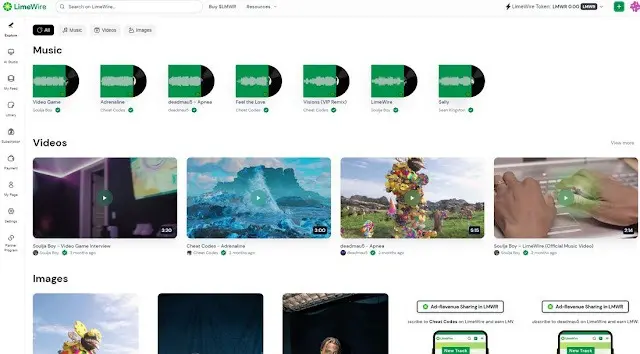
In the rapidly shifting landscape of artificial intelligence and digital content creation, few brand transformations have been as unexpected as the resurgence of LimeWire. Once a household name associated with the peer-to-peer file-sharing culture of the early 2000s, the brand has been entirely reimagined. Today, it stands not as a relic of the past, but as a modern, cutting-edge AI content publishing platform designed to bridge the gap between creative expression and digital monetization. By integrating generative AI tools with blockchain technology, the new LimeWire has carved out a unique niche that empowers creators to produce, distribute, and profit from their digital work in ways that were previously inaccessible to the average user.
A New Chapter for a Familiar Name
The current iteration of LimeWire represents a total departure from its predecessor. While the name remains, the platform has pivoted toward the future of generative media, providing a robust ecosystem for artists, musicians, and digital creators. This transition is not merely a rebranding exercise; it is a fundamental shift in how digital assets are created and owned. By leveraging the power of generative AI, the platform provides users with an intuitive toolkit to generate high-quality imagery, with plans to expand into music and video production.
The platform’s growth has been marked by significant interest from the creative community. High-profile artists, including Deadmau5, Soulja Boy, and Sean Kingston, have already adopted the platform to publish their own digital works. By utilizing LimeWire Studio, these creators are effectively using the platform as a launchpad for NFTs—ranging from music tracks to video content and digital artwork—thereby proving that the platform’s infrastructure can handle high-stakes creative output from established industry professionals while remaining accessible to newcomers.
The Power of AI Image Generation
At the heart of the LimeWire experience is its advanced AI image generation suite. Designed to be both versatile and user-friendly, the studio integrates some of the most powerful generative models currently available, such as Stable Diffusion 2.1, Stable Diffusion XL, and DALL-E 2. This multi-model approach allows users to experiment with different visual styles, from hyper-realistic cinematic shots and digital art to anime, pixel art, and classic analog film aesthetics.
The technical flexibility provided by the platform is a key differentiator. Users do not need to be experts in machine learning to leverage these tools. The interface is designed to accommodate a wide range of experience levels; one can start with simple, short prompts or dive into complex, highly specific instructions to fine-tune the final result. By offering additional features such as samplers and prompt guidance, LimeWire ensures that creators have the granular control necessary to achieve their specific artistic vision. Furthermore, the platform’s active development of its own proprietary AI model suggests a commitment to long-term innovation, ensuring that users will continue to have access to state-of-the-art tools as the technology evolves.
Monetization and the NFT Ecosystem
One of the most compelling aspects of the revamped LimeWire is its integrated monetization model. The platform recognizes that for content creators to thrive, they require more than just a space to publish—they need a viable financial incentive. When a user generates an image or piece of content on LimeWire, the platform provides an automated pathway to mint that creation as a Non-Fungible Token (NFT) on either the Polygon or Algorand blockchain. This process provides each piece of content with a unique, verifiable digital signature, establishing provenance and clear ownership in the decentralized web.
This system creates a unique environment where digital assets become tradeable commodities. Creators have full agency over how their content is shared. They can choose to make their work public, allowing for broad discoverability and potential trading among fans, or they can opt for an exclusive, premium subscription model. In the latter scenario, the content remains hidden from the general public, accessible only to those who have subscribed to the creator’s page. This creates an intimate, fan-centric economy where creators can foster deep loyalty while generating a recurring revenue stream.
The financial incentive structure extends beyond simple NFT sales. LimeWire has implemented a revenue-sharing model that compensates creators for the engagement their content receives. When other users view a creator’s images, music, or videos on the platform, the creator is entitled to a portion of the ad revenue generated. Specifically, creators can earn 70% of the ad revenue, providing a tangible reward for their contributions to the platform’s ecosystem.
Understanding the LMWR Token Economy
The economic engine of the new LimeWire is the LMWR token, the platform’s proprietary cryptocurrency. All revenue earned through ad-sharing and NFT trading is distributed to users in the form of these tokens. This integration serves to simplify the financial experience for creators, as they can withdraw their earnings and trade them on major cryptocurrency exchanges such as Kraken, ByBit, and UniSwap.
Beyond acting as a payout mechanism, the LMWR token serves a functional role within the platform’s ecosystem. Users can utilize their tokens to purchase additional credits for the AI generation tools, effectively creating a closed-loop economy where the fruits of one’s creative labor can be reinvested into the production of future content. This structure is designed to reward consistent creators, giving them more tools and more control over their artistic output as they become more active on the platform.
Flexible Tiers for Every Creator
LimeWire employs a tiered pricing structure that caters to a wide spectrum of users, from hobbyists to professional content creators. The platform offers a free entry point, providing new users with 10 credits that allow for up to 20 image generations per day, alongside a 50% share of ad revenue. This accessibility ensures that anyone interested in exploring the world of generative AI can do so without an upfront financial commitment.
For those looking to scale their creative operations, the platform offers several premium plans. The $9.99 monthly plan increases the allocation to 1,000 credits, enabling up to 2,000 image generations, and maintains the 50% ad revenue share. As users move up to the $29, $49, and $99 tiers, they gain access to significantly higher credit counts, increased ad revenue shares—reaching up to 70%—and priority access to the latest, most advanced AI models as they are rolled out. All premium tiers include additional professional benefits, such as a Pro profile badge, faster image generation speeds, access to a comprehensive creation history, and an ad-free browsing experience.
Looking Toward the Future
As LimeWire continues to refine its platform, the roadmap remains focused on expansion and technological refinement. While the current offerings are heavily centered on AI-driven image generation, the company has made its intentions clear regarding the future: the integration of music and video generation tools. This expansion is highly anticipated, as it will move the platform closer to its goal of becoming an all-encompassing hub for generative media.
By lowering the barriers to entry for creative production and providing a sophisticated, blockchain-backed system for ownership and monetization, LimeWire is positioning itself as a pivotal player in the creator economy. It offers a unique synthesis of the "Web2" social experience and the "Web3" decentralized future. For artists and designers, the platform represents an opportunity to experiment with the latest AI technology while maintaining control over their intellectual property. As the platform evolves and introduces new generative capabilities, it stands as a testament to how legacy digital brands can find new life by embracing the transformative power of artificial intelligence and the digital ownership revolution. With tools that are both powerful and increasingly accessible, the platform remains an essential destination for those looking to explore the intersection of human creativity and machine intelligence.