Welcome to the daily roundup of the literary internet, where we explore the cultural milestones, historical anniversaries, and digital discussions shaping the world of books and writing today. In the vast and interconnected landscape of contemporary literary discourse, readers and writers alike continually look back to the foundational voices that have shaped poetry, fiction, and cultural critique across the globe. Today brings a significant historical commemoration that bridges early twentieth-century European literature with modern digital appreciation, highlighting the enduring relevance of a visionary writer whose work continues to resonate deeply within international literary circles.
THE BEST OF THE LITERARY INTERNET
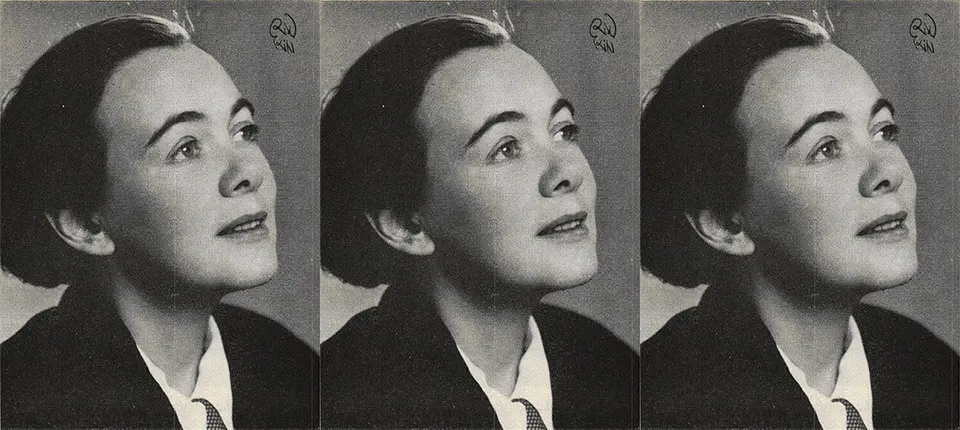
Today marks a special commemoration in the annals of literary history. In 1900, the celebrated Swedish poet and novelist Karin Boye was born, marking the advent of a literary voice that would profoundly influence Scandinavian letters and speculative fiction worldwide. As digital platforms, literary archives, and online cultural journals gather to honor her memory, the literary internet reflects on her remarkable contributions to poetry and prose, examining how her distinct artistic vision continues to inspire contemporary audiences, translators, and scholars.
Born in Gothenburg, Sweden, at the dawn of the twentieth century, Karin Boye grew up during a period of immense social, political, and artistic transformation in Europe. Her journey into the literary world began early, driven by a profound sensitivity to the human condition, existential questions, and the intricate complexities of modern life. Over the course of her relatively short but immensely impactful life, Boye emerged as a central figure in the Swedish modernist movement. She was not only a prolific poet who published several acclaimed collections—beginning with her debut Märkt in 1927—but also a talented novelist and a prominent essayist, deeply engaged with the intellectual currents of her time, including psychoanalysis, socialism, and European avant-garde movements.
Among her expansive bibliography, Boye is perhaps most internationally renowned for her pioneering dystopian masterpiece, Kallocain, published in 1940. Set in a sterile, totalitarian world state where citizens are subjected to chemical interrogation via a truth serum known as kallocain, the novel offers a chilling exploration of state control, the erosion of personal privacy, and the resilient human need for inner freedom and genuine connection. Written under the gathering shadow of World War II and the rise of totalitarian regimes across Europe, Kallocain stands alongside other monumental works of dystopian literature, offering a uniquely psychological and philosophical perspective on the dangers of collective tyranny. Long before modern discussions regarding digital surveillance and data privacy dominated the literary internet, Boye’s prophetic narrative provided a stark warning about the potential surrender of individual conscience to state mechanisms.
Beyond her contributions to prose and dystopian fiction, Boye’s poetry remains a cornerstone of Swedish literature. Her verses are frequently celebrated for their lyrical intensity, emotional depth, and striking imagery. Poems such as "I rörelse" (In Motion) capture the restless human desire for growth, movement, and purpose, featuring famous lines that resonate with generations of readers seeking meaning in times of uncertainty. Her ability to merge strict formal control with deeply vulnerable, confessional emotional states earned her a lasting place in the pantheon of Nordic poets. Furthermore, her association with the influential Swedish literary magazine Clarté and her involvement with progressive intellectual circles highlighted her commitment to addressing social injustices and advocating for human dignity.
In contemporary digital spaces, literary enthusiasts, academic researchers, and translators frequently revisit Boye’s life and work, sharing analyses, new translations, and digital tributes that keep her legacy vibrant for new generations of readers. Platforms dedicated to global literature often highlight her anniversary, prompting renewed discussions about the accessibility of her translated works and the ongoing relevance of her themes in the twenty-first century. As online literary communities continue to map the interconnected histories of international poetry and speculative fiction, Karin Boye remains a shining example of an artist whose intellectual courage and creative brilliance transcended geographical and linguistic boundaries.
As today’s digital celebrations and retrospectives unfold across literary websites, journals, and social platforms, the appreciation of Karin Boye serves as a reminder of the enduring power of the written word. Whether through the haunting corridors of her dystopian visions or the quiet, resonant beauty of her lyrical poetry, her artistic output continues to challenge, comfort, and inspire. The literary internet today honors not only the date of her birth in 1900, but the permanent imprint she left on the global literary landscape—an imprint that remains as sharp, vital, and provocative as it was a century ago.