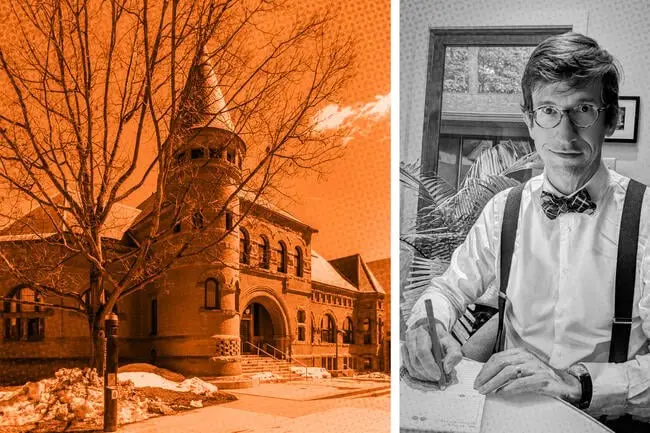
The high-profile resignation comes just weeks before Schnell was scheduled to face a momentous no-confidence vote orchestrated by faculty leaders who grew increasingly vocal over the expanding scandal. The controversy has sent shockwaves through the Ivy League campus, raising complex questions about the appropriate boundaries of generative artificial intelligence in scholarly publishing, university leadership, and academic research.
In a memorandum addressed to students, faculty, and staff, Dartmouth President Sian Leah Beilock—who has frequently advocated for embracing artificial intelligence across the university ecosystem—addressed the departure directly.
"I expect our senior leaders to hold themselves to the highest standards," President Beilock wrote. "Out of respect for his colleagues and the institution, Santiago has resigned as provost and is leaving the university."
The controversy surrounding Schnell’s reliance on artificial intelligence tools first erupted in August. At that time, an investigation published by Semafor revealed that an AI detection program called Pangram flagged an editorial written by Schnell for The Washington Post as being at least 80 percent AI-generated. The revelation prompted immediate scrutiny from the academic community and the media.
Shortly thereafter, The Dartmouth, the campus student newspaper, pursued its own independent investigation into Schnell’s body of published works. Using the same Pangram software, the student journalists analyzed a series of articles written by the provost. According to their findings, Pangram determined that Schnell’s work averaged 96 percent "AI-written" content across nine separate professional articles published that year. This subset of writings included the high-profile Post essay alongside two academic papers focused on mathematics.
While Schnell openly acknowledged that he utilized artificial intelligence as an assistant during his writing processes, he consistently maintained that the technology never acted as a substitute for his own research, intellectual judgment, or core authorship. However, this defense failed to quell a mounting wave of blowback. Students and faculty members argued passionately that his actions constituted a direct violation of the college’s honor code. Under Dartmouth’s official policies, students are explicitly required to acknowledge whenever they employ generative artificial intelligence tools to complete their academic coursework, and critics argued that university executives should be held to an equally rigorous, if not higher, standard.
As the outcry intensified across campus, President Beilock convened an independent advisory committee. Composed of a mix of faculty members and alumni, the committee was tasked with scrutinizing how Schnell integrated AI into his written works. Specifically, the panel was asked to determine whether he met the explicit AI-disclosure requirements enforced by various publishers, whether he was entirely honest regarding his technological usage, and whether his actions constituted a formal breach of Dartmouth’s institutional policies.
The Claude Logs
The independent advisory committee submitted its detailed, eight-page report to President Beilock. Crucially, the committee opted against relying on Pangram or other commercial AI detection software. Industry experts have frequently noted that such detectors can be unreliable and prone to false positives. Instead, the committee adopted a forensic approach, focusing on analyzing articles Schnell had authored for publishers that either completely barred the use of artificial intelligence or mandated strict disclosure when it was utilized.
Furthermore, the committee drew upon available records concerning the provost’s professional communications, alongside data retrieved from his institutional Dartmouth Claude account. These digital footprints offered a clear window into how the provost leveraged artificial intelligence to edit his research papers and public writings.
Despite the thoroughness of the review, the committee noted in its findings that Schnell did not fully cooperate with the internal investigation.

"Although he did provide his Dartmouth-issued laptop for inspection, the Provost did not, upon request, provide logs of his use of personal LLM accounts that he used for his academic and public writings," the report stated. "The Provost also failed to make himself available at the time requested or to propose additional times that he could meet to discuss his AI use across his recent writings."
Despite these limitations, investigators successfully examined the interaction logs from the university’s enterprise version of Claude. These records revealed how Schnell handled revisions and peer-review feedback for a paper ultimately published last month in the journal ChemSystemsChem. The committee determined that Schnell utilized the system to "substantially edit his research manuscript, troubleshoot errors in computer code, and generate figures for his publication following the receipt of major revisions from peer reviewers."
The committee’s report highlighted specific prompts that Schnell entered into the AI tool. In one instance, he asked the system, "Do you find any scientific issue with the paper, problem or contradiction that it would prevent me to submit it?" In another exchange regarding revisions, he noted, "I asked ChatGPT to write a version of the response to peer reviewers which you will find enclosed. Please check it. Based on this version would you change anything in your version?"
According to the committee, the policies enforced by the journal "at the time of the paper’s submission, acceptance, and publication all required disclosure of AI use of this kind." Yet, the report concluded, the "provost failed to provide any such disclosure." Although Schnell previously offered an explanation for the discrepancy—arguing that the publisher only implemented formal AI disclosure rules in 2025 and that he was relying on outdated author guidelines—the committee uncovered evidence establishing that the publisher had required explicit disclosure of artificial intelligence utilization since at least 2023.
Additional examination of the Claude logs revealed that Schnell had also uploaded the manuscript for a forthcoming article carrying the title "Academic Freedom and Catholic Mission: The Procedural Overlap Zone in University Governance." Within the platform, he asked the large language model if there were "many signatures of AI writing in this article?" According to the investigation, Schnell subsequently submitted a revised manuscript that closely incorporated the stylistic alterations recommended by Claude.
Following the initial public uproar surrounding his writing habits, Schnell proactively contacted the editor of the journal to pause the publication process. While that specific publisher did not maintain a rigid AI policy at the time, Schnell formally disclosed that he "used AI as an editorial tool during the article preparation and revision process to help refine sentences, improve clarity, and the expression of arguments."
Nevertheless, the advisory committee asserted that this characterization severely "understates the nature of the provost’s actual AI use according to the Claude logs." The panel ultimately concluded that both papers went far beyond the boundaries of Schnell’s previous public descriptions regarding his integration of artificial intelligence into authorship. The committee determined that his incomplete disclosures, missing acknowledgments, and public statements minimizing his AI reliance were fundamentally inconsistent with the university policy mandating a culture of integrity, honesty, and respect in scholarship.
Even with Schnell’s departure, Dartmouth College—an institution that proudly identifies as the historical birthplace of artificial intelligence—is not shifting its strategic focus away from the technology itself. The university continues to grapple with how academia must adapt to a rapidly shifting technological landscape.
"Each of us brings a different perspective on how and when to incorporate AI into our work and our lives," President Beilock noted. "Moreover, keeping Dartmouth at the forefront of AI inevitably means leading through an environment that is fluid and fast-changing. That is why, as leaders, it is so critical that we model the transparency and human judgment that we expect from our students and scholars."
In the wake of Schnell’s resignation, Matthew Delmont, a distinguished history professor and the associate dean of faculty for international and interdisciplinary studies, has stepped into the role of Dartmouth’s interim provost. He is set to serve in the position through June 2028.