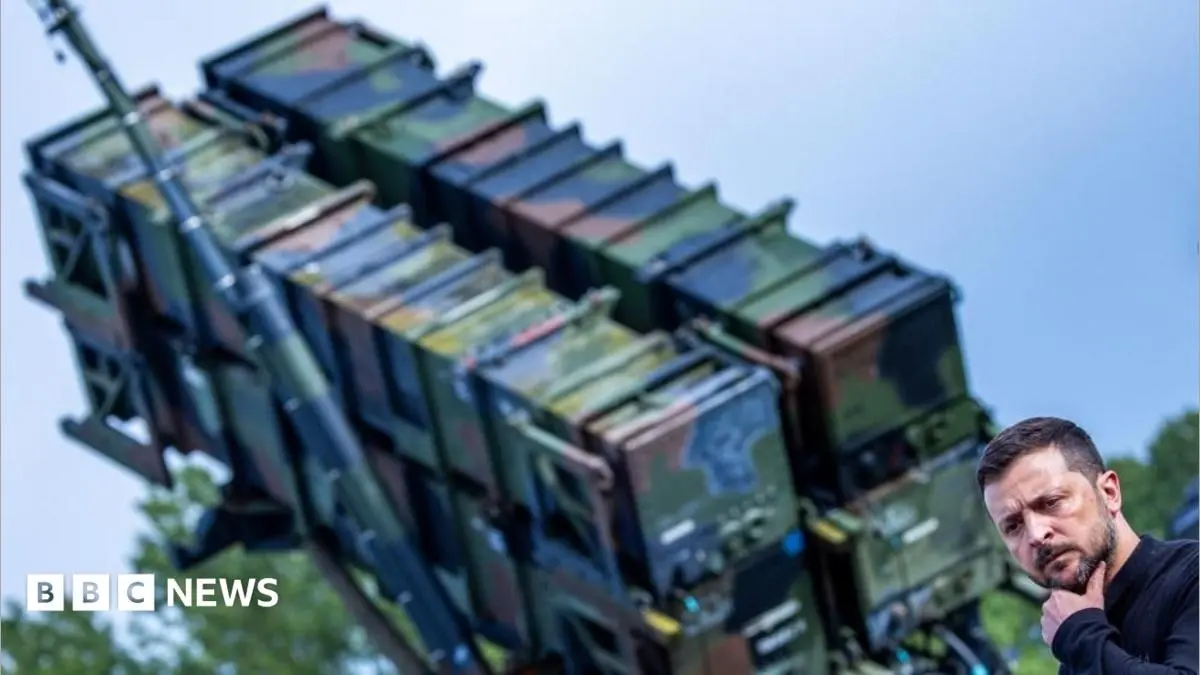
In a significant move to bolster Ukraine’s aerial defense capabilities, the United States has officially approved the sale of 500 Patriot PAC-3 interceptor missiles to Kyiv. The acquisition, valued at approximately $2.1 billion (£1.6 billion), comes at a precarious moment for the Ukrainian military, which has been struggling to counter an escalating campaign of Russian aerial strikes targeting the nation’s critical energy infrastructure and urban centers.
The State Department confirmed the approval on Friday, emphasizing that the purchase is designed to enhance the security of a vital partner country that serves as a cornerstone for political and economic stability in Europe. Crucially, the Department underscored that the transaction is “funded entirely” by Ukraine’s international allies, ensuring that no direct US federal funds are utilized in the procurement process. The financing structure involves a coalition of nations, with contributions from Canada, Germany, and Norway channeled through the JUMPSTART program and supported by the European Union’s Ukraine Support Loan initiative.
This approval arrives after months of mounting pressure from Kyiv, with President Volodymyr Zelensky having repeatedly issued urgent pleas to Washington to expedite the delivery of Patriot munitions. For the Ukrainian military, the Patriot missile system remains the only effective defense against Russia’s most sophisticated ballistic missiles. The delay in receiving these interceptors has been a point of contention; earlier this week, President Zelensky remarked that his administration had been waiting nearly a month for the final signature on the supply agreement.
The political climate surrounding this decision is complex, occurring just days after a public disagreement between President Zelensky and US President Donald Trump. In recent comments, President Trump suggested that it was time for a change in Ukrainian leadership, implying that a new administration might be better positioned to navigate an end to the protracted war with Russia. Despite this diplomatic friction, the State Department’s statement maintained a focus on the strategic necessity of the sale, noting that it supports the broader foreign policy and national security objectives of the United States.
The primary contractor for this massive order is the American aerospace and defense giant, Lockheed Martin. While the announcement marks a diplomatic and logistical milestone, the reality of global supply chain constraints remains a significant hurdle. There is currently a global shortage of Patriot interceptors, exacerbated by high demand and the munitions’ deployment in various international theaters, including the US engagement in operations against Iranian threats.
The production timeline for these 500 missiles remains unclear, though reports indicate that the order consists of newly manufactured units rather than a transfer of existing stockpile. This distinction is vital, as it implies that the delivery will not be immediate. The defense industry faces significant bottlenecks; according to the US Department of Defense, total global production capacity for these highly complex interceptors is approximately 600 missiles per year. Consequently, even with the contract signed, the physical arrival of the hardware in Ukraine will be governed by the slow, deliberate pace of industrial manufacturing.
The urgency for these systems was underscored once again on Friday evening, when President Zelensky utilized the Telegram messaging platform to report that Russian ballistic missiles had struck two separate regions of Ukraine. The incident served as a grim reminder of the daily threat faced by Ukrainian civilians and the vulnerability of the country’s power grid.
“They continue to carry out terrorist strikes against our cities,” Zelensky wrote, highlighting the persistent nature of the aerial campaign. As winter approaches, the vulnerability of Ukraine’s energy infrastructure has become a primary target for Russian forces, who have intensified their use of long-range missiles to disrupt heat and electricity supplies across the country.
President Zelensky has been transparent about the dire state of his country’s air defense stocks, recently admitting that Ukraine is running critically low on Patriot interceptors. The system’s ability to intercept ballistic threats makes it a high-value asset that is currently being stretched to its limits. Because the Patriot system is the only reliable shield against Russia’s most advanced weaponry, the scarcity of these missiles is not merely a logistical challenge but a direct threat to the safety of Ukraine’s population centers and industrial hubs.
The path to this deal has not been without its own controversies regarding production and licensing. In July, the issue of domestic production capabilities became a focal point when President Trump suggested that Washington had not agreed to license Ukraine to manufacture Patriot missiles domestically. This statement followed, and effectively walked back, an offer made just three weeks earlier that suggested the US might be open to granting Ukraine the rights to produce the munitions locally. The decision to stick with US-based production under Lockheed Martin ensures the quality and standardization of the weapons but keeps Ukraine dependent on the existing, limited global supply chain.
As the war enters this new, colder phase, the significance of this $2.1 billion deal cannot be overstated. By leveraging funds from the EU, Canada, Germany, and Norway, Ukraine has managed to secure a vital replenishment of its defense arsenal without placing the burden on the American taxpayer. However, the reliance on new builds highlights the long-term nature of the commitment required to sustain Ukraine’s defense.
The US State Department’s insistence that the sale aligns with American national security interests reflects a broader acknowledgment that the conflict in Ukraine is inextricably linked to European stability. By strengthening Ukraine’s ability to repel ballistic attacks, the international coalition is effectively trying to prevent the collapse of the country’s critical infrastructure, which would have cascading humanitarian and economic consequences across the continent.
As Kyiv waits for the manufacturing process to begin and eventually yield the new interceptors, the Ukrainian military must continue to manage its existing inventory with extreme caution. Every Patriot missile fired represents a critical decision between protecting a strategic facility or a populated urban area. The announcement of the 500-missile order provides a glimmer of hope for future capacity, but it also highlights the stark reality of a war of attrition where the speed of industrial output is as decisive as the bravery of those on the front lines.
The diplomatic messaging accompanying the sale is carefully calibrated to assure both the domestic US audience and international partners that the support remains robust and strategically sound. By emphasizing that no US funds are involved, the administration appears to be navigating the delicate balance of maintaining support for Kyiv while addressing political concerns within the United States about the costs of the war.
For the people of Ukraine, the news is a vital lifeline. With winter conditions expected to exacerbate the impact of the ongoing energy strikes, the promise of these interceptors—even with the lag in production—is a necessary component of the broader strategy to endure the coming months. The effectiveness of these weapons in the field has already been proven, and their continued presence in the Ukrainian arsenal is viewed by Kyiv as an essential deterrent against the intensification of Russian aerial warfare.
While the geopolitical landscape remains volatile and the debate over the war’s end continues to evolve, the practical reality on the ground remains focused on the immediate need for defense. The integration of international financing into the US defense industrial base represents a unique collaborative effort, designed to ensure that Ukraine’s skies remain protected, even as the global demand for advanced missile systems continues to outstrip the available supply. The coming months will likely see intense focus on how quickly the production lines can move and how effectively the Ukrainian military can sustain its defense against the unrelenting barrage of ballistic threats.