Recent data released by the US Federal Election Commission has shed light on the immense financial footprint Elon Musk is leaving on the American political landscape. According to the filings, the billionaire Tesla and SpaceX chief executive has funneled at least $445 million into Republican-aligned political action committees and conservative groups since last year. Despite deploying this unprecedented level of financial influence, however, public statements and expert analyses suggest that Musk is increasingly anxious about the outcome of the upcoming US midterm elections.
The tech mogul has made no secret of his apocalyptic view of a potential Democratic victory. Insisting that a strong showing by Democrats on Tuesday could spell doom for the nation’s governance, Musk took to his social media platform, X, to sound the alarm.
"This would result in America becoming a permanent one-party state and the end of democracy in any meaningful sense of the word," Musk wrote on Friday. "All that is needed to ensure this doesn’t happen is 51 Republican senators in 2029."
Musk’s heavy involvement in partisan politics represents a striking evolution for someone who once positioned himself primarily as a champion of clean energy and technological innovation. Over the years, however, his business enterprises have grown heavily reliant on massive federal contracts, while his political stances have shifted firmly toward the fossil fuel sector. Furthermore, his recent association with the controversial initiatives of the so-called Department of Government Efficiency, or DOGE, has faced intense scrutiny, with critics arguing that its actions have engineered labor shortages within regulatory bodies that were previously tasked with investigating his commercial empire.
Now, political observers note that Musk appears visibly distraught by the prospect of newfound Democratic congressional power, which could pave the way for aggressive legislative investigations and regulatory crackdowns once the midterms conclude.
Those fears may not be unfounded, as Musk’s overt attempts to shape the outcome of the elections have drawn widespread public analysis and sharp condemnation from political figures. Earlier this month, former Secretary of Labor Robert Reich spoke out against the billionaire after Musk publicly suggested that Reich should face imprisonment.
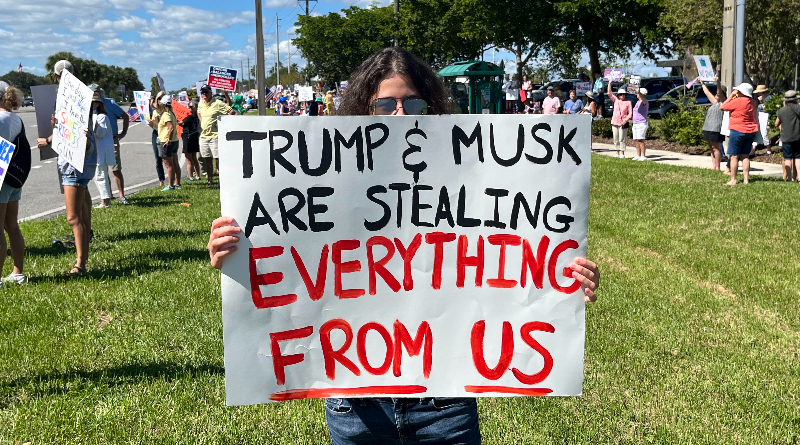
"I worry about what Musk’s impulsive bullying is doing and has done to others more vulnerable than I am," Reich wrote, pointing to what he described as a lifelong pattern of behavior in which the billionaire has threatened, racially denigrated, and pushed around people throughout his life.
Reich expanded his concerns beyond personal attacks, expressing deep apprehension for everyday voters who have been "deluged with TV ads for Republican candidates" financed by Musk’s political machinery. He also highlighted the plight of federal workers who have suffered under DOGE initiatives, Americans impacted by the degradation of public services, and vulnerable populations globally who face deteriorating conditions due to cuts to USAID championed by Musk’s associates.
Through America PAC, Musk has poured resources into 43 US House and Senate races. This influx of capital has saturated media markets with television commercials, digital advertisements, text message campaigns, and physical mailers. Ironically, this multi-million-dollar alliance comes after a period last year when Musk had temporarily fallen out of favor with Donald Trump and the broader leadership of the Republican Party.
According to its official website, America PAC purports to champion "secure borders, safe cities, free speech, sensible spending, fair justice system, and self-protection." While these broad objectives may resonate with many voters, a significant majority of the political action committee’s actual spending has been directed toward aggressive attack ads. Musk routinely amplifies this contentious content by cross-posting it directly to his audience of more than 200 million followers on X, a platform he owns and uses to exert near-total control over its internal messaging ecosystem.
In a recent installment of his podcast, journalist Ezra Klein interviewed Quinn Slobodian, a professor of international history at Boston University, to discuss Musk’s electoral strategy. Slobodian interpreted the billionaire’s heavy campaign financing as a blatant flexing of personal power designed to make or break political candidates at whim. Furthermore, Slobodian noted that the strategy serves to fine-tune Musk’s grip over the broader media and messaging ecosystem, acting as a preemptive defense against the looming wave of federal regulation that would inevitably accompany a Democratic majority in Congress.
The potency of these messaging campaigns—even when built on questionable premises—has become a central question of the 2026 midterms. Social historian Heather Cox Richardson has pointed out that modern political manipulation frequently relies on painting vivid pictures of societal collapse, effectively eroding individuals’ ability to process reality and make sense of the world around them. Faced with manufactured chaos, some media consumers naturally gravitate toward authoritarian figures promising absolute order, while others experience profound political fatigue and simply surrender control of their governance.

Musk’s Attack Ads are Having a Reverse Effect
Despite the massive financial imbalance introduced by outside spending, Musk’s heavy-handed tactics are encountering notable resistance on the ground. In Texas alone, America PAC has injected more than $33 million into the Senate campaign of Ken Paxton. This was supplemented by an additional $168 million contribution from Musk to the Senate Leadership Fund, a super PAC that ultimately funneled substantial resources back into the Paxton race.
The heavy corporate presence has triggered a fierce populist backlash from Democrats. James Talarico, the Democratic nominee for the US Senate in Texas, addressed the issue head-on during a campaign rally at the University of Texas, where his remarks were met with roaring boos from the assembled crowd.
"Elon Musk wants our land. He wants our water. He wants our tax dollars," Talarico told supporters. "He wants his very own personal United States senator."
Talarico argued that Musk’s primary objective is to halt the grassroots political movement taking shape across the state. In stark contrast to his opponent’s backing by billionaire-funded super PACs, Talarico emphasized that his own campaign relies entirely on small-dollar contributions from more than a million everyday citizens. The day prior to the rally, the Talarico campaign released a viral digital advertisement depicting Paxton as a political pawn of the tech executive, closing with the rallying cry: "Let’s remind Elon: Texas is not for sale."
While the financial disparity between the opposing campaigns remains vast, early indications suggest that Musk’s aggressive ad buys may be creating a polarizing effect rather than guaranteeing conservative victories. Across Texas and numerous other battleground states nationwide, Democratic candidates are maintaining competitive standing, leaving many crucial congressional races entirely too close to call as election day approaches.