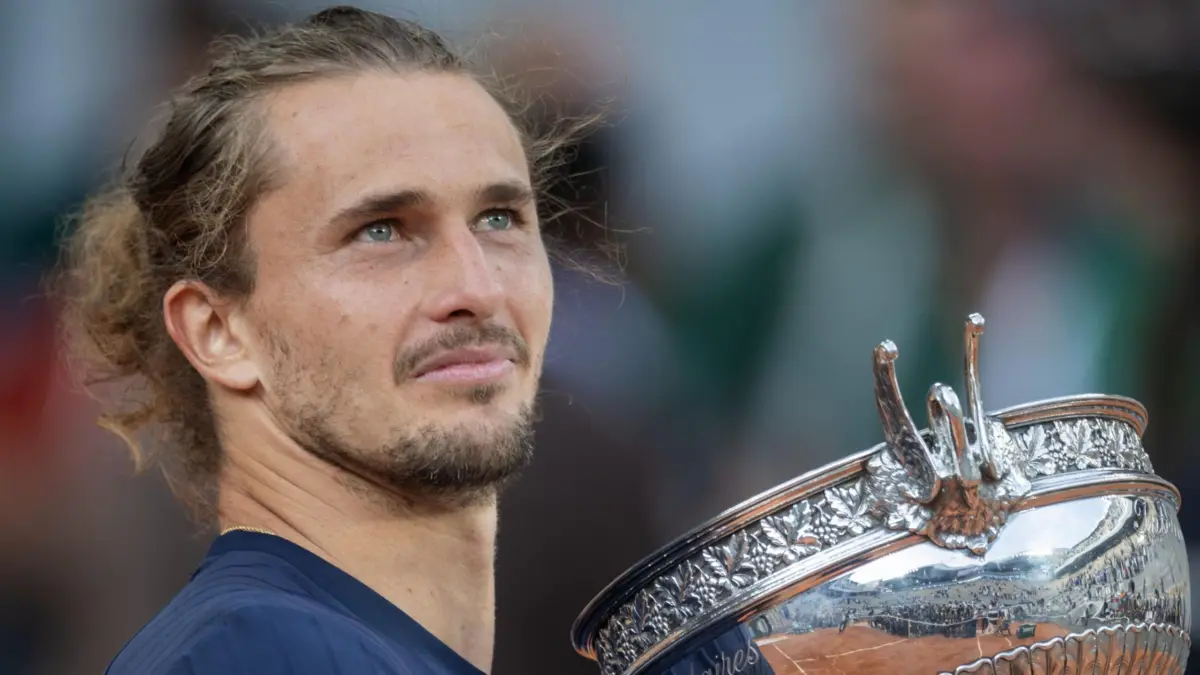
For more than a decade, the narrative surrounding Alexander Zverev in the world of professional tennis felt like a recurring, unresolved script. To many observers, the German was the quintessential "best player never to have won a Grand Slam," a perennial contender whose immense talent was perpetually shadowed by an inability to cross the final, most daunting threshold. Yet, as the 2026 season draws to a close, that narrative has been irrevocably rewritten. Zverev ends the year not just as a two-time major champion, but as the undisputed, deserved world number one.
At 29 years old, Zverev has achieved a milestone that defies the modern trend of youthful dominance. He has become the oldest man in more than half a century to ascend to the world number one ranking for the first time. This historic climb was not the result of a single breakout tournament, but rather a sustained, blistering campaign punctuated by triumphs at both the French Open and the US Open. These victories served as the essential springboards for his rise, proving that his long-standing reputation for faltering on the biggest stages has finally been laid to rest.
For Zverev, the journey to the top of the sport has been marked by a profound sense of persistence. Diagnosed with type 1 diabetes at the age of four, he has spent his career balancing the physical demands of elite athletics with the rigorous management of his condition. His breakthrough this year stands as a testament to that grit—a reward for years of intense, sometimes punishing, hard work that saw him endure heartbreak in major finals before finally grasping the trophies that had long eluded him.
However, the portrait of the new standard-bearer for men’s tennis remains complex. Alongside his athletic ascension, Zverev has faced intense public scrutiny. He has been the subject of serious accusations of physical abuse by two former partners, leading to a major independent investigation by the sport’s governing body. As he stands at the pinnacle of his profession, the contrast between his on-court dominance and the off-court controversies that have dogged his career remains a defining, and often polarising, element of his legacy.
The Mallorca Shift: How Ten Days with Nadal Changed His Approach
To understand Zverev’s 2026 transformation, one must look back to the summer of 2025. At that time, Zverev was already an established star: an Olympic gold medalist, a two-time winner of the season-ending ATP Finals, and a former world number two who had already tasted the pressure of three Grand Slam finals. Yet, the sting of those losses remained fresh, particularly the 2020 US Open final. In that match, he held a two-set lead over Dominic Thiem, only to collapse in a fifth-set tie-break after serving two double faults as his opponent struggled with physical cramping.

That loss became a recurring ghost in his career, symbolizing a broader, perennial struggle: an inability to channel the same freedom and aggressive intent on the biggest stages that he displayed so effortlessly during routine ATP Tour events. He had become known for a certain stiffness, a hesitation that often betrayed him when the stakes were highest.
Determined to break the cycle, Zverev sought a change in perspective. In July 2025, he spent ten pivotal days in Mallorca, training under the tutelage of Rafael Nadal and his legendary coach, Toni Nadal. "I wanted to see and then hear a new vision of what tennis in their mind looks like—and how my tennis, in their mind, looks like," Zverev explained. He viewed the opportunity to pick the brains of the Nadals as a rare luxury, noting that because Rafa had played against him for a decade, he possessed a unique, analytical understanding of his game. The result was a commitment to a more daring style of play: higher ball speeds, increased risk-taking, and a greater variety of tactics within rallies.
The transition was not without its trials. During the French Open final in June, the familiar specter of anxiety returned, manifesting as physical cramping against Flavio Cobolli. Yet, the difference this time was stark. Where once he might have faltered, Zverev held firm, dominating the deciding set 6-1 to secure his long-awaited maiden major title.
A Family Affair and the Road Ahead
Zverev’s success is deeply rooted in his family history. His father, Alex Sr., has remained a steadfast presence in his coaching box, providing a sense of stability that has guided him through his most turbulent years. In recent times, his older brother, Mischa, has also joined the team, bringing his own experience from the ATP Tour to support Alexander’s efforts.
There is a poignant symmetry to this dynamic. Zverev fondly recalls his childhood, when he would sit by the sidelines as a toddler, watching Mischa practice with the likes of Andy Murray. Today, the roles have reversed, yet the foundation remains the same. Zverev attributes the success of his working relationship with his parents to a healthy boundary: they spend almost no time together off the court. "The big difference with my parents is that they never forced me to do anything," Zverev has noted. "They wanted me to play different sports so they didn’t have to coach me. They always told me, ‘Why don’t you play football, or field hockey?’ as that was the sport I loved. They are very smart. They’ve been through it."

While his French and US Open titles define his 2026 season, Zverev’s performance at Wimbledon—where he reached the final—offered perhaps the most compelling evidence of his evolution. Despite a four-set loss to Jannik Sinner on Centre Court, Zverev played what he considers his best tennis of the year, displaying a level of aggression and tactical daring that was previously absent from his game.
Looking forward, the challenge for the new world number one is to sustain this momentum. With ten consecutive losses to Sinner, Zverev is well aware of the hurdles ahead. If Carlos Alcaraz and Sinner return to full fitness for the start of the 2027 season, the sport appears poised for a compelling three-way rivalry, a prospect that promises to elevate the quality of men’s tennis to new heights.
A Polarising Figure at the Top
While the tennis world celebrates his tactical growth, Zverev’s tenure as world number one is inseparable from the controversies that have defined his personal life. The allegations of physical violence and controlling behavior brought by his ex-partner, Olga Sharypova, in October 2020, remain a significant point of contention. Zverev has consistently maintained his innocence, describing the allegations as "baseless." While no criminal charges were brought, the ATP Tour initiated a major third-party investigation.
In January 2023, the ATP released its findings, stating there was "insufficient evidence to substantiate published allegations of abuse." The report cited a lack of reliable evidence, conflicting statements, and an absence of eyewitness accounts. In response to the high-profile nature of the case, the ATP appointed a director of safeguarding and launched a global framework aimed at preventing and responding to misconduct across the tour.
Further legal issues emerged in October 2023, when Zverev was issued a penalty order and fined 450,000 euros by a German court for bodily harm against another ex-girlfriend, Brenda Patea. Zverev contested the order, leading to a public trial in Berlin in May 2024. However, just one week into the proceedings, the court terminated the case following a settlement between the parties. The court clarified that the decision was not a verdict on guilt or innocence, but was instead driven by the witness’s desire to end the trial.

Addressing the situation during the French Open, Zverev defended the outcome. "That’s what dropping the case is. That is innocence," he stated. "They’re not going to drop the case if you’re guilty at the end of the day. Done. We move on. I never ever want to hear another question about the subject again."
Throughout this period, Zverev has faced vocal opposition from segments of the public, including heckling at tournaments like the Australian Open and in Munich. His career has also been marred by disciplinary incidents on the court, most notably in 2022 at the Mexican Open, where he was disqualified for repeatedly smashing his racquet into the umpire’s chair in a fit of rage over a line call. He was subsequently given a suspended eight-week ban, which was never enacted after he maintained a clean record regarding aggressive behavior for the following twelve months.
As Zverev ends the 2026 season as the world’s top-ranked player, he remains a figure of profound contrast: a disciplined, reinvented athlete who has finally mastered the art of winning, yet one who remains permanently tethered to the public fallout of his private life. His tennis legacy is now undeniable, but the conversation surrounding his character shows little sign of subsiding as he enters the next phase of his career.