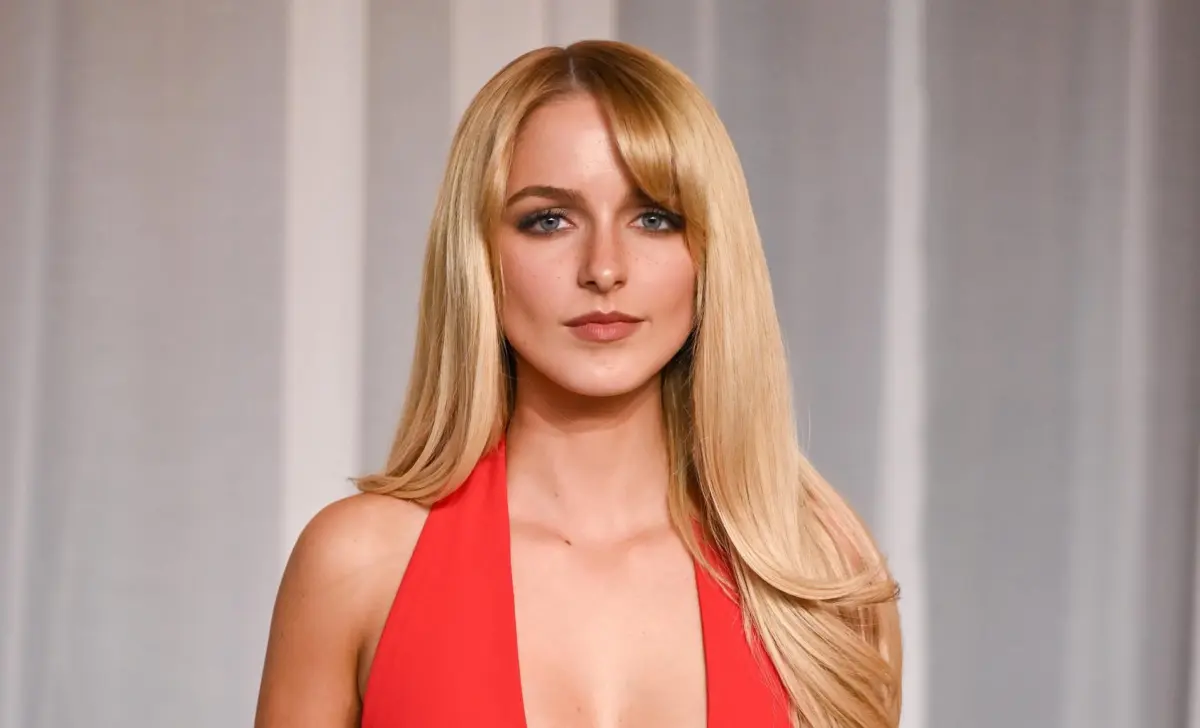
As Mckenna Grace steps into the spotlight for the highly anticipated release of "The Hunger Games: Sunrise on the Reaping," the young actor is taking a moment to reflect on the deliberate choices shaping her burgeoning career. In a candid new interview with Cosmopolitan magazine, Grace revealed that she actively avoids roles requiring nudity or hyper-sexualized content, citing a long-held personal aspiration: the dream of one day portraying a Disney princess on the big screen.
Grace, who has been a fixture in Hollywood since childhood and recently starred as a victim of Ghostface in the latest "Scream" installment, remains clear about the professional boundaries she has set for herself. While she is no stranger to the intensity of horror or high-stakes drama, she maintains that there is a distinct line she is not prepared to cross.
"At this point, I definitely don’t do nudity or very hypersexual things," Grace told Cosmopolitan when asked about the types of roles she tends to decline. "I respect anybody who can, but it’s terrifying to me. I don’t know if that’ll ever change. It’s not like I only do wholesome things—my character literally gets gutted by Ghostface in ‘Scream’—but my dream is to try and be a Disney princess someday."
Grace’s perspective highlights a growing trend among contemporary performers who are increasingly vocal about their comfort levels regarding intimate scenes. By prioritizing her long-term goal of embodying a classic Disney archetype, Grace is strategically curating a filmography that aligns with a specific public image, ensuring that her choices today do not conflict with the aspirations she holds for the future.
This approach finds a notable precedent in the career of Amy Adams, who has long been considered the gold standard for navigating the transition from a serious actress to a beloved Disney icon. Adams, who solidified her status as a cultural staple with her role as Giselle in the 2007 smash hit "Enchanted," became famously protective of that image. Her commitment to her younger fanbase influenced many of her professional decisions, leading her to turn down projects that might have conflicted with the whimsical, family-friendly persona she had cultivated.
One such instance involved an offer for a "Saturday Night Live" sketch that, while comedic, featured themes Adams felt were inappropriate for the audience that knew her primarily as a Disney princess. Comedian Andy Samberg, who was set to perform the sketch alongside her, later recalled the interaction on an episode of "The Lonely Island and Seth Meyers" podcast, illustrating just how seriously Adams took her responsibility to her fans.
"I’m not gonna go into great detail about it, but it was a song that would have been a duet with me and Amy Adams, and it was very dirty," Samberg explained. "It was basically like we were both really old and we were having a picnic, old people couple, and one of us gets stung by a scorpion. And then I’m dying or something and the one lament on my deathbed is that we didn’t explore things more sexually in our life, and it’s this huge up anthem about that."
According to Samberg, Adams’ response was immediate and firm. "She was like, ‘That’s really funny. I can’t do that,’" Samberg noted. "Little girls are so obsessed with ‘Enchanted’ right now. They will find this, and it will be scarring for them. I just can’t mix that right now." This level of foresight eventually paved the way for Adams to reprise her iconic role in the 2022 sequel, "Disenchanted," maintaining a decades-long connection with her audience that few actors manage to sustain with such clarity of purpose.
The conversation surrounding intimacy and boundaries in Hollywood has gained significant momentum in recent years, with established stars speaking more openly about the psychological toll and personal discomfort that can accompany filming intimate scenes. Amanda Seyfried, another acclaimed performer, recently made headlines for expressing a similar stance. During the Hamptons International Film Festival in September, Seyfried openly discussed her decision to step back from roles that rely heavily on sexualized content.
"I passed on a show where I would have to have sex all the time because of the sex," Seyfried revealed. "Doesn’t matter [who it’s with]… I don’t wanna do it. I’m uncomfortable with it. I’m not into it right now."
For performers like Seyfried and Grace, these choices are not necessarily permanent, but rather a reflection of their current personal and professional priorities. As Seyfried added, "Maybe if [the project] came along again [at a later point], maybe I’d be in a different space. But I don’t wanna deal with being naked with a stranger."
For Mckenna Grace, these boundaries are simply a part of her process as she transitions from a child star to an adult actor navigating an industry that often pushes for more explicit content. Her ability to define her own limits while continuing to land prominent roles in major franchises like "The Hunger Games" suggests that artists can indeed maintain their integrity and personal goals without sacrificing career growth.
Grace’s current trajectory is impressive by any standard. Having recently made a splash in the "Scream" franchise, she is now preparing for the November 20 release of "The Hunger Games: Sunrise on the Reaping," where she portrays the character Maysilee Donner. Additionally, she is set to star as Daphne in the upcoming live-action "Scooby-Doo" reboot series for Netflix. By balancing these high-profile roles with a clear vision for her brand—and perhaps a future turn as a Disney princess—Grace is demonstrating a level of agency that is becoming increasingly common among the next generation of Hollywood talent.
The industry has seen a shift toward more collaborative environments, particularly with the introduction of intimacy coordinators on film sets, aimed at ensuring the comfort and safety of actors during sensitive scenes. Yet, as the comments from Grace, Seyfried, and Adams suggest, the decision to opt out of such scenes entirely remains a personal prerogative, often influenced by the actor’s desire to protect their public image and the connection they share with their audience.
As Grace continues to navigate the complexities of her career, her openness about her goals serves as a reminder that the path to success in Hollywood is not one-size-fits-all. While the industry frequently demands versatility and a willingness to push boundaries, there is significant power in an artist who knows exactly what they are—and are not—willing to give to a role. For those watching Grace’s career, the focus remains on her upcoming performances, but the conversation she has started about personal boundaries and the sanctity of the "Disney princess" dream provides a deeper look into the motivations of a young star who is charting her own course through the spotlight.
The full interview, offering further insights into Grace’s thoughts on her work and her future aspirations, can be found on Cosmopolitan magazine’s website. With a busy schedule of releases ahead and a clear sense of self, Mckenna Grace is positioning herself as an actor who is as thoughtful about her off-screen life as she is dedicated to her on-screen craft.