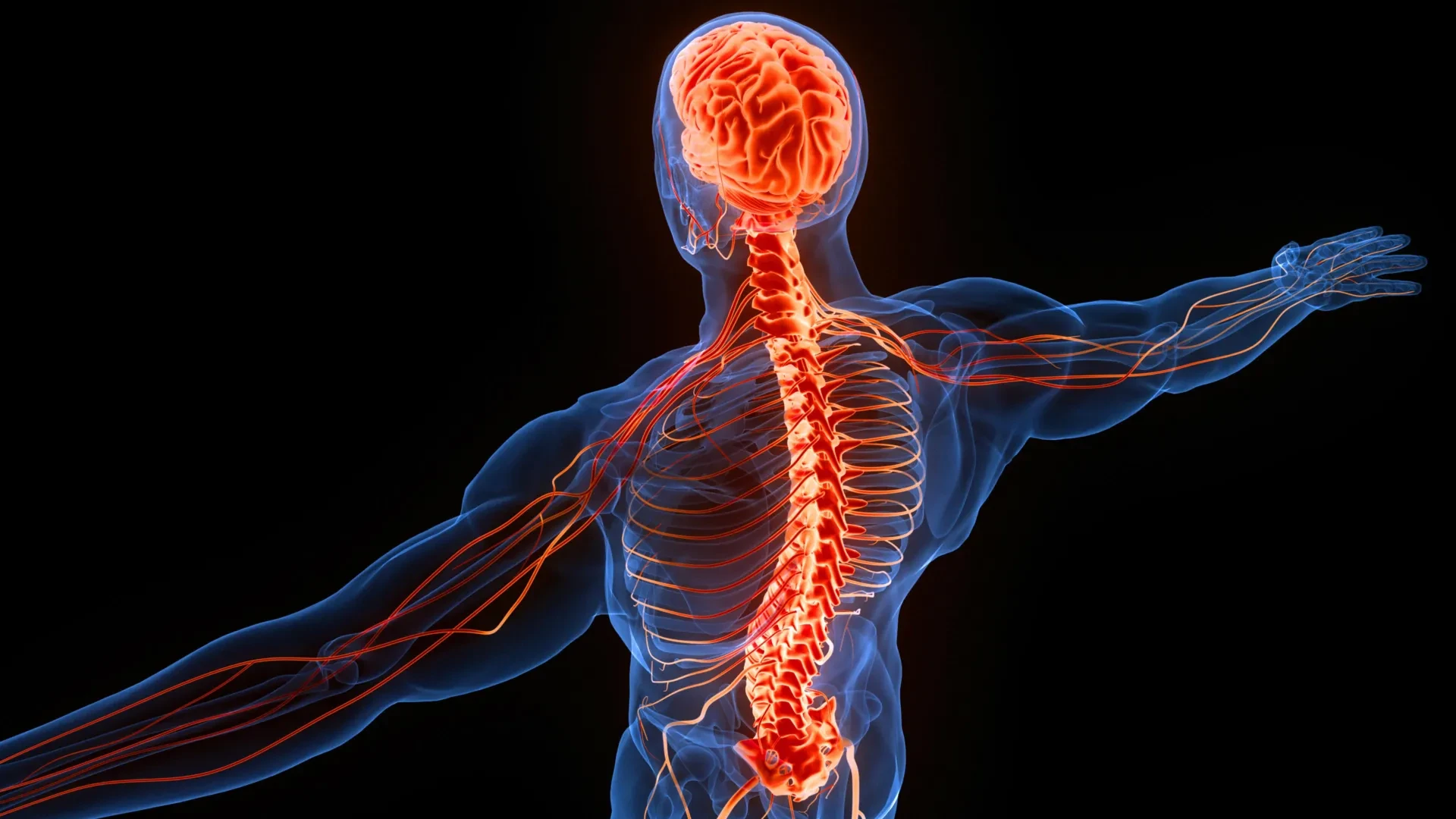
Why does the left hemisphere of the human brain govern the right side of the body, while the right hemisphere oversees the left? This striking, counterintuitive arrangement is one of the most fundamental and intriguing features of the vertebrate nervous system. For generations, the "crossed" nature of our neural architecture has prompted questions about efficiency and evolutionary utility. Now, a new study led by neuroscientists at the University of Minnesota suggests that this peculiar design is not necessarily a product of complex optimization, but rather an evolutionary inheritance dating back to the dawn of vertebrate life more than 500 million years ago.
Dr. Martin Wessendorf, a neuroscientist and associate professor emeritus at the University of Minnesota, and cognitive neuroscientist Daniel Wang have dedicated their recent research to unraveling the origins of these contralateral connections. Their findings, published in the journal Frontiers in Neuroanatomy, propose that the crossed wiring of our nervous system is a structural artifact—a historical byproduct of how evolution built new brain circuits upon the framework of an ancient visual system.
The Foundation of the Cross: The Visual System
To understand why our motor and sensory systems are wired to the opposite side of the body, one must first look at the eyes. The human visual system is inherently reversed: as light passes through the lens of the eye, the image projected onto the retina is inverted and mirrored. Consequently, objects appearing in our right visual field are captured by the left side of the retina, and vice versa.
This visual data travels along the optic nerve to a pivotal crossroads known as the optic chiasm. Here, nerve fibers are organized with remarkable precision, ensuring that information from the right visual field is routed to the left side of the brain, while data from the left visual field is directed to the right. This arrangement is not merely a quirk of human biology; it is a feature shared by virtually all vertebrates.
A significant portion of these signals terminates in an ancient brain structure known as the optic tectum—referred to as the superior colliculus in mammals. Located in the midbrain, the optic tectum is responsible for rapid, reflexive responses to visual stimuli, such as the instinctual twitch of the head toward a sudden movement in one’s periphery. Because the optic tectum exists across all vertebrate species, researchers consider it one of the most primitive and conserved structures in the nervous system. Its early evolutionary appearance, the study suggests, provided the "blueprint" that subsequent neural pathways were forced to follow.
The Architecture of Sensory Pathways
The researchers extended their analysis beyond vision to examine two primary pathways responsible for transmitting sensations from the body to the brain: the dorsal column pathway and the spinothalamic tract. Both pathways cross the midline of the central nervous system, and both appear to be deeply ingrained in the evolutionary history of tetrapods—the group of four-limbed animals that includes mammals, birds, reptiles, and amphibians.
The dorsal column pathway is the body’s highway for "fine" sensations, such as light touch, vibration, and proprioception (the awareness of where our limbs are in space). Signals from the torso and limbs ascend through the spinal cord before crossing over to the opposite side of the brainstem. While this specific pathway is absent in fish, its consistent presence across amphibians, reptiles, birds, and mammals indicates that it emerged early in the transition to land and has remained largely unchanged for millions of years.
In contrast, the spinothalamic tract—which carries information regarding pain, temperature, and itching—crosses the midline much earlier, within the spinal cord itself. Once crossed, these signals travel upward to the thalamus, a critical sensory relay station located above the midbrain. Interestingly, elements of this crossed arrangement appear even in cartilaginous fish like sharks and rays, suggesting that the drive toward crossed sensory processing predates the emergence of land-dwelling animals entirely.
Movement and the Legacy of the Tectum
The crossed organization of the nervous system is not limited to incoming sensory data; it is equally prevalent in the motor circuits that control skeletal muscles. The researchers identified three major pathways that connect one side of the brain to the opposite side of the spinal cord, each serving as a testament to the brain’s evolutionary history.
The tectospinal pathway is perhaps the most illustrative of the brain’s original design. Because the optic tectum serves as an integration center for vision, sound, and touch, it builds a cohesive map of the environment. If a threat is detected to the right, the tectum triggers a rapid response on the left side of the body to turn toward or away from the stimulus. This rapid-response circuit, which relies on the crossing of fibers from the deep layers of the optic tectum to the opposite side of the spinal cord, is found in both tetrapods and certain cartilaginous fish.
A second major circuit, the rubrospinal pathway, originates in the red nucleus of the midbrain and extends to the opposite side of the spinal cord. This pathway is vital for limb control, particularly in mammals. By maintaining the crossed connection, the brain continues to utilize a structural map established by the optic tectum, allowing for the coordination of complex movements in response to sensory input.
The Evolution of Fine Motor Control
Perhaps the most complex piece of the puzzle is the corticospinal tract, which is of paramount importance to humans. This pathway allows for high-level motor control, including the delicate movements of the fingers. The evolution of this tract is uniquely tied to the development of the telencephalon, the forward section of the brain that expanded dramatically in mammals.
While all vertebrates possess a telencephalon, only mammals evolved a cerebral cortex organized into six distinct layers. This advanced architecture allows for the integration of sensory data, memory, and sophisticated motor planning. In most mammals, the corticospinal tract functions primarily as a sensory regulator, with fibers reaching spinal regions to modulate incoming data. However, in primates—including humans—this pathway has been repurposed to reach the spinal cord regions responsible for muscle control.
Wessendorf and Wang suggest that human dexterity is not the result of a "new" invention by evolution, but rather the repurposing of an ancient system. By adapting a neural circuit that was originally designed to regulate sensory input, evolution granted primates the ability to execute precise, fine motor tasks. Rather than building a new system from scratch, the brain simply layered additional functionality onto an existing, pre-established "crossed" framework.
An Evolutionary Inheritance, Not an Advantage
The implications of this study reach beyond neuroanatomy, challenging the common assumption that every biological feature must exist because it provides a distinct survival advantage. While it is tempting to theorize that a crossed nervous system provides some hidden efficiency, the evidence suggests a more historical explanation: evolution is a tinkerer, not an engineer.
If the optic chiasm and the optic tectum were already present in the primitive, jawless fish of the Cambrian Period—some 500 million years ago—then the "crossed" organization of the vertebrate brain was locked into place long before the emergence of modern mammals. Once these visual pathways established a contralateral pattern, it became the standard operating procedure for the nervous system. Subsequent sensory and motor pathways likely followed this established "path of least resistance," inheriting the crossed organization of their predecessors.
This hypothesis offers a compelling, testable path for future research. By examining the fossilized skulls of ancient jawless fish, scientists may one day find anatomical evidence of an optic chiasm and tectum, effectively confirming the deep-time origins of our brain’s layout.
Ultimately, the crossed wiring of our nervous system may be one of the most enduring examples of evolutionary conservatism. It serves as a living fossil, a reminder that the way we perceive and interact with the world today is dictated by the sensory systems of ancestors that lived half a billion years ago. We are, in effect, navigating the modern world with an ancient, deeply inherited map, a testament to the way evolution repeatedly reuses the successful designs of the past to build the complex beings of the present.