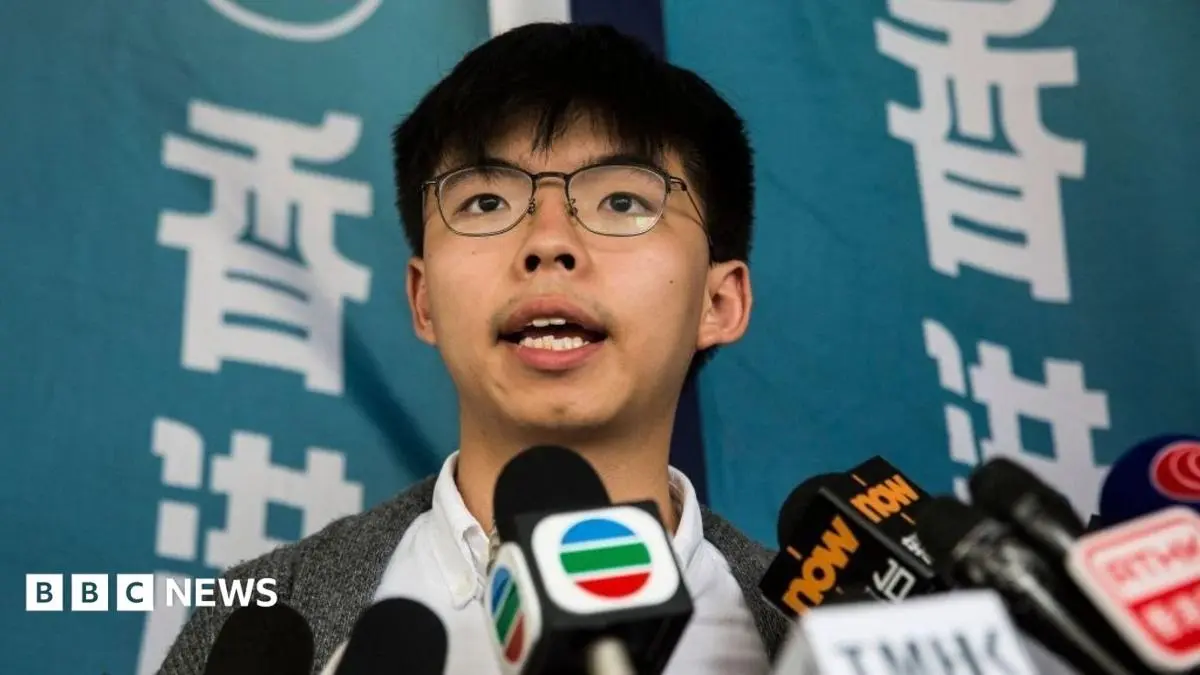
Joshua Wong, a central figure in Hong Kong’s pro-democracy movement, was handed another prison term this Thursday, marking a somber new chapter in a life of activism that began when he was barely a teenager. Now 30 years old, having celebrated his birthday just last month, Wong is no stranger to the judicial system, having faced repeated incarceration over the past decade.
On Thursday, Wong appeared in court looking noticeably slimmer than in previous public appearances. Dressed in a dark blue, long-sleeved shirt paired with khaki trousers and his signature black-rimmed glasses, he maintained a composed demeanor. As the judge delivered the reasons for the latest sentencing, Wong intermittently took notes, occasionally nodding toward the members of the public gallery who had packed the courtroom.
The atmosphere outside the court was tense and crowded. Dozens of supporters and concerned citizens had queued for hours in the hope of securing a seat in the public gallery, a testament to the enduring, albeit diminished, visibility of the movement he once helped lead. A heavy police presence was stationed around the court premises, reflecting the sensitivity of the proceedings.
Wong was already serving a lengthy term for his conviction in the landmark "Hong Kong 47" subversion case and was originally expected to be released early next year. However, this latest sentence—the result of charges to which he pleaded guilty in September—will see him remain behind bars for longer. The judge ruled that two months and two days of this new 10-year sentence will be served concurrently with his ongoing imprisonment.
The latest charges stem from allegations that Wong conspired with other campaigners, including self-exiled activist Nathan Law, to lobby for foreign sanctions and international blockades against Beijing. Prosecutors told the court that these activities took place between July and late November 2020, a period defined by the initial implementation of the National Security Law (NSL) in Hong Kong.
Wong and Law were the co-founders of Demosisto, a prominent pro-democracy political party that has since been disbanded. Following the sentencing, Hong Kong’s Chief Executive, John Lee, issued a statement labeling Wong and Law as "among the primary culprits responsible for undermining Hong Kong’s prosperity and stability." Lee argued that their actions "not only severely undermined national sovereignty, security, and development interests, but also directly prejudiced the well-being of the general public and the stability of society."
To understand the weight of this moment, one must look back to 2014, when a teenage Wong stood at the forefront of the "Umbrella Movement." His articulate advocacy and unwavering presence during the 79-day occupation of major city thoroughfares propelled him into the international spotlight, quickly establishing him as one of the most recognizable faces of Hong Kong’s push for democratic reform.
In 2016, building on that momentum, he co-founded Demosisto alongside Law and Agnes Chow—the latter of whom is also currently living in exile. Despite his elevated profile, Wong frequently expressed a deep-seated discomfort with being labeled a "protest leader." He often sought to frame the movement as a collective, horizontal effort rather than one driven by individual celebrity.
"We have a lot of facilitators in this movement and I’m one of them," Wong told The Financial Times in November 2019, at the height of the anti-extradition bill protests. "Instead of having a top-down command, we now have a bottom-up command hub."
The political landscape changed drastically in 2020 when Beijing introduced the National Security Law, effectively dismantling the space for organized democratic opposition. Demosisto disbanded shortly thereafter. While Nathan Law fled to the United Kingdom, where he has continued his advocacy from abroad, Wong chose to remain in Hong Kong. He attempted to pivot toward electoral politics, aiming to secure a seat in the legislature, but authorities barred his candidacy, citing his vocal opposition to the NSL as a primary reason for his disqualification.
As his political path was systematically blocked, the legal pressure against him began to mount. On November 23, 2020, Wong pleaded guilty to charges related to his involvement in protests outside the Hong Kong police headquarters in 2019. This was merely the beginning of a cascade of legal challenges.
In February 2021, while already incarcerated, Wong was named as one of 47 prominent activists and former lawmakers charged with "conspiracy to commit subversion" under the NSL. This case, which became known globally as the "Hong Kong 47," remains the largest prosecution brought under the security legislation to date. Wong was already serving a 56-month sentence for his subversion conviction when he was hit with the additional charges of collusion that led to this week’s sentencing.
The accumulation of these cases has turned Wong’s early adulthood into a series of court appearances and prison transfers. Yet, his communication with his supporters—often filtered through lawyers or social media posts managed by his associates—has remained consistent. On November 22, 2020, just one day before pleading guilty to the protest-related charges, Wong penned a poignant message to "the people of Hong Kong" on Instagram.
"To be honest, I have never had much faith in Hong Kong’s politics, but I have every confidence in the people of Hong Kong," he wrote. "Even as political power now poses a comprehensive challenge to the resilience of our civil society, I believe the people of Hong Kong will, as always, find a way to see things through."
For many, these words continue to define Wong’s legacy in the eyes of his supporters—a blend of skepticism toward political institutions and an abiding faith in the civic resilience of the city’s population. As he returns to his cell, the contrast between his teenage years as a symbol of youthful defiance and his current status as a long-term political prisoner serves as a stark illustration of the seismic shifts in Hong Kong’s political reality over the last decade.
The legal proceedings on Thursday were brief but significant, serving as a reminder that the authorities remain focused on penalizing those who participated in the 2020 lobbying efforts. With the judicial system continuing to process cases linked to the events of 2019 and 2020, the sentencing of individuals like Wong remains a focal point for international observers and rights groups monitoring the city’s rule of law.
As Wong continues his sentence, the absence of prominent figures like him and Law leaves a significant void in the city’s political discourse. The heavy police presence outside the court, the quiet, disciplined atmosphere inside, and the continued focus from the Chief Executive’s office underscore how central these figures remain to the government’s narrative of stability. For Joshua Wong, the road ahead remains behind bars, his story now inextricably linked to the broader, complex history of Hong Kong’s struggle for political expression.