The global culinary community turned its eyes toward Lima, Peru, on Wednesday, 5 November 2026, as the results of the prestigious "The World’s 50 Best Restaurants" awards were unveiled. In a crowning moment for Basque gastronomy, the top honor was bestowed upon Asador Etxebarri, a restaurant tucked away in the quiet, scenic mountain village of Axpe in Spain’s Atxondo valley.
For many, this win marks the culmination of an arduous and storied journey. After securing the second-place spot in 2025, Asador Etxebarri has climbed to the summit of the international dining scene. The restaurant has been a consistent fixture on the list since its debut in 2008 at number 44, representing an 18-year ascent to the top of the industry.
The Art of Wood-Fired Mastery
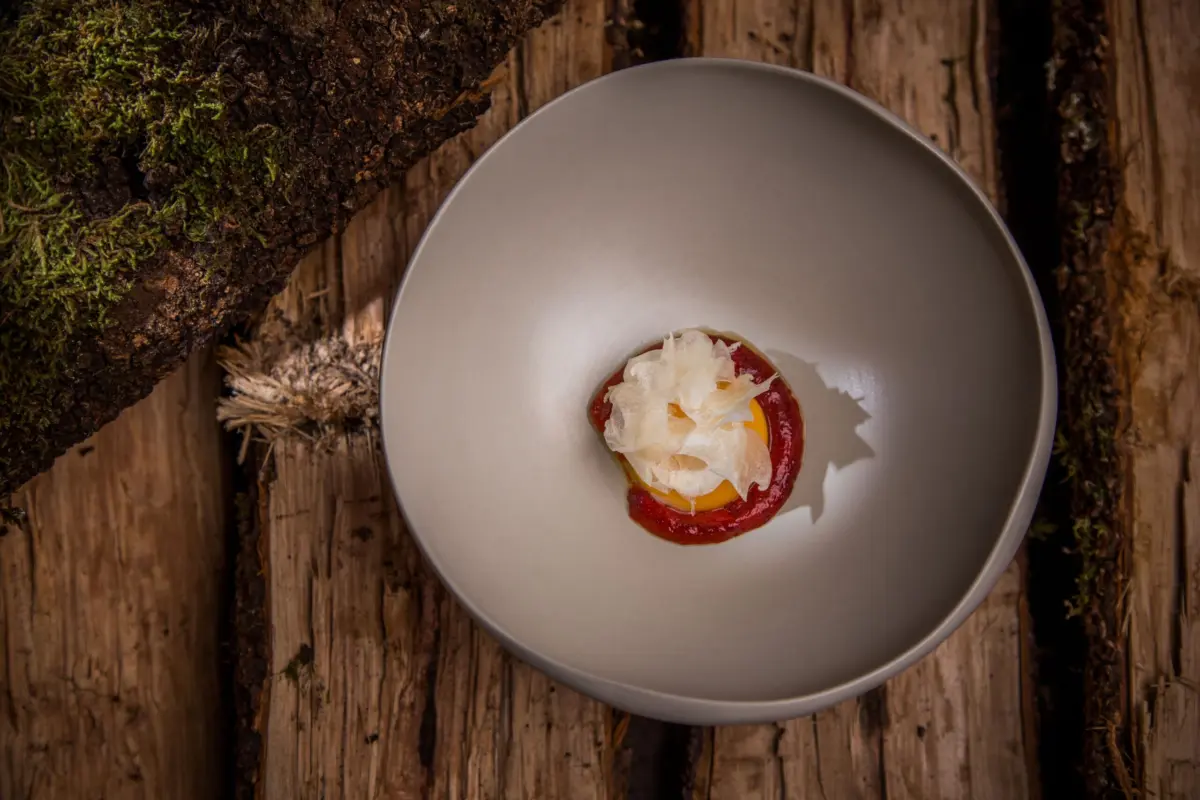
At the heart of Asador Etxebarri’s success is its chef-owner, Bittor Arguinzoniz. Widely regarded as a visionary in the realm of live-fire cooking, Arguinzoniz has redefined the possibilities of the grill. His philosophy is one of uncompromising precision and respect for raw ingredients. At the restaurant, the menu—a tasting experience priced at approximately €300—is a masterclass in elemental cooking. Every dish, from the delicate, succulent Palamós red prawns to the unexpected, complex depth of smoked milk ice cream, is prepared over custom-engineered wood and charcoal grills.
Located roughly 45 minutes by car from the bustling city of Bilbao, the restaurant has become a site of pilgrimage for food enthusiasts globally. Since its doors first opened in 1990, it has maintained a rustic charm that belies the sophisticated, world-class culinary output found within its walls.
Following this victory, Asador Etxebarri will now transition into "The Best of the Best" category. This transition is a staple of the awards’ format: once a restaurant reaches the number one position, it is rendered ineligible for future nominations, ensuring that the spotlight remains dynamic and provides new establishments the opportunity to earn top billing. This esteemed group already includes legendary institutions such as The French Laundry in Yountville, California, and Barcelona’s Disfrutar. Last year’s champion, Maido in Lima, Peru, has now officially joined this exclusive hall of fame.

The Integrity of the Voting Process
The selection process for the 50 Best is as rigorous as it is distinct. Unlike other industry accolades that rely on a small group of inspectors, the 50 Best list acts as a living, breathing snapshot of the global dining landscape. It aggregates the experiences of over 1,100 hospitality experts—including chefs, restaurateurs, food critics, and highly traveled gourmets—who have dined at their selections within the previous 18 months.
Rikki Tidball, managing director of awards and rankings for The 50, emphasized the independence of this methodology. "Every year, The 50 Best Restaurants list gives us a snapshot of where more than 1,100 individuals who live and breathe this industry have had their most memorable restaurant experiences," she noted. "Each Academy member votes independently, so nobody at The 50 or any of our partners has a say in who makes the list, and restaurants cannot nominate themselves. This means every restaurant on the list has genuinely earned it." To ensure the process remains beyond reproach, the voting data is subjected to an independent audit by the professional services firm Deloitte.
Because the list is based on the subjective, evolving tastes of its Academy, it is not uncommon for restaurants to fall off the list in one year only to reappear later. This dynamic nature was evident in 2026 with the return of several notable establishments. For instance, The Ledbury in London, known for chef Brett Graham’s masterful fusion of British produce with Japanese and French techniques, returned to the rankings at number 83. Similarly, Mosu in Seoul, South Korea—where chef Sung Anh presents elevated interpretations of traditional Korean flavors—re-entered the list at number 78.
Regional Highlights and Individual Accolades
During the ceremony, specific attention was paid to the highest-ranking establishments on each continent. Gaggan in Bangkok, which moved up from sixth place last year to the number two spot globally, was once again named the Best Restaurant in Asia. Mexico City’s Quintonil (number 4) retained its title as the Best Restaurant in Latin America, while New York City’s Atomix (number 11) was recognized as the Best Restaurant in North America. Dubai’s Trèsind Studio (number 28) secured the title for the Middle East for the second consecutive year. Cape Town’s La Colombe (number 35) stood as the top representative for Africa, while Sydney’s Saint Peter (number 50) took the honors for Oceania. As the overall winner, Asador Etxebarri was also named the Best Restaurant in Europe.
Beyond the restaurant rankings, the 2026 ceremony highlighted individuals who have made extraordinary contributions to the industry. The Best Female Chef Award was presented to Jessica Rosval of Modena’s Al Gatto Verde. The Best Pastry Chef Award was claimed by Bangkok’s Dej Kewkacha, while the Best Sommelier Award was awarded to Lesley Liu of Singapore’s Odette. The Estrella Damm Chefs’ Choice Award went to Junghyun "JP" Park of New York City’s Atomix. Furthermore, the SevenRooms Icon Award was presented to Spanish culinary pioneer Ferran Adrià of El Bulli, and the 50 Best Restaurants Scholarship was awarded to Doris Lam.

The ceremony also celebrated several major milestones. Tuju in São Paulo was honored with the Highest New Entry Award, while Copenhagen’s Kadeau was recognized as the Highest Climber, having vaulted 33 places up the rankings. India’s Naar, located in Kasauli, was awarded the Sustainable Restaurant Award for its commitment to environmentally conscious practices.
The Global Landscape: Rankings 1–50
The top 50 list reflected a diverse range of culinary traditions and techniques. Following Asador Etxebarri at number one and Gaggan at number two, the top five was rounded out by Alchemist in Copenhagen (3), Quintonil in Mexico City (4), and Wing in Hong Kong (5).
The rest of the top 10 included The Chairman in Hong Kong (6), Kjolle in Lima (7), Kadeau in Copenhagen (8), Diverxo in Madrid (9), and Plénitude in Paris (10). Atomix, the sole United States representative in the top 50, landed at number 11, continuing its steady climb from 12th place in 2025.
The list continued with Sorn in Bangkok (12), Mérito in Lima (13), Sühring in Bangkok (14), Odette in Singapore (15), and Tuju in São Paulo (16). The rankings proceeded with Mingles in Seoul (17), Nusara in Bangkok (18), Jan in Munich (19), and Piazza Duomo in Alba (20). The second half of the top 50 featured restaurants such as Meet the Bund in Shanghai (21), Boragó in Santiago (22), Vyn in Skillinge (23), Al Gatto Verde in Modena (24), Lasai in Rio de Janeiro (25), Masque in Mumbai (26), Reale in Castel di Sangro (27), Trèsind Studio in Dubai (28), Enigma in Barcelona (29), and Steirereck in Vienna (30).
Rounding out the list were Celele in Cartagena (31), Potong in Bangkok (32), Elkano in Getaria (33), Le Coquillage in Saint-Méloir-des-Ondes (34), La Colombe in Cape Town (35), Ru Yuan in Hangzhou (36), Nuema in Quito (37), Atelier Moessmer Norbert Niederkofler in Brunico (38), Schloss Schauenstein in Fürstenau (39), Jordnær in Copenhagen (40), Onjium in Seoul (41), Bozar in Brussels (42), Le Calandre in Rubano (43), Don Julio in Buenos Aires (44), Mayta in Lima (45), El Chato in Bogotá (46), Le Louis XV – Alain Ducasse in Monte Carlo (47), Ikoyi in London (48), Naar in Kasauli (49), and Saint Peter in Sydney (50).

Expanding the Horizon: 51–100
Before the announcement of the top 50, the extended list of restaurants ranked 51 to 100 was unveiled. This segment highlighted emerging and established talent alike. Among the notable entries were Khufu’s in Giza, Egypt, where executive chef Mostafa Seif crafts modern Egyptian cuisine with a view of the Great Pyramids, and Lamdre in Beijing, where chef Dai Jun explores the boundaries of plant-based Chinese gastronomy.
The 51–100 list represents the depth and breadth of the international food scene, including Uliassi in Senigallia (51), La Cime in Osaka (52), Ling Long in Shanghai (53), Nelita in São Paulo (54), Alcalde in Guadalajara (55), Sazenka in Tokyo (56), Koan in Copenhagen (57), Frantzén in Stockholm (58), Narisawa in Tokyo (59), Hiša Franko in Kobarid (60), Florilège in Tokyo (61), Fu He Hui in Shanghai (62), The Jane in Antwerp (63), Seroja in Singapore (64), Fyn in Cape Town (65), Willem Hiele in Oudenburg (66), Arpège in Paris (67), Evvai in São Paulo (68), Cocina Hermanos Torres in Barcelona (69), and Kol in London (70).
The list continued with Salsify at the Roundhouse in Cape Town (71), Eatanic Garden in Seoul (72), Chef Tam’s Seasons in Macau (73), Le Du in Bangkok (74), Belcanto in Lisbon (75), Nobelhart & Schmutzig in Berlin (76), Caprice in Hong Kong (77), Mosu in Seoul (78), Huniik in Mérida (79), Txispa in Atxondo (80), Septime in Paris (81), Coda in Berlin (82), The Ledbury in London (83), Le Doyenné in Saint-Vrain (84), Tim Raue in Berlin (85), Eliane in Brussels (86), Arca in Tulum (87), FZN in Dubai (88), Burnt Ends in Singapore (89), Baan Tepa in Bangkok (90), Den in Tokyo (91), Lamdre in Beijing (92), SingleThread in Healdsburg (93), Neolokal in Istanbul (94), Mil in Cusco (95), Rosetta in Mexico City (96), Khufu’s in Giza (97), Labyrinth in Singapore (98), Fauna in Valle de Guadalupe (99), and Aponiente in El Puerto de Santa María (100).
As the 2026 awards ceremony concluded, the focus shifted back to the kitchens across the globe where these chefs continue to push the boundaries of culinary art. With Asador Etxebarri now transitioning into the Hall of Fame, the stage is set for a new chapter in the ongoing narrative of global fine dining.