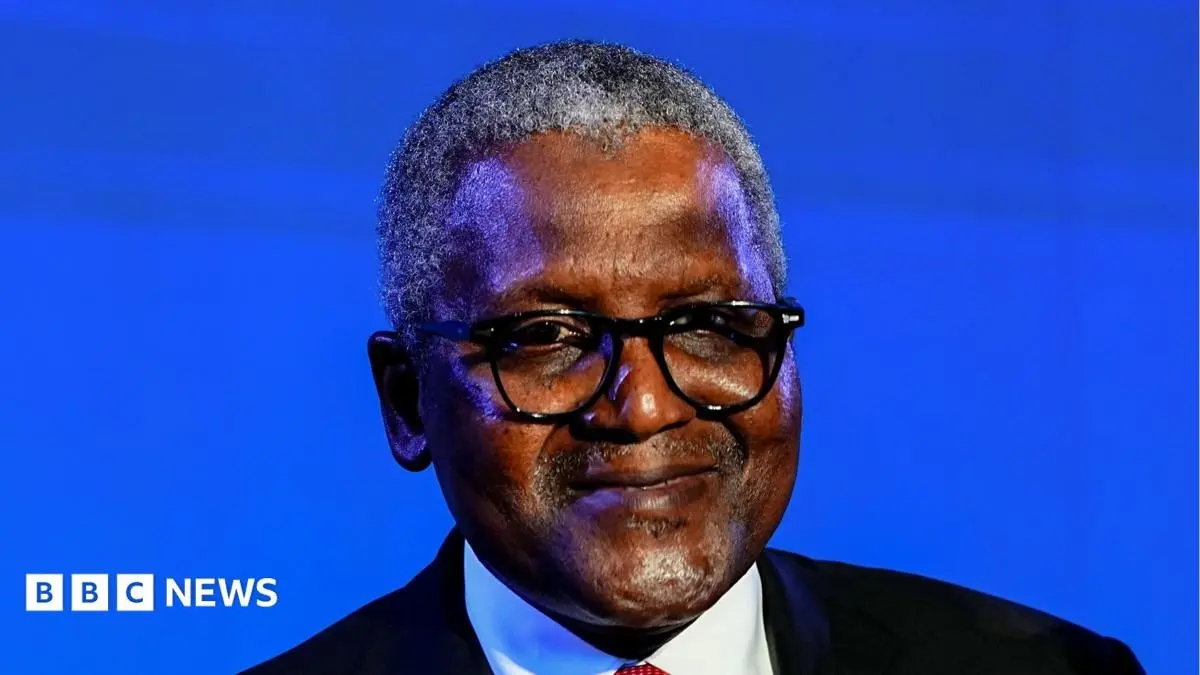
Nigerian billionaire Aliko Dangote has officially announced a significant capital investment of $660 million (£500 million) to spearhead the development of a transformative fuel pipeline connecting Ethiopia and Djibouti. This ambitious infrastructure project is poised to fundamentally alter the energy logistics landscape for landlocked Ethiopia, which has long grappled with the complexities and inefficiencies of transporting petroleum products across its borders.
The project encompasses the construction of a 120-kilometer (75-mile) pipeline designed to establish a direct, high-capacity link between the Damerjog port in Djibouti and a major distribution facility in Dewele, Ethiopia. Beyond the pipeline itself, the infrastructure plan includes the development of substantial storage capacity, estimated at approximately 400 million litres. This storage buffer is expected to provide a crucial hedge against supply chain volatility, ensuring that Ethiopia maintains a steady reserve of fuel to meet domestic demand.
Stakeholders anticipate that the project will reach completion and begin full-scale operations within 18 months. The timeline reflects a fast-tracked approach to infrastructure development, underscoring the urgent need to address the logistics bottlenecks that currently hinder Ethiopia’s industrial and economic progress.
Ethiopian Prime Minister Abiy Ahmed, speaking on the impact of the venture, emphasized the dramatic efficiency gains the pipeline will yield. Currently, the movement of fuel from the port in Djibouti to the Ethiopian capital, Addis Ababa, is a slow and arduous process that can take up to five days due to road transport constraints. The new pipeline is projected to compress this timeline to just one day, representing a massive leap in logistical throughput.
The initial phase of the project is specifically engineered to handle essential petroleum products, including jet fuel, diesel, and petrol—the lifeblood of Ethiopia’s modern economy. During the ground-breaking ceremony, Aliko Dangote, recognized as Africa’s richest man, highlighted the broader strategic implications of the investment. He noted that the project is designed not merely as a commercial venture, but as a mechanism to strengthen Ethiopia’s national energy security and build a more resilient, reliable fuel supply chain.
For landlocked Ethiopia, the dependency on Djibouti’s port is absolute. Virtually all of the country’s petroleum imports currently transit through this gateway. By streamlining the transport process, the pipeline is expected to alleviate significant pressure on the existing road and rail transport systems. This, in turn, will provide a much-needed relief to various sectors of the economy, including the aviation, agriculture, and construction industries, which are frequently hampered by fuel shortages or transport delays.
The benefits of the initiative are not limited to the Ethiopian side of the border. Djibouti is also expected to see a significant boost in its economic outlook. The project is projected to increase port activity, stimulate job creation, and ultimately generate higher government revenues for the nation, further cementing the symbiotic economic relationship between the two neighboring states.
This pipeline project serves as a cornerstone of Aliko Dangote’s wider, aggressive strategy to expand his infrastructure and manufacturing footprint across the African continent. His business empire has become synonymous with large-scale industrialization efforts that seek to replace imports with domestic production and enhance regional integration.
The scale of Dangote’s ambitions is best reflected in the performance and future projections of his existing industrial assets. Dangote Cement, a titan in the regional construction material market, maintains a staggering annual production capacity of approximately 55 million tonnes, serving as a primary driver for infrastructure projects across Africa. Parallel to this, his massive oil refinery in Nigeria stands as one of the most significant industrial projects in the history of the continent. Currently, the refinery possesses the capacity to process 700,000 barrels of crude oil per day. However, management is actively pursuing plans to double this output to 1.4 million barrels per day, a move that would solidify the refinery’s position as a global leader in petroleum processing.
The financial maneuvers underpinning these expansions have also been notable. The refinery recently achieved a major milestone by listing 4.1 billion ordinary shares on the Nigerian Stock Exchange. This strategic move aims to raise approximately $1.63 billion (£1.2 billion) in capital, providing the liquidity necessary to sustain these capital-intensive projects and potentially explore further opportunities for growth in other emerging markets.
The Ethiopia-Djibouti pipeline is part of a series of regional energy investments that signal a shift in how Dangote is positioning his business interests. In Kenya, the company is set to break ground as early as next week on a proposed 700,000-barrel-a-day crude oil refinery in Lamu. This project, much like the one in Djibouti, seeks to capitalize on the increasing demand for refined petroleum products in East Africa, a region that has seen rapid urbanization and industrial growth but remains constrained by inadequate processing and distribution infrastructure.
By diversifying his investments across the Horn of Africa and East Africa, Dangote is effectively creating a network of energy infrastructure that addresses the continent’s most pressing structural deficits. The investment in Ethiopia is particularly timely; as the country continues to pursue ambitious infrastructure projects of its own, the demand for reliable and affordable energy remains a critical variable for sustainable growth.
For the regional governments involved, the partnership with a private investor of Dangote’s caliber represents a pragmatic solution to infrastructure gaps that public funding alone has struggled to bridge. By bringing technical expertise, capital, and a proven track record of industrial project execution, the Dangote Group is acting as a catalyst for regional trade facilitation. The transition from road-based fuel delivery to pipeline distribution will not only reduce the costs associated with transit but also mitigate the environmental and safety risks inherent in long-haul fuel trucking.
As the 18-month construction period begins, the eyes of the region remain fixed on the Damerjog-Dewele corridor. If the project succeeds in meeting its operational goals, it could serve as a blueprint for similar cross-border infrastructure initiatives across the continent. For Ethiopia, the successful commissioning of the pipeline would signify a major victory in its efforts to stabilize the cost of living and production, as energy logistics costs often filter down into the price of consumer goods and industrial materials.
The collaboration reinforces the growing importance of intra-African investment. Rather than relying solely on international consortia, the involvement of African entrepreneurs in developing the continent’s critical infrastructure is increasingly viewed as a key driver of the African Continental Free Trade Area (AfCFTA) agenda. By connecting the ports of the coast to the markets of the interior, the project is a tangible step toward the realization of a more integrated and self-sufficient African energy sector.
As work commences, the project’s impact will be closely monitored, not just for its logistical efficiency, but for its role in testing the feasibility of large-scale, privately-funded energy pipelines in a region that has historically been dominated by state-led logistics. The scale of the investment—$660 million—is a testament to the confidence that major stakeholders have in the long-term economic prospects of the Horn of Africa. With the construction phase now underway, the focus shifts to the technical execution and the timely delivery of the infrastructure, which will ultimately determine the project’s success in alleviating the fuel supply pressures that have long dictated the rhythm of commerce in the region.