Innovation in the clean energy sector often comes from finding clever ways to optimize existing technologies rather than inventing entirely new scientific principles from scratch. In Australia, a fresh venture known as Thermal Dawn is making waves by targeting one of the most stubborn and expensive energy challenges in modern households: replacing gas boilers in cold climates with cost-effective, highly efficient heating and cooling solutions.
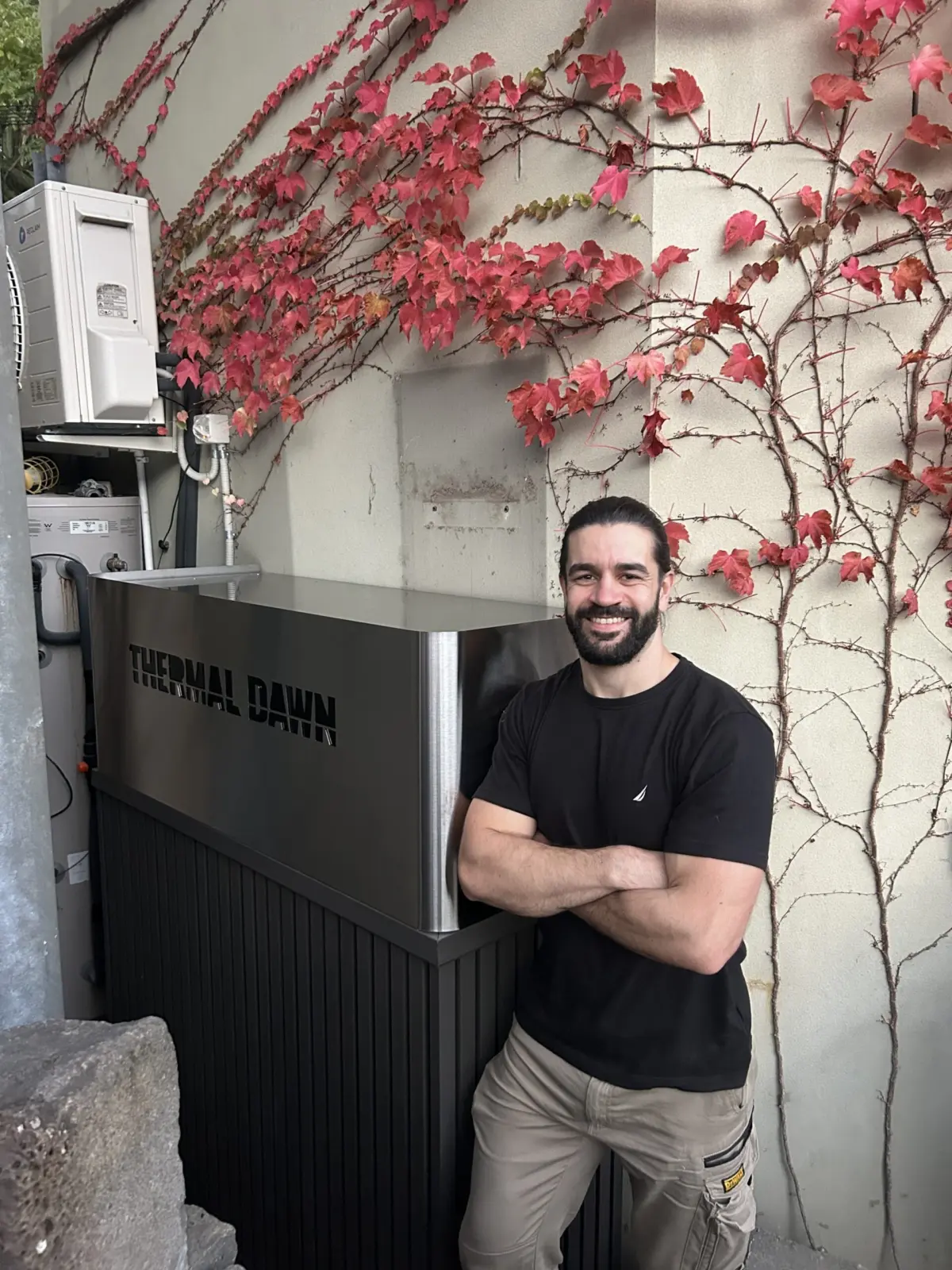
Recently, CleanTechnica caught up with Nick Zeniou, the founder of Thermal Dawn, fresh off his presentation at the Everything Electric expo. Zeniou has been introducing consumers and industry experts to a revolutionary thermal storage system that behaves much like a thermal battery, storing heat and releasing it steadily without drawing power from the grid during peak pricing hours.
Gauging Public Reaction at Everything Electric
The Everything Electric exhibition provided an ideal testing ground to measure public sentiment toward the emerging technology. Hundreds of curious attendees visited the Thermal Dawn stall to see the unit firsthand and learn how it integrates into residential properties. Zeniou noted that consumer priorities are clear cut when it comes to home climate control. "People care about carbon cost and comfort. People don’t compromise on comfort," he observed, emphasizing that comfort ultimately trumps carbon cost for the average homeowner.

Homeowners who engaged with the exhibit and completed an onsite survey showed a strong dual focus on sustainability and financial savings. However, Zeniou remains grounded about the broader market appeal, cautioning that exhibition crowds represent a self-selected demographic. Out of sixty-two survey respondents at the Melbourne event, fifty already owned rooftop solar systems, meaning the feedback reflects an already-converted audience rather than the mainstream housing market as a whole.
Rethinking Residential Heating with Thermal Storage
While much of Australia enjoys a warm or subtropical climate—such as Brisbane—millions of residents across regions like Sydney, Canberra, and Melbourne endure genuinely cold winters. Thermal Dawn’s system is specifically engineered for these cooler areas. The equipment is capable of storing thermal energy at temperatures up to 70 degrees Celsius, or dropping down to 5 degrees for cooling applications.
Rather than requiring a complete overhaul of a home’s infrastructure, the system can circulate hot or cold water through existing pipes and radiators, effectively bypassing the need for an expensive gas boiler. Zeniou describes the setup simply as a thermal battery. Crucially, the unit does not generate electricity; instead, it stores and manages thermal energy with remarkable efficiency.

Real-world performance data from a residential installation in Melbourne during a chilly day in August illustrates the system in action. Monitoring data captured in unedited 15-minute intervals shows that the home’s heat pump operated until approximately 1:45 in the afternoon. After that window, the heat pump remained completely off, with the entire household heated through the evening peak using energy stored earlier in the day.
Proven Financial Returns and Grid Independence
When questioned about return on investment, Zeniou pointed to two residential systems that operated throughout the southern Australian winter, each saving the respective homeowners approximately AU$1,500. The first site, a home in Melbourne utilizing the technology since May, charges its thermal battery during the local energy retailer’s free three-hour midday window. As a result, the heat required for the evening costs the homeowners virtually nothing.
The second installation took place in July at a slab-heated home in Warragul, Victoria. The system was installed over the course of just two days, utilizing proprietary controls to turn the home’s concrete slab into an active component of the thermal battery. The smart software manages precisely when the slab charges and when it releases its heat. Data from the installation shows that on 95 percent of winter evenings, the home’s heat pumps did not run at all between the peak hours of 5:00 PM and 9:00 PM. Combined, these two installations have successfully avoided the consumption of 70,521 megajoules of gas since being commissioned.

The broader systemic advantage lies in shifting load away from expensive hours. Standard heat pumps draw heavily from the electrical grid during morning and evening peaks, meaning that even households that have successfully eliminated gas still face premium utility rates whenever outdoor temperatures drop at night. Thermal Dawn addresses this by charging when electricity is cheapest—whether through a free midday tariff window, onsite solar generation, or late-night off-peak rates—and delivering that stored warmth throughout the evening while keeping the compressor switched off.
The Secret Sauce: Phase Change Materials
The core technology behind Thermal Dawn relies on a combination of reverse-cycle heat pumps, well-insulated water tanks, and Phase Change Materials. While Zeniou naturally keeps the exact proprietary composition of their PCMs confidential, the underlying principle is well established. Phase Change Materials are substances designed to freeze or melt at specific temperatures, absorbing and releasing large amounts of heat as they transition between solid and liquid states. According to Zeniou, integrating PCMs effectively doubles the system’s overall heat capacity.
For homeowners interested in cooling as well as heating, the system offers an optional add-on. Cool water from the storage tank is routed through a fan coil unit, allowing a quiet indoor fan to circulate chilled air throughout the living space.

This thermal approach also changes the role of standard household lithium-ion batteries. Zeniou explains that thermal storage acts as a specialized, low-cost solution for managing the largest and most predictable energy loads in a home: heating, cooling, and hot water. Covering these loads thermally is significantly cheaper per kilowatt-hour than relying entirely on chemical battery storage. By decoupling heating from chemical batteries, the household battery is freed up to power lights, appliances, electric vehicles, and overnight backup, while its lifespan is extended by avoiding heavy winter evening cycling.
From Childhood Chores to Engineering Innovation
Zeniou’s path to founding Thermal Dawn is rooted in practical experience with heating. Growing up in a remote part of New Zealand, his childhood chores included collecting firewood for the family fireplace. If the fire was not lit by 4:00 PM, the house would fail to warm up before the cold evening set in, teaching him an early lesson about the critical importance of timing in thermal management—a lesson that directly parallels the economics of modern electricity pricing.
A mechanical engineer by training, Zeniou worked across various technology companies and startups. While working on commercial air conditioning installations, he began connecting the dots between massive 24-hour fluctuations in electricity costs, the fact that residential heating accounts for up to two-thirds of a home’s energy consumption, and the growing transition of residential properties into decentralized power stations.

The venture started with entrepreneurial grit. Once the first unit was completed, Zeniou loaded it into a utility vehicle at 5:00 PM and drove the 1,000 kilometers down the Hume Highway from Sydney to Melbourne overnight, arriving just in time to install it the following morning. At the time, he and his wife Linda had a four-month-old baby at home. Linda, a co-founder who leads mechanical design and manufacturing, managed the newborn while Zeniou handled logistics on the road.
Looking Ahead and Regional Expansion
Having successfully proven the concept, Thermal Dawn is now fulfilling orders for its initial batch of domestic units while developing a larger product designed for ducted air conditioning systems. While apartment block heating is on the long-term roadmap, the company is prioritizing residential homes first.
Looking at regulatory and regional landscapes, Zeniou notes that Victoria is preparing to introduce support policies for thermal systems, though the company deliberately designed its product to be economically viable without government subsidies. Meanwhile, the Australian Capital Territory represents an ideal market for expansion due to its cold winters, high concentration of hydronic-heated homes, and active government transition away from gas. Thermal Dawn is currently engaging with local installers in Canberra to bring the technology to the region.

Australian homeowners interested in adopting the technology can register their interest through the company’s website, with international readers also invited to submit inquiries to help signal regional demand for future expansion.