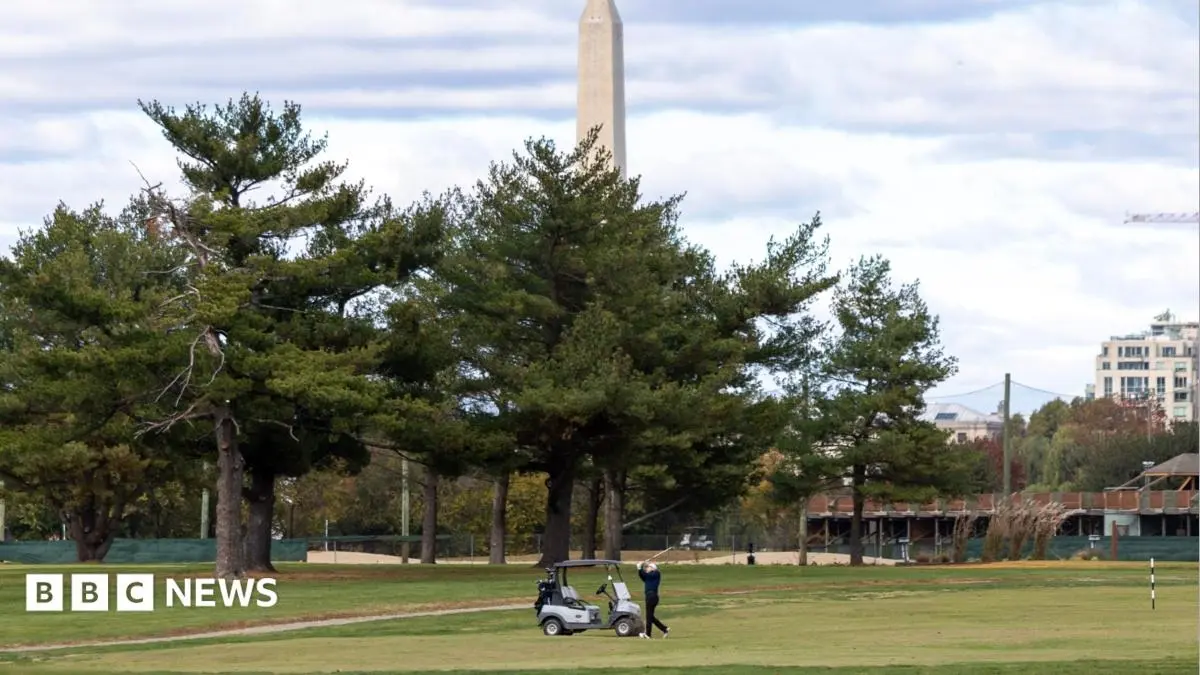
A federal judge has issued a temporary restraining order blocking the Trump administration’s attempt to shut down the historic East Potomac Golf Links and its surrounding parkland in Washington, D.C. The decision, handed down by US District Judge Ana Reyes, represents a significant judicial intervention in a protracted legal battle over the future of one of the capital’s most recognizable public recreation spaces.
Judge Reyes, who has presided over the case for several months, ruled that while the administration is not legally required to actively manage or improve the facilities, it does not have the authority to unilaterally close the park and golf course to the public. The ruling, contained within a 30-page memorandum, serves as a major setback for the administration’s ambitious plans to overhaul the 106-year-old facility, which was scheduled to cease operations on 15 November for an extensive 15-month renovation project.
The legal dispute, which first emerged in February, pits the administration’s vision for a “world-class” sporting facility against local preservationists and community advocates who argue that the government’s actions violate federal law and ignore the public interest.
The Conflict Over "Trash Island"
The renovation project has been a focal point of intense rhetoric from the President, who is an avid golfer and has long expressed a desire to upgrade the site. In public statements, including posts on Truth Social, the President has been highly critical of the current state of the course, famously labeling the site “Trash Island.” He has argued that the course is “old, broken, dilapidated, and of no further use or effect,” citing what he described as “dangerous and disease-infested trees” and a “collapsing and hazardous seawall.”
The President’s stated goal is to transform the East Potomac Golf Links into a premier destination capable of hosting international tournaments while remaining open to the public. In October, despite the ongoing litigation and legal challenges, the administration announced that the course would be closed for 15 months to accommodate the redesign. A rendering of the proposed course was shared publicly, showcasing a high-end vision for the land.
However, Judge Reyes found that the administration’s justifications for the sudden closure were “pretextual.” In her ruling, she asserted that the government had violated at least two federal laws in a rush “to meet an arbitrary deadline.” By attempting to close the park indefinitely, she argued, the government is acting in a manner that “runs counter to the public interest in utilizing national parkland.” She further noted that the administration failed to provide any evidence that they would suffer harm if the status quo were maintained during the pendency of further legal proceedings. The current restraining order is set to remain in effect until 28 November.
A History of Legal Escalation
The struggle over East Potomac, which is located just two miles south of the White House and serves as one of three public courses managed by the National Park Service (NPS) in the District of Columbia, began in earnest earlier this year. The DC Preservation League, along with other community stakeholders, initiated the lawsuit to challenge the legality of the redevelopment plans.
Tensions escalated dramatically in October when the NPS began removing hundreds of trees on the property. In a move that drew sharp criticism from the bench, the government did not notify Judge Reyes of the impending work until just 15 hours before the chainsaws were scheduled to start. The sudden environmental impact prompted an immediate reaction from the court. Judge Reyes ordered the administration to cease all tree removal until at least 26 October and mandated that the government provide the court with three business days’ notice before initiating any other permanent alterations to the site.
The administration’s decision to proceed with the closure announcement shortly after the court-ordered work stoppage only added to the judicial scrutiny. The judge’s latest ruling reinforces the court’s authority over the site while the broader legal issues remain unresolved.
Judicial Inquiry into Government Conduct
The scope of Judge Reyes’s oversight has expanded beyond the land use dispute itself. In a development that has sent ripples through the legal community, the judge has launched a separate inquiry into whether Department of Justice attorneys assigned to the case made misrepresentations to the court and violated ethical standards.
At the heart of this investigation is the question of whether the government acted in bad faith, particularly regarding the timing of its notifications to the court. The judge is seeking to determine if the legal team deliberately withheld information about the renovation plans or failed to correct statements that were later revealed to be inaccurate. To facilitate this rigorous oversight, Judge Reyes has announced that she will be working with a “special master”—an independent third party appointed to assist the court in fact-finding and ensuring compliance with judicial orders.
This inquiry into government conduct highlights the heightened stakes of the case. As the litigation continues, the court is focused not only on the physical future of the park but also on the integrity of the process by which the administration has sought to implement its policy goals.
The Future of the National Parkland
For the residents of Washington, D.C., and the many golfers who frequent the East Potomac facilities, the coming weeks will be critical. The parkland has served as a fixture of the city’s recreational landscape for over a century, and the debate reflects a broader tension between the administration’s desire to impose its specific vision on public property and the legal obligations of the government to manage such spaces in accordance with established federal statutes.
The White House has been contacted for comment regarding the judge’s ruling and the ongoing inquiry. As it stands, the status quo remains, with the golf course continuing to operate under the constraints set by the federal court. Whether the administration will adjust its plans or attempt to further challenge the judge’s intervention remains to be seen.
For now, the rolling fairways of East Potomac—a site that has survived wars, urban development, and shifting political administrations—remain open, protected by a temporary order that preserves the park for the public while the battle over its future continues in the courtroom. The outcome of this case may ultimately set a significant precedent for how federal agencies navigate the intersection of property development, environmental preservation, and the oversight powers of the judiciary.