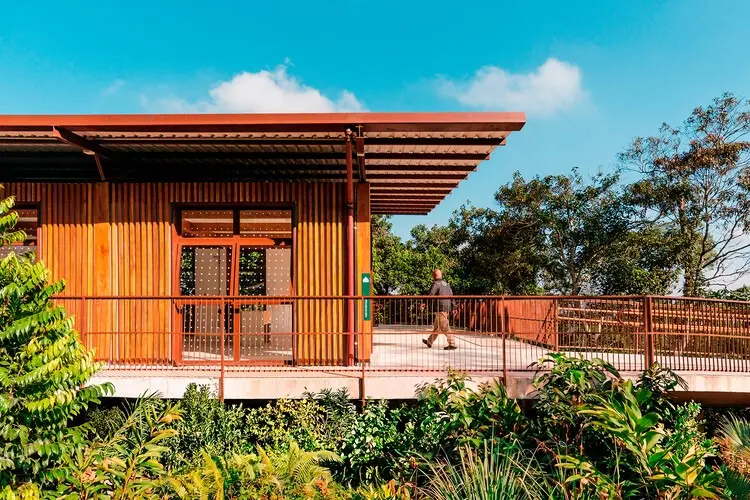
Urban planning and environmental architecture have achieved a significant milestone in Brazil’s largest metropolis with the completion of the Nascentes Hub at the Cabeceiras do Aricanduva Municipal Natural Park. Situated in Cidade Tiradentes, a densely populated district in the eastern zone of São Paulo, this expansive new project spans approximately 96,000 square meters. Developed by Natureza Urbana in close collaboration with the Department of Implementation, Projects, and Works of the Municipal Secretariat for the Green and the Environment, the park serves as both a vital ecological sanctuary and a welcoming public amenity. It successfully bridges the gap between heavily urbanized residential neighborhoods and a heavily protected, sensitive natural ecosystem.
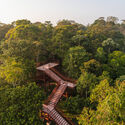
At its core, the project protects and celebrates a critical landscape: the rare remnants of the Atlantic Forest alongside the vital headwaters of the Aricanduva River basin. For decades, the pressures of rapid urban sprawl in São Paulo’s eastern periphery have encroached upon natural water sources and native flora. The establishment of the Cabeceiras do Aricanduva Municipal Natural Park directly combats this environmental fragmentation. By designating this nearly 96,000-square-meter territory as a municipal natural park, local authorities and design professionals have created a defensive perimeter around crucial environmental assets, safeguarding local biodiversity and regulating hydrological cycles in a region prone to the ecological imbalances of urbanization.
The architectural and landscape intervention executed by Natureza Urbana was guided by the dual objective of conservation and community integration. Designing within an ecologically sensitive area requires an extremely delicate touch. Rather than imposing an artificial urban landscape onto nature, the design team focused on framing, protecting, and facilitating human interaction with the existing environment. The Nascentes Hub acts as the primary gateway to the park, orchestrating the transition for visitors as they step out of the dense urban fabric of Cidade Tiradentes and into the tranquil, living landscape of the Atlantic Forest.
This transitional zone is meticulously planned to accommodate community life while maintaining strict ecological boundaries. The layout acknowledges that long-term environmental preservation in an urban context cannot succeed without the active participation and appreciation of the local populace. By bringing the neighborhood closer to its own natural heritage, the project fosters a sense of local stewardship. Residents of Cidade Tiradentes now have direct access to educational and recreational opportunities centered around environmental awareness, allowing them to witness firsthand the importance of protecting local headwaters and native woodlands.
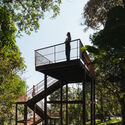
The collaborative nature of the project underscores the evolving role of public administration in Brazilian urban centers. Partnering with the Municipal Secretariat for the Green and the Environment, Natureza Urbana translated municipal environmental goals into tangible, built realities. The Department of Implementation, Projects, and Works played a crucial role in navigating the engineering and logistical complexities of building adjacent to a protected river basin and forest remnant. Every pathway, viewing point, and structural element within the Nascentes Hub was chosen to minimize soil compaction, protect existing vegetation, and respect the natural topography of the terrain.
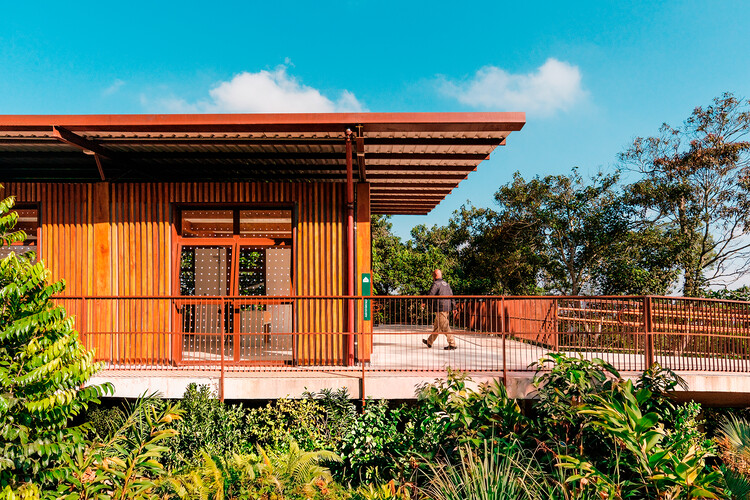
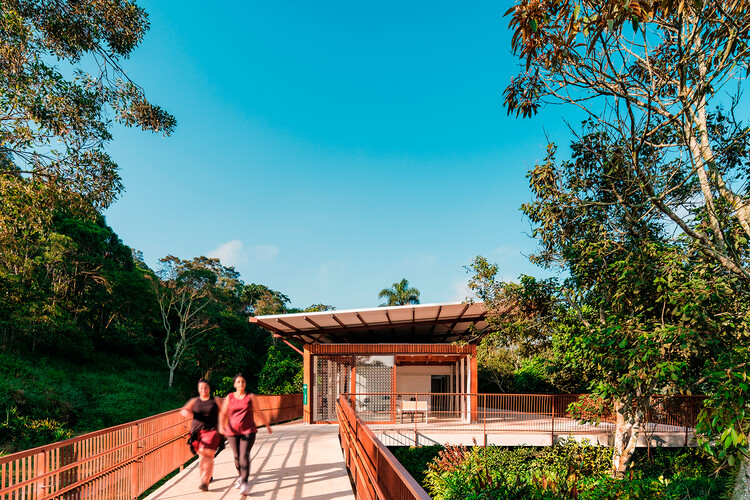
Material choices and architectural interventions throughout the park reflect a deep respect for the surrounding ecology. Wood and other context-sensitive materials dominate the built components, ensuring that visitor infrastructure harmonizes with the forest canopy rather than competing with it. Elevated walkways and carefully positioned viewing decks guide pedestrian flow, preventing unregulated foot traffic from damaging fragile undergrowth and sensitive wetland areas near the river headwaters. These design strategies protect the hydrology of the Aricanduva River basin, allowing rainwater to infiltrate naturally and supporting the continuous flow of the springs that give the Nascentes Hub its name.
The opening of the Cabeceiras do Aricanduva Municipal Natural Park marks an important chapter in São Paulo’s ongoing effort to reclaim and protect its green infrastructure. As one of the world’s largest megacities, São Paulo faces continuous challenges in balancing real estate growth, social infrastructure demands, and environmental protection. Projects like the Nascentes Hub demonstrate that these priorities do not have to be mutually exclusive. By transforming a vulnerable edge condition into a thriving municipal natural park, the city has created a model for urban conservation that honors both the integrity of the Atlantic Forest and the quality of life for the communities that surround it.