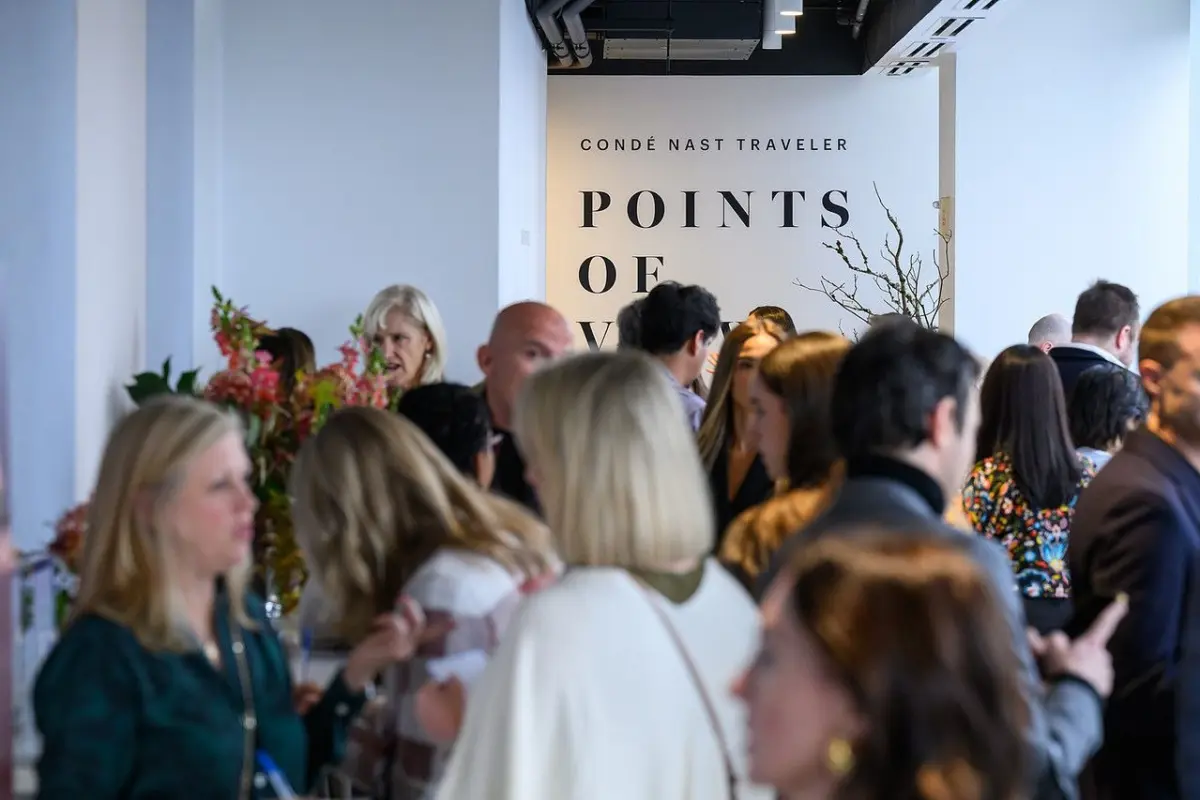
When planning the 2026 Points of View Summit, the editorial team at Condé Nast Traveler sought to create more than just a series of presentations; the goal was to provide an intimate forum to hear directly from the travel specialists who work behind the scenes. These experts are the architects of the world’s most ambitious, deeply personal, and logistically complex itineraries. By embedding breakout sessions between high-level panels—which covered everything from the preservation of Lowcountry heritage and shifting summer travel trends to the evolving business model of all-inclusive resorts—editors and specialists engaged in extended, candid conversations about the future of the industry. From the cultural depth of Gullah cuisine on Hilton Head Island to the changing demographics of the luxury globetrotter, these discussions offered a rare, unfiltered look at how the world’s most discerning travelers are moving and why.
The New Frontier of Culinary Travel
Culinary travel has long been a staple of the luxury market, but the definition of what constitutes a "food trip" is undergoing a significant evolution. Inspired by the rich, complex tapestry of Gullah cuisine on Hilton Head Island, senior features editor Megan Spurrell and editorial assistant Skyli Alvarez led a deep dive into the modern traveler’s search for taste. The conversation moved quickly away from traditional, scripted cooking classes toward a growing interest in foraging, the discovery of local, harder-to-find gems over big-name chef branding, and the identification of regional hotspots that have yet to hit the mainstream culinary map.
The specialists were in universal agreement: travelers are craving "authentic" food experiences, yet defining—and successfully locating—that authenticity remains a persistent challenge. Omolola Campbell, a sixth-generation Gullah descendant and executive producer of the short documentary The Spirit We Move With, provided a poignant framework for this dilemma. For Campbell, the value of a culinary experience is inextricably linked to the storyteller behind the stove. "Taking a cooking class is much different than getting it from a local chef who can tell stories about why a dish means so much to this locality," she noted. She illustrated this by highlighting the history of okra in South Carolina; its seeds were famously sown into the hair of enslaved West Africans brought to the South, making the plant a symbol of resilience. This historical context is what grants a meal its soul. "That’s how you differentiate the person who really knows why they’re cooking what they’re cooking," Campbell concluded, suggesting that the future of food tourism lies in connecting travelers with those who can articulate the lineage of their ingredients.

The Changing Dynamics of Multigenerational Travel
The traditional image of the family vacation—a set of grandparents in their 70s leading the charge—is rapidly being rewritten. During a session led by global executive director of video Dana Kravis and commerce director Madison Flager, travel specialists observed a distinct shift in power dynamics: the grandchildren are increasingly acting as the architects of the trip, while the grandparents are financing it as a way to cement their legacy and spend quality time with their heirs.
This shift is compounded by the fact that people are having children later in life, which means the "grandparents" of today are often in their 80s or 90s, requiring itineraries that are far more nuanced than those designed for previous generations. Trip designers are now balancing a wider range of physical abilities and energy levels than ever before. The consensus among the specialists was that the most successful family trips are those that build in intentional space for separation, followed by meaningful reconvening. A successful daily itinerary often includes three distinct activity options, allowing younger, more active travelers to pursue their interests while the older generation enjoys a more relaxed pace, with the entire family regrouping for meals. For those seeking forced, high-quality family interaction, specialists frequently recommended boat and yacht charters, which provide a controlled, communal environment where family members are encouraged to engage with one another rather than drifting off into individual activities.
The New Guard of Ultra-Luxe Travel
What defines "luxury" is becoming increasingly subjective. During a breakout session hosted by features director Rebecca Misner and commerce writer Jessica Sulima, specialists debated the shifting priorities of the modern affluent traveler. For some, luxury remains a packed, bucket-list itinerary; for others, it is the rare privilege of total disconnection and the luxury of doing absolutely nothing for a week.

Virgi Schiffino Kennedy, managing partner at Lux Voyage, characterized the modern luxury shift as something intangible: "Luxury is being able to pass on meaning to kids, and exposing families to the broader world and its cultures." Others, like Ruchi Harnal of Harnal Travel, emphasized that true luxury is no longer defined by the resort or the villa, but by the level of hyper-personalization applied to every aspect of the trip. The demographic of those footing the bill is also evolving. Thomas Robinson, MR at Dehouche, noted that Millennials and Gen Z are demonstrating a higher propensity for spending, though they are increasingly focused on the "how" and "why" of their investment, seeking to ensure their capital is supporting ethical or sustainable practices. Furthermore, there is a notable pivot away from the traditional model of parents funding their children’s travel, with an increasing number of 30- and 40-somethings treating their parents to milestone trips, often centered around birthdays or anniversaries.
Navigating the Euro Summer
The challenges of overtourism, inflation, and record-breaking temperatures have created a complex landscape for the classic European summer. Director of special projects Lale Arikoglu and commerce editor Meaghan Kenny opened the floor for specialists to discuss how to maintain the quality of the European experience under these pressures. Brian Dore, owner of CIU Travel, offered a pragmatic alternative: "If you’re thinking of traveling to the Dolomites, consider Switzerland instead. There’s history and beautiful scenery with fewer crowds."
The Alps, in general, are being repositioned as a primary solution for the heat-conscious traveler, as higher elevations offer cooler climates while still providing access to "soft adventure" hiking or lake-based leisure. For those looking to avoid the crushing crowds of traditional hotspots, specialists suggested looking toward Belgium, Denmark, or Norway—the latter of which is seeing an expansion in cruise accessibility as early as March. For families, regions like Umbria, Austria, Ireland, and Croatia were highlighted as top-tier alternatives that offer deep cultural and festival experiences without the saturation of more famous destinations. For those determined to stick with classic European itineraries, the advice remains consistent: go as early as possible in the season—such as May rather than August—and always verify local temperature trends before confirming bookings.

The Rising Global Demand for Asia
The conversation regarding Asia’s tourism growth, led by Mei Zhang, chairman and founder of WildChina, highlighted a surge in demand that shows no sign of slowing. Global features director Erin Florio and editorial assistant Kat Chen explored the specific destinations fueling this interest. Zulya Rajabova of Silk Road Treasure Tours emphasized that interest is gravitating toward destinations with "indispensable craft identities," citing the millennia-old design traditions of Samarkand, Uzbekistan, as a major draw. Meanwhile, travel designer Marigold Wood of Blonde Atlas is seeing a rise in specialized routes, such as the tea trails of Yunnan, China, which cater to those seeking trekking and hiking experiences. For experts like Ethan Crowley of Asia Desk Ltd, the focus is increasingly on "demystifying" major landmarks in countries like Cambodia, encouraging travelers to look past the most-visited sites to find the deeper, more localized experiences that define the region’s current appeal.
Entertainment and the Rise of Pop Culture Travel
If 2026 was defined by the fan, 2027 is poised to amplify the trend of traveling specifically for entertainment. Associate editor Charlie Hobbs and commerce writer Jessica Chapel led a discussion on the logistical hurdles of planning around global sporting events, music festivals, and art fairs. The rise of "bundled" purchases—such as the requirement of a hotel package to access a Pink concert at the Sphere, or full-house buyouts for the Ryder Cup at Adare Manor—is creating significant barriers to entry for the average traveler.
Specialists expressed concern over the lack of legal protections against extreme ticket scalping in the United States, which is making domestic stadium concerts increasingly inaccessible. Stephanie Malakie of Empress Travel Club pointed out that the sheer volume of events and providers makes it difficult for travel advisors to filter for the right fit. The industry consensus is that the value for the client now lies not just in the ticket, but in the curation of the surrounding experience. Whether it’s pairing a London NFL game or an F1 race in Shanghai with niche cultural experiences—like Papal Blessings in Vatican City or European Christmas markets—the goal is to build an itinerary that transcends the event itself. For those looking to avoid the stress of peak-event ticketing, "set-jetting" to filming locations remains a popular, lower-pressure alternative that still offers high-value experiential travel.

The Great Outdoors and the Digital Dilemma
The final breakout of the summit, led by travel bookings commerce editor Jamie Spain and news editor Hannah Towey, addressed the modern traveler’s contradictory relationship with nature. While there is a surging demand for "all things outdoorsy," there is a notable gap between the desire for a digital detox and the reality of the traveler’s needs. "Guests all want to have access for emergency reasons at a minimum," said Kate Doty of Geographic Expeditions. "I don’t have a single guest who wants to fully digital detox."
The group observed that travelers want the sense of being disconnected without actually losing the ability to connect. As Lou Lagrange of Luxury Travel Advisor noted, planners must be explicit about the lack of connectivity in places like national parks to manage expectations. To help bridge this gap, many high-end operators are introducing services like professional photographers on small-ship expeditions, which alleviates the need for guests to constantly reach for their own devices to document their experience. Furthermore, the discussion touched on the growing demand for "luxury glamping," where access to the wilderness is paired with creature comforts. When faced with the realities of extreme weather, the specialists emphasized the importance of reframing itineraries rather than canceling them, suggesting that travelers embrace the "playful unpredictability" of nature, such as experiencing the lush, green beauty of a region during its rainy season. Through these adaptive strategies, travel specialists continue to find ways to balance the demands of a modern, connected world with the timeless, grounding appeal of the outdoors.