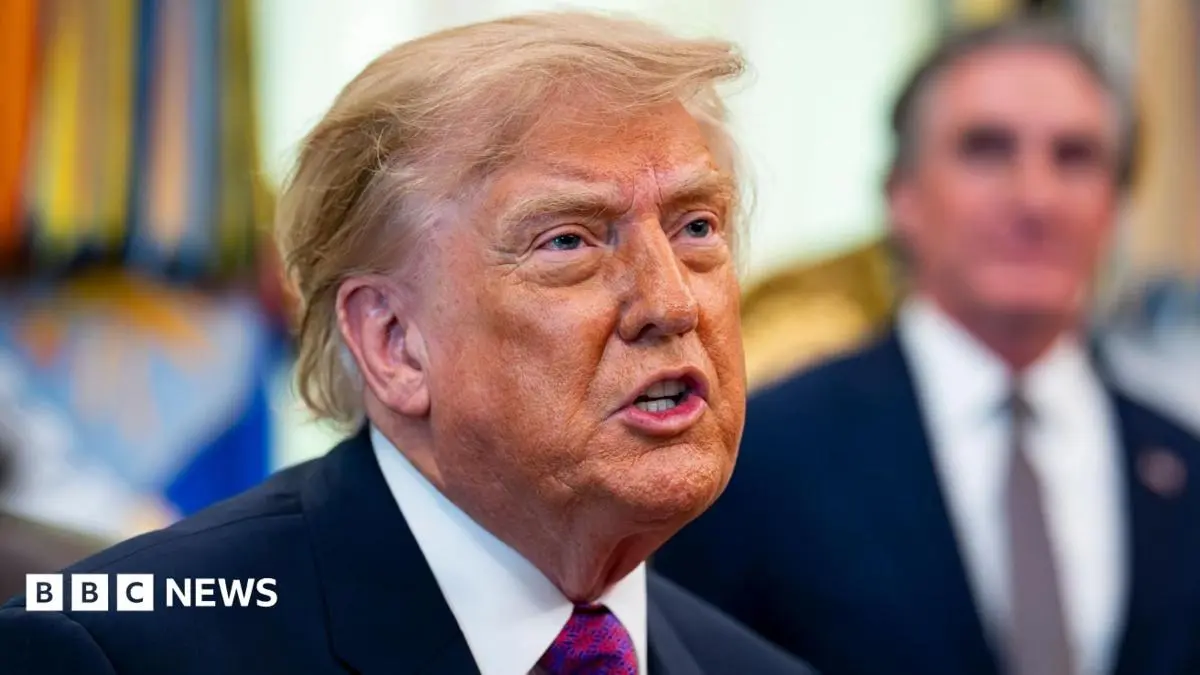
A significant constitutional confrontation is unfolding in Washington as CNN, Politico, and MS NOW have officially announced their intention to sue the Trump administration following the revocation of their journalists’ White House press credentials. The ban, which President Donald Trump announced this past Friday, has ignited a fierce debate over the limits of executive power and the foundational protections afforded to the press under the First Amendment of the United States Constitution.
The administration’s decision to bar these organizations stems from President Trump’s frequent assertions that these specific outlets have engaged in the publication of "fiction or lies" regarding his administration. Following the initial announcement, reporters from the affected outlets were denied physical access to the White House complex on Saturday. In a unified response on Monday, the media organizations issued a joint statement declaring their intent to pursue legal action, emphasizing that their objective is to "defend the principle that the government does not decide what the press reports."
The legal challenge centers on the First Amendment, which prohibits the government from "abridging" the freedom of the press. For decades, American courts have interpreted this language as a safeguard against government entities discriminating against media organizations based on the content or ideological leanings of their coverage. The media outlets argue that the administration’s actions constitute a direct threat to the democratic process.
"Without notice or process, the White House revoked our journalists’ credentials because it objected to our reporting," the joint statement from the three organizations read. "Left unchallenged, this threatens press freedom and the public’s right to independent journalism free from government interference."
Shortly after the announcement of the lawsuit, President Trump took to the social media platform Truth Social to defend his administration’s position. He explicitly denied that his actions amounted to an "assault on the Free Press," characterizing his efforts instead as a targeted campaign against what he labels "FAKE NEWS."
The fallout from the ban has extended beyond the courtroom and into the logistical operations of the White House press corps. On Monday morning, major US television networks announced they would suspend their participation in the White House "pool"—a system where media organizations rotate duties and share material to ensure comprehensive coverage while managing the costs and spatial constraints of broadcasting presidential events.
This development creates a significant vacuum in media coverage as the President prepares to travel to New York for the United Nations General Assembly. Bryan Boughton, the Washington bureau chief for Fox News and a key coordinator for the rotating TV pool, informed colleagues via email that the organization would no longer be covering events designated as "pool coverage" for President Trump. The email, which was reviewed by the BBC, noted that the move was a direct response to the White House’s decision to prevent CNN from fulfilling its designated pool duties for the upcoming New York trip. The message concluded with the stark assessment that "there will be no replacement pool put in place."
CNN, one of only five major news outlets tasked with live television pool coverage at the White House, had been scheduled to cover the President’s trip to the UN General Assembly this week. However, the physical reality of the situation was evident on Monday morning: the five-seat CNN booth in the basement of the White House press area—a space that typically hums with activity from the early hours of the morning—was dark and vacant. Monitors and screens within the booth were powered down, and a CNN crew was relegated to broadcasting live from a public pavement outside the secured perimeter of the White House grounds.
The broader media establishment has signaled its support for the legal challenge. In a joint statement, five major networks—ABC, CBS, CNN, Fox News, and NBC—expressed a unified stance: "The public has a vital interest in receiving accurate, independent information about its government. No administration should restrict a news organization because it objects to its reporting." These five networks currently hold the necessary infrastructure and financial resources to distribute high-quality, live, and independent coverage of presidential activities.
As of Monday, the designated White House media slots remained largely vacant or underutilized. Instead of the traditional pool arrangement, the conservative outlet Real America’s Voice was listed as the "secondary" crew for the President’s delegation to New York. During the trip, President Trump is expected to engage in high-level diplomacy, including meetings with New York City Mayor Zohran Mamdani and French President Emmanuel Macron.
When the ban was first announced, the President did not cite specific news stories or investigative reports as the catalyst for the decision. However, in subsequent comments, he clarified that the move was the result of "cumulative stories over the last few years." When pressed by reporters to elaborate on whether other outlets might face similar restrictions, President Trump suggested that the list could grow, specifically naming the New York Times and the Washington Post as organizations he considers to be "fake news."
This latest escalation in tensions is part of a broader shift in the administration’s relationship with the press. In February, the White House announced it would be taking direct control of the press pool system, which had been managed for over a century by the White House Correspondents’ Association. That same month, the administration barred reporters and photographers from the Associated Press (AP) from restricted areas, including the Oval Office and Air Force One. The administration’s stated rationale for that ban was the AP’s usage of the term "Gulf of Mexico" rather than the administration’s preferred terminology, "Gulf of America." The AP subsequently filed a lawsuit against the administration, a case that remains active in the courts.
President Trump has consistently maintained a combative stance toward legacy media organizations throughout his tenure. His administration has initiated legal action against a wide array of outlets, including the Wall Street Journal and the BBC. In some instances, these legal battles have concluded with media companies agreeing to multimillion-dollar settlements, though the administration’s litigation against the BBC remains ongoing.
As the legal battle between CNN, Politico, MS NOW, and the White House begins, the situation highlights an increasingly volatile environment for journalists covering the executive branch. The outcome of these lawsuits will likely have lasting implications for the norms of presidential press access and the legal protections afforded to independent reporting in the United States. For now, the administration continues to frame its actions as a necessary correction against biased media, while the industry remains steadfast in its claim that such interventions represent an unconstitutional overreach that undermines the public’s fundamental right to be informed.