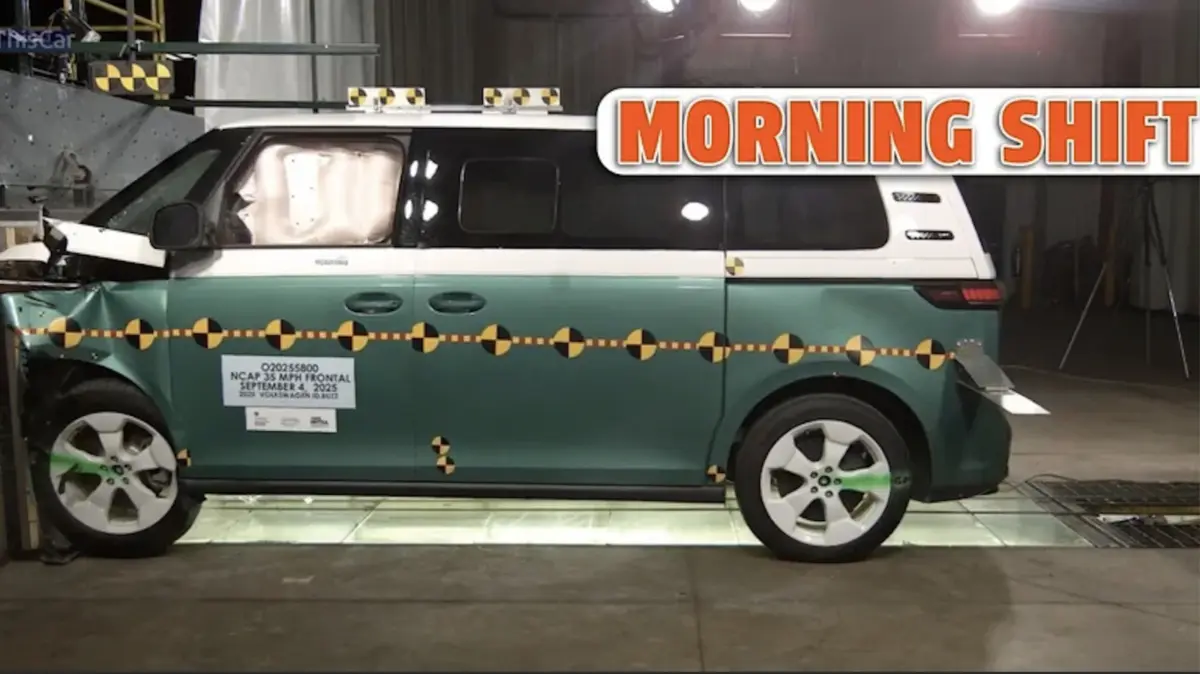
Good morning! It is Friday, September 25, 2026, and this is The Morning Shift, your daily comprehensive roundup of the most critical automotive headlines shaping the global transport landscape and influencing how Americans drive and commute.
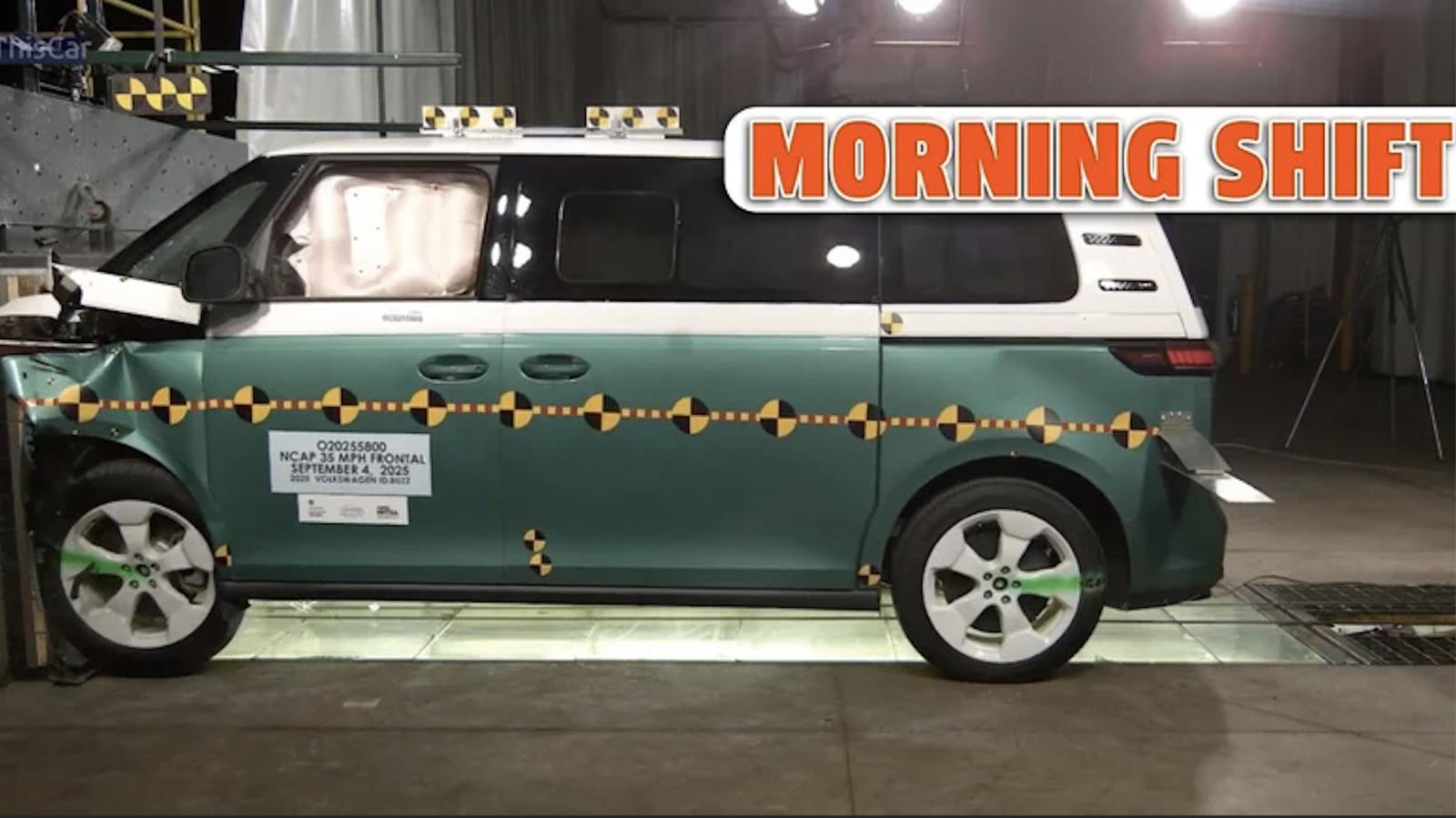
In today’s top stories, Volkswagen is making American consumers wait yet another model year for the troubled ID. Buzz to return to domestic showrooms, finally targeting a 2028 comeback. Meanwhile, Tesla has officially commenced customer deliveries of its long-awaited Semi truck, nearly a decade after its initial unveiling. In Washington, two U.S. senators spearheading a bipartisan bill to permanently ban Chinese vehicles from the American market have briefly delayed a high-stakes fast-track vote as they negotiate with a lone holdout. Finally, in Europe, an independent safety group’s evaluation of Tesla’s Full Self-Driving system reveals persistent speed-limit reading errors on Belgian roadways.
1st Gear: Volkswagen Pushes U.S. ID. Buzz Return to the 2028 Model Year
The polarizing Volkswagen ID.. Buzz is taking an even longer hiatus from the North American market than previously planned. After initial hurdles prompted Volkswagen to skip the 2026 model year entirely and tentatively point toward a 2027 return, the automaker has now decided to bypass the 2027 model year as well. The electric van is now scheduled to reappear for the 2028 model year.
Despite announcements in May indicating that the vehicle would return for the 2027 model year equipped with fresh paint options, physical steering wheel buttons, a North American Charging Standard (NACS) port, and a targeted camper-style "Tourer" trim, those plans have been shifted. Volkswagen has opted to hold off until 2028, at which point the refreshed van will debut alongside upgraded software, vehicle-to-load capabilities, and integrated digital key functionality.
Industry analysts point out that the ID. Buzz faced an uphill battle upon its initial launch in the U.S. in November 2024. As one of the most expensive passenger vehicles in Volkswagen’s domestic lineup—coupled with a driving range hovering just over 200 miles—its consumer appeal was inherently restricted. Furthermore, the van has contended with high U.S. import tariffs implemented in the spring of 2025, two major recalls that triggered stop-sale orders, and the complete elimination of the $7,500 federal EV tax credit.
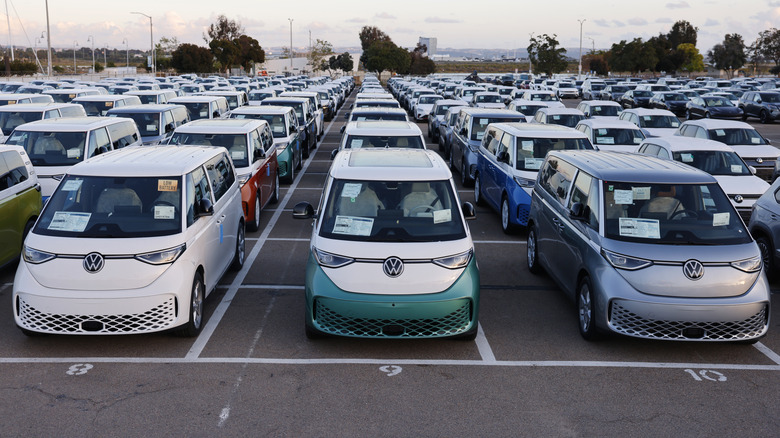
During its first full year on the market, Volkswagen delivered just 6,140 units, with volume severely hampered by regulatory and mechanical pauses. An additional 2,481 vans were sold during the first half of 2026. Sell-down efforts for the remaining 2025 inventory are nearing completion, with online vehicle listings showing fewer than forty new units remaining nationwide, mostly restricted to single-tone silver and black exterior finishes. Volkswagen has stated that it will release further product specifications and timeline details for the 2028 model year in the coming months.
2nd Gear: Tesla Semi Enters Customer Fleets Following Years of Delays
After a lengthy development cycle punctuated by repeated postponements, Tesla has officially begun customer deliveries of its all-electric Class 8 Semi truck. The rollout arrives nearly nine years after CEO Elon Musk first introduced the big rig to the public and roughly seven years behind the initial target production schedule. Comprehensive details regarding long-term production volume forecasts and official pricing structures remain scarce.
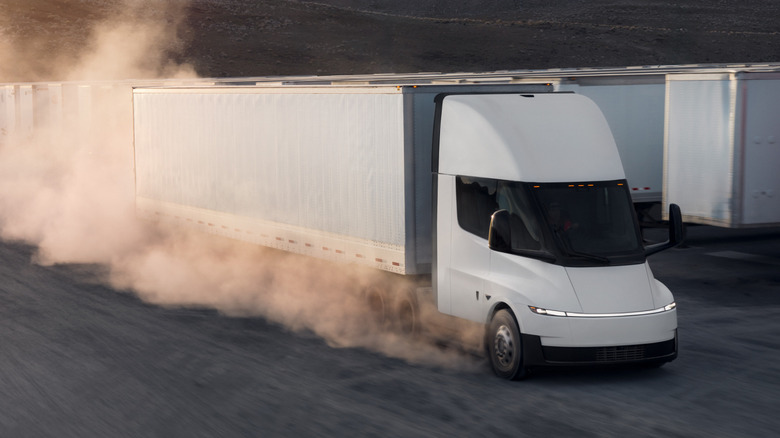
While Musk did not attend the primary delivery event in person—instead addressing attendees via a pre-recorded video message—representatives from major logistics and retail customers including PepsiCo, DHL, and US Foods were present to receive their vehicles. Dan Priestley, Tesla’s director of Semi truck engineering, confirmed during the event that the long-range variant successfully delivers 500 real-world miles of range on a single charge when fully loaded, while the standard variant provides 325 miles.
The milestone follows a limited, early-stage pilot program launched in late 2022 that saw a small number of prototypes delivered to fleet operators like PepsiCo. Although broader market penetration has faced headwinds from rising industry competition and shifting federal and state clean-energy policies, demand has seen recent sparks. A coalition of major cargo shippers, including Microsoft and PepsiCo, recently placed an order for 2,500 Semi trucks—an order that stands to nearly double the existing population of heavy-duty electric trucks on U.S. roads. Additionally, Swedish freight operator Einride AB recently finalized an agreement to integrate 500 units into its global fleet.

3rd Gear: Senate Delays Fast-Track Vote on Permanent Ban for Chinese Vehicles
Legislative efforts to establish a permanent legislative ban on Chinese automotive imports in the United States have hit a temporary procedural speed bump. Senator Bernie Moreno (R-OH) and Senator Elissa Slotkin (D-MI), who hoped to fast-track their bipartisan bill through the Senate via unanimous consent, have agreed to delay the floor vote by a week to secure the support of the chamber’s single remaining holdout.
That lone opponent is Republican Senator Rand Paul of Kentucky, who indicated he would spend the weekend and the following week discussing lingering concerns regarding the legislation. Proponents of the bill argue that swift legislative action is necessary to protect hundreds of thousands of American manufacturing jobs from what they characterize as potential market domination by heavily subsidized Chinese automakers.
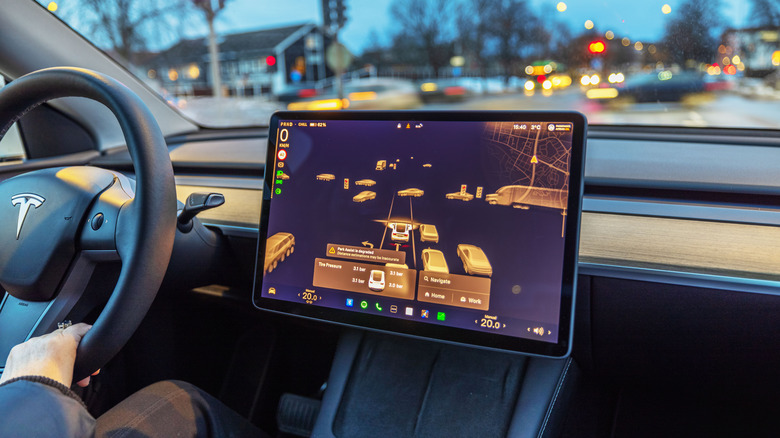
The proposed legislation would codify and strengthen regulations initially established by executive action, preventing future administrations from granting trade waivers to Chinese automotive manufacturers. It also addresses complex ownership stakes; provisions within the bill target companies with more than 15% Chinese corporate ownership, potentially impacting established global brands like Mercedes-Benz, though lawmakers are actively discussing compliance pathways and waiver mechanisms for European manufacturers with legacy financial ties.
The legislative push coincides with heightened tensions and broader trade discussions between Washington and Beijing, as domestic automakers, dealers, and suppliers continue lobbying federal leaders to maintain strict barriers against Chinese vehicle imports, software, and hardware components over national security and data privacy concerns.

4th Gear: Safety Advocates Report Speed-Limit Discrepancies in Tesla FSD Testing in Belgium
An independent road-safety advocacy organization in Belgium, Johanna.be, has released findings from a three-day, 250-mile evaluation of Tesla’s Level 2 "Full Self-Driving" (Supervised) driver assistance system, highlighting recurring issues with speed limit recognition and urban cycling infrastructure.
The evaluation, conducted in July following regulatory approvals in several European markets, revealed that the Tesla system frequently exceeded posted speed limits in urban 20 km/h and 30 km/h zones. According to the advocacy group, the vehicle’s onboard display often registered roadside 30 km/h speed limit signs correctly with one sensor, while simultaneously projecting an incorrect limit of 50 km/h onto the driver’s interface and accelerating accordingly. In Brussels-area test segments, vehicles operated under the system averaged 44 km/h in designated 30 zones. Additionally, the group recorded instances of the system attempting to execute overtaking maneuvers around cyclists on restricted streets where such actions are prohibited.
While regulatory bodies such as the Netherlands’ RDW have approved the software architecture under the premise that human drivers retain absolute legal responsibility for vehicle operation, several European transport authorities continue to scrutinize the technology’s adaptability to localized traffic rules. Tesla has defended its driver-assistance software, pointing to internal data studies suggesting that vehicles utilizing the system generally match surrounding traffic speeds and maintain a high standard of caution around vulnerable road users. European transport authorities and regulatory agencies across the EU are expected to review ongoing data submissions ahead of broader regional policy votes.